Lamborghini
Huracan
Lamborghini Huracan: official NHTSA recalls, fault code help and maintenance guides.
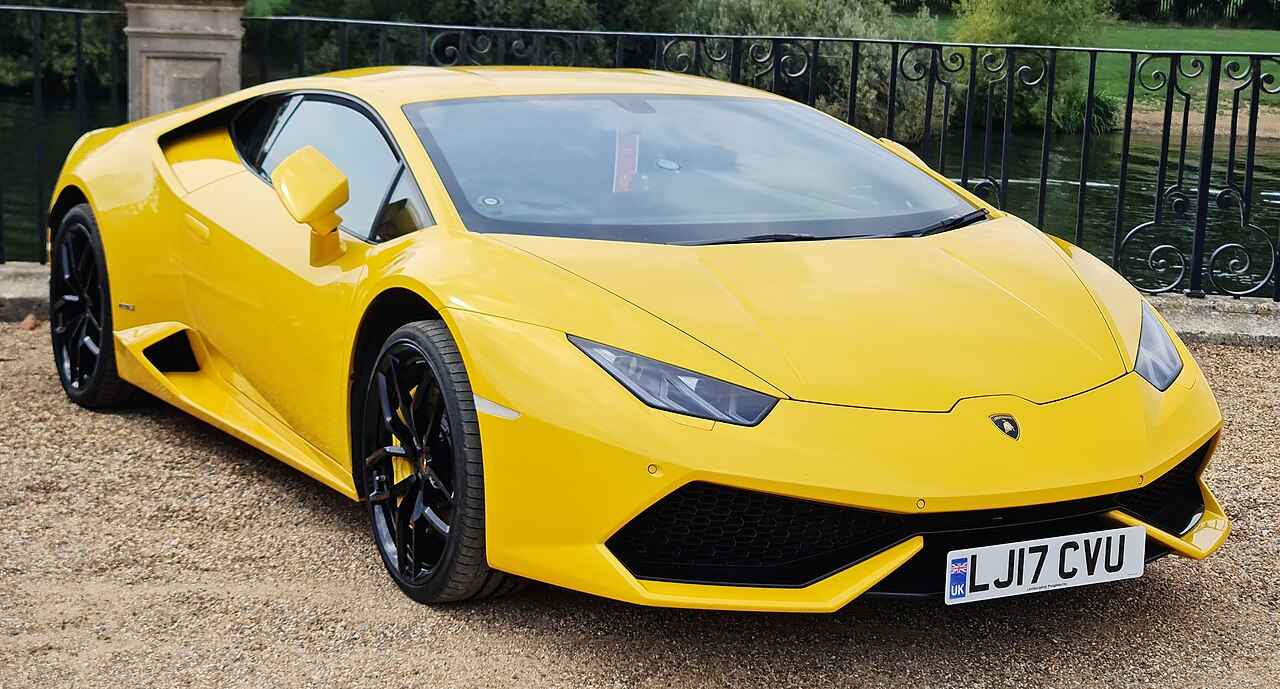 Licensed photo · Photo credit
MakeLamborghini
ClassTwo-seater
Model years (US)2015–2026
New registrations (EU)2014–2025
Recall dataNHTSA (United States)
Generations and technical specifications
Lamborghini Huracán2014–2024
| Specification | Value |
|---|---|
| Production | 2014–2024 |
| Body styles | 2-door coupé 2-door convertible |
| Layout | Longitudinal, mid-engine, four-wheel-drive (LP 610-4, LP 640-4 Performante, LP 640-4 Sterrato) Rear mid-engine, rear-wheel-drive (LP 580-2, LP 620-2, LP 610-2, Tecnica, STO) |
| Platform | Volkswagen Group Modular Sports System Platform |
| Engines | DFJ (2014–2018)/DGF (2019–2024) 5.2 L odd-firing V10 |
| Transmissions | 7-speed dual-clutch |
| Wheelbase | 2,620 mm |
| Length | 4,459 mm (pre-facelift) |
| Width | 1,924 mm (pre-facelift) |
| Kerb weight | (without fluids) 1,553 kg (with fluids) |
| Class | Sports car (S) |
| Assembly | Italy: Sant'Agata Bolognese |
| Designer | Filippo Perini (original design) Mitja Borkert (LP 640-4, facelift) |
Engines and transmissions
| Model years | Engine | Transmission | Drive | Fuel |
|---|---|---|---|---|
| 2015–2024 | 5.2 L, 10 cyl | 7-speed automated manual | All-wheel drive | Petrol (premium) |
| 2017–2024 | 5.2 L, 10 cyl | 7-speed automated manual | Rear-wheel drive | Petrol (premium) |
Fuel economy (EPA)
| Model years | Configuration | Combined | City | Highway |
|---|---|---|---|---|
| 2015–2024 | 5.2 L, 10 cyl · 7-speed automated manual · All-wheel drive | 13.8–15.7 L/100 km | 16.8–18.1 L/100 km | 11.2–13.1 L/100 km |
| 2017–2024 | 5.2 L, 10 cyl · 7-speed automated manual · Rear-wheel drive | 13.8–15.7 L/100 km | 16.8–18.1 L/100 km | 11.2–13.1 L/100 km |
Values are the official EPA label figures for each model year, shown as the lowest and highest value for the configuration. Electric models show energy use per 100 km. Real-world consumption depends on driving style, weather and load. Luggage and passenger volumes follow the EPA measuring method and can differ from the VDA figures used in Europe.
EU type-approval data
| Years | Powertrain | Engine | Power | Mass | CO₂ |
|---|---|---|---|---|---|
| 2014–2021, 2023–2025 | Petrol | 5204 cm³ | 449 kW (610 PS) | 1607–1727 kg | 330–351 g/km (WLTP) |
| 2017–2025 | Petrol | 5204 cm³ | 470 kW (639 PS) | 1525–1727 kg | 328–338 g/km (WLTP) |
| 2016–2019 | Petrol | 5204 cm³ | 426 kW (579 PS) | 1572–1692 kg | 332–345 g/km (WLTP) |
Years are registration years. Each range runs from the 10th to the 90th percentile of the values reported for new registrations; it is not an average. Mass is the mass in running order. For electric cars the power is the type-approval net power, which can be lower than the peak power in brochures.
Key specifications
| Specification | Value |
|---|---|
| EPA size class | Two-seater |
| Model years in EPA data | 2015–2024 |
| Powertrains | Petrol |
| Engine displacement | 5.2 L |
| Cylinders | 10 |
| Transmission types | Automated manual |
| Drive | All-wheel drive, Rear-wheel drive |
| Fuel | Petrol (premium) |
| Configurations listed | 34 |
| Start-stop system | On some versions |
| Powertrains (EU) | Petrol |
| Engine displacement (EU) | 5,204 cm³ |
| Power (EU) | 426–470 kW (579–639 PS) |
| Mass in running order (EU) | 1,525–1,727 kg |
| Wheelbase (EU) | 2,620 mm |
Years and markets
| Specification | Value |
|---|---|
| Model years (US) | 2015–2026 |
| New registrations (EU) | 2014–2025 |
Recalls
Lamborghini Huracan recall: Exterior Lighting:headlightsLamborghini Huracan recall: Structure:body:door:handle:exteriorLamborghini Huracan recall: Power Train:automatic Transmission:fluid/lubricantLamborghini Huracan recall: Back Over Prevention:display FunctionLamborghini Huracan recall: Electrical SystemLamborghini Huracan recall: Exterior Lighting:headlights