Aston Martin
DB9
Aston Martin DB9: official NHTSA recalls, fault code help and maintenance guides.
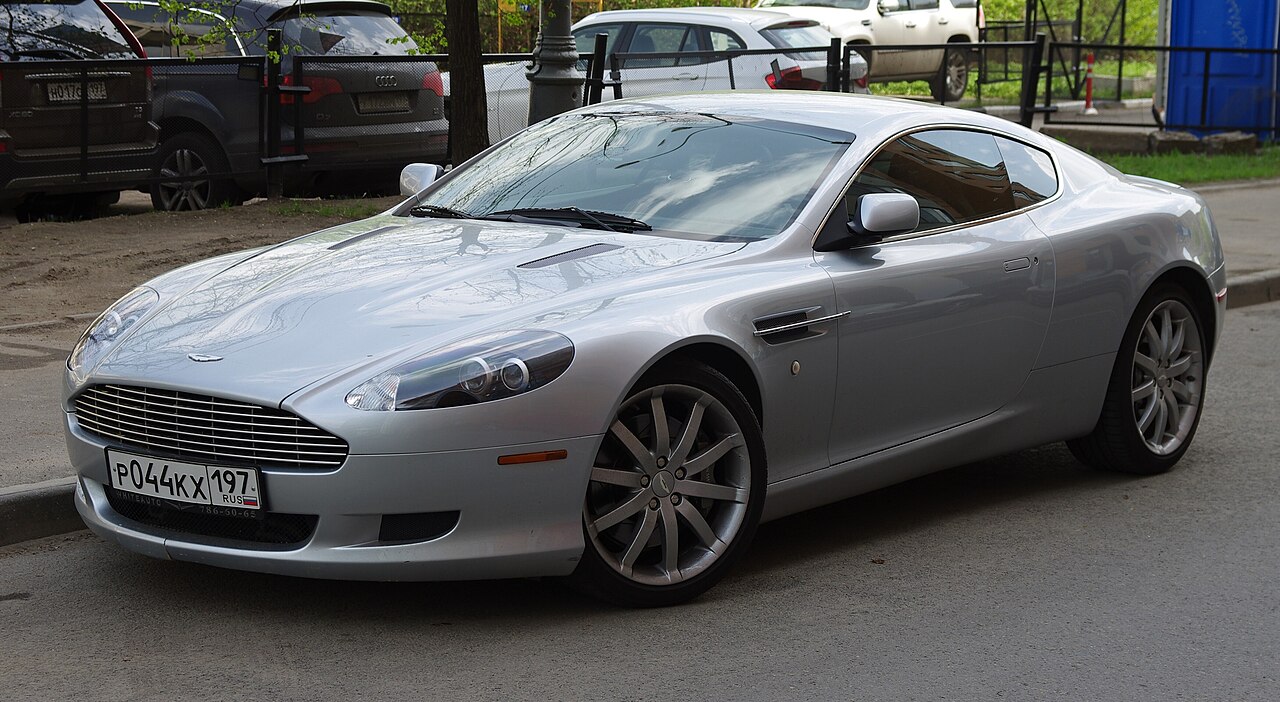 Licensed photo · Photo credit
MakeAston Martin
ClassMinicompact car
Model years (US)2005–2016
New registrations (EU)2004–2018, 2022
Recall dataNHTSA (United States)
Generations and technical specifications
Aston Martin DB92004–2016
| Specification | Value |
|---|---|
| Model code | AM802 |
| Production | January 2004 – July 2016 |
| Body styles | 2+2 2-door coupé 2+2 2-door convertible |
| Layout | Front mid-engine, rear-wheel-drive |
| Platform | Aston Martin VH |
| Engines | 5.9 L Aston Martin V12 |
| Transmissions | 6-speed ZF 6HP 26 (Touchtronic) automatic 6-speed Graziano manual |
| Wheelbase | 2,740–2,745 mm |
| Length | 4,697–4,720 mm |
| Width | 2,017–2,061 mm |
| Height | 1,270–1,282 mm |
| Kerb weight | 1,710–1,785 kg |
| Class | Grand tourer |
| Assembly | United Kingdom: Gaydon, Warwickshire |
| Designer | Ian Callum and Henrik Fisker (2001; initial design) Marek Reichman (facelifts) |
Engines and transmissions
| Model years | Engine | Transmission | Drive | Fuel |
|---|---|---|---|---|
| 2005–2016 | 5.9 L, 12 cyl | 6-speed automatic | Rear-wheel drive | Petrol (premium) |
| 2005–2012 | 5.9 L, 12 cyl | 6-speed manual | Rear-wheel drive | Petrol (premium) |
Fuel economy (EPA)
| Model years | Configuration | Combined | City | Highway |
|---|---|---|---|---|
| 2005–2016 | 5.9 L, 12 cyl · 6-speed automatic · Rear-wheel drive | 15.7–18.1 L/100 km | 18.1–21.4 L/100 km | 11.8–13.8 L/100 km |
| 2005–2012 | 5.9 L, 12 cyl · 6-speed manual · Rear-wheel drive | 18.1–19.6 L/100 km | 21.4–23.5 L/100 km | 13.8–14.7 L/100 km |
Values are the official EPA label figures for each model year, shown as the lowest and highest value for the configuration. Electric models show energy use per 100 km. Real-world consumption depends on driving style, weather and load. Luggage and passenger volumes follow the EPA measuring method and can differ from the VDA figures used in Europe.
EU type-approval data
| Years | Powertrain | Engine | Power | Mass | CO₂ |
|---|---|---|---|---|---|
| 2015–2018 | Petrol | 5935 cm³ | 403 kW (548 PS) | 1860–1965 kg | 325 g/km (NEDC) |
| 2012–2016 | Petrol | 5935 cm³ | 381 kW (518 PS) | 1860–1965 kg | 325–333 g/km (NEDC) |
| 2011–2012 | Petrol | 5935 cm³ | 350 kW (476 PS) | 1875–1930 kg | 345–368 g/km (NEDC) |
Years are registration years. Each range runs from the 10th to the 90th percentile of the values reported for new registrations; it is not an average. Mass is the mass in running order. For electric cars the power is the type-approval net power, which can be lower than the peak power in brochures.
Key specifications
| Specification | Value |
|---|---|
| EPA size class | Minicompact car |
| Model years in EPA data | 2005–2016 |
| Powertrains | Petrol |
| Engine displacement | 5.9 L |
| Cylinders | 12 |
| Transmission types | Automatic, Manual |
| Drive | Rear-wheel drive |
| Fuel | Petrol (premium) |
| Configurations listed | 28 |
| Luggage volume (EPA) | 142 L |
| Passenger volume (EPA) | 2,209 L |
| Powertrains (EU) | Petrol |
| Engine displacement (EU) | 5,935 cm³ |
| Power (EU) | 350–403 kW (476–548 PS) |
| Mass in running order (EU) | 1,860–1,965 kg |
| Wheelbase (EU) | 2,740 mm |
Years and markets
| Specification | Value |
|---|---|
| Model years (US) | 2005–2016 |
| New registrations (EU) | 2004–2018, 2022 |
Recalls
Aston Martin DB9 recall: Power Train:automatic TransmissionAston Martin DB9 recall: Vehicle Speed Control:accelerator PedalAston Martin DB9 recall: Vehicle Speed Control:accelerator PedalAston Martin DB9 recall: Seats:front Assembly:seat Heater/coolerAston Martin DB9 recall: Power Train:automatic Transmission:control Module (tcm/pcm/tecm)Aston Martin DB9 recall: Latches/locks/linkages