Ferrari
GTC4Lusso
Ferrari GTC4Lusso: official NHTSA recalls, fault code help and maintenance guides.
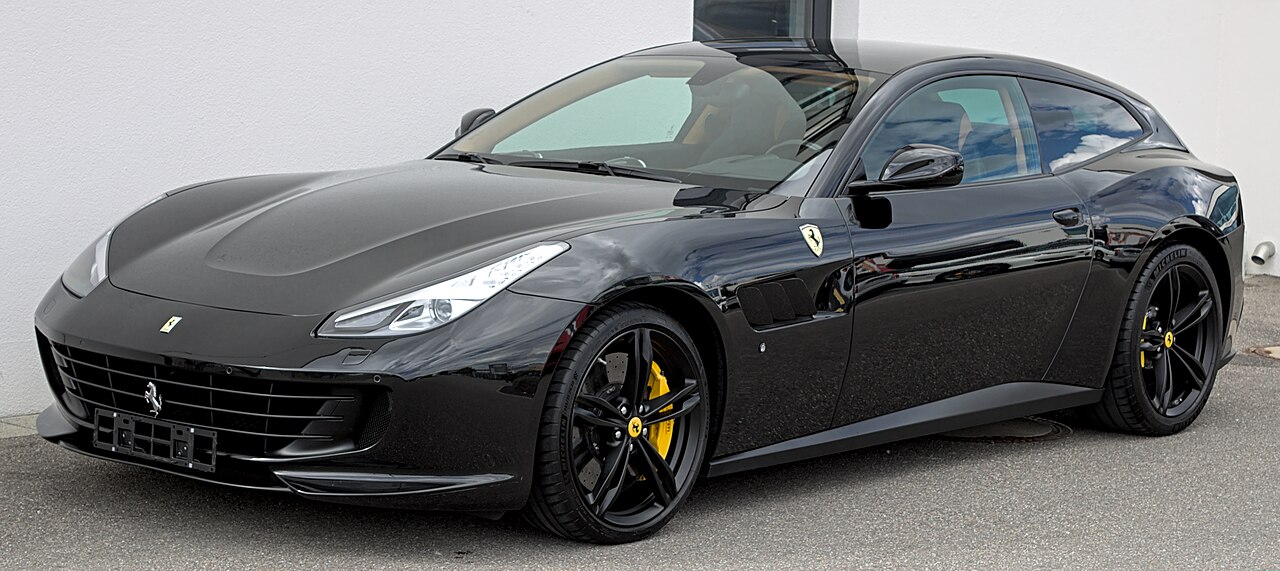 Licensed photo · Photo credit
MakeFerrari
ClassMinicompact car
Model years (US)2017–2020
New registrations (EU)2016–2021
Recall dataNHTSA (United States)
Generations and technical specifications
Ferrari GTC4Lusso2016–2020
| Specification | Value |
|---|---|
| Production | 2016–2020 |
| Body styles | 3-door shooting brake |
| Layout | Front mid-engine, all-wheel drive / rear-wheel drive (GTC4Lusso T) |
| Engines | 3.9 L F154 BD twin-turbocharged V8 (GTC4Lusso T) 6.3 L F140 ED V12 (GTC4Lusso) |
| Transmissions | 7-speed Magna 7DCL750 dual-clutch |
| Wheelbase | 2,990 mm |
| Length | 4,922 mm |
| Width | 1,980 mm |
| Height | 1,383 mm |
| Kerb weight | GTC4Lusso: 1,790 kg (dry) GTC4Lusso T: 1,740 kg (dry) |
| Class | Grand tourer (S) |
| Assembly | Italy: Maranello |
| Designer | Ferrari Styling Centre under Flavio Manzoni |
Engines and transmissions
| Model years | Engine | Transmission | Drive | Fuel |
|---|---|---|---|---|
| 2018–2020 | 3.9 L, 8 cyl | 7-speed automated manual | Rear-wheel drive | Petrol (premium) |
| 2017–2020 | 6.3 L, 12 cyl | 7-speed automated manual | Part-time four-wheel drive | Petrol (premium) |
Fuel economy (EPA)
| Model years | Configuration | Combined | City | Highway |
|---|---|---|---|---|
| 2018–2020 | 3.9 L, 8 cyl · 7-speed automated manual · Rear-wheel drive | 13.8 L/100 km | 15.7 L/100 km | 11.2 L/100 km |
| 2017–2020 | 6.3 L, 12 cyl · 7-speed automated manual · Part-time four-wheel drive | 18.1 L/100 km | 19.6 L/100 km | 13.8 L/100 km |
Values are the official EPA label figures for each model year, shown as the lowest and highest value for the configuration. Electric models show energy use per 100 km. Real-world consumption depends on driving style, weather and load. Luggage and passenger volumes follow the EPA measuring method and can differ from the VDA figures used in Europe.
EU type-approval data
| Years | Powertrain | Engine | Power | Mass | CO₂ |
|---|---|---|---|---|---|
| 2017–2021 | Petrol | 3855 cm³ | 449 kW (610 PS) | 1940 kg | 294 g/km (WLTP) |
| 2016–2021 | Petrol | 6262 cm³ | 507 kW (689 PS) | 1955–1995 kg | 366 g/km (WLTP) |
| 2020 | Petrol | 6262 cm³ | 585 kW (795 PS) | 1995 kg | 366 g/km (WLTP) |
| 2017 | Petrol | 6262 cm³ | 761 kW (1035 PS) | 2070 kg | 350 g/km (NEDC) |
Years are registration years. Each range runs from the 10th to the 90th percentile of the values reported for new registrations; it is not an average. Mass is the mass in running order. For electric cars the power is the type-approval net power, which can be lower than the peak power in brochures.
Key specifications
| Specification | Value |
|---|---|
| EPA size class | Minicompact car |
| Model years in EPA data | 2017–2020 |
| Powertrains | Petrol |
| Engine displacement | 3.9–6.3 L |
| Cylinders | 8, 12 |
| Transmission types | Automated manual |
| Drive | Part-time four-wheel drive, Rear-wheel drive |
| Fuel | Petrol (premium) |
| Configurations listed | 7 |
| Forced induction | Turbocharged (on some versions) |
| Start-stop system | Yes |
| Luggage volume (EPA) | 198 L |
| Passenger volume (EPA) | 1,954–1,982 L |
| Powertrains (EU) | Petrol |
| Engine displacement (EU) | 3,855–6,262 cm³ |
| Power (EU) | 449–507 kW (610–689 PS) |
| Mass in running order (EU) | 1,940–1,995 kg |
| Wheelbase (EU) | 2,990 mm |
Years and markets
| Specification | Value |
|---|---|
| Model years (US) | 2017–2020 |
| New registrations (EU) | 2016–2021 |