Fisker
Ocean
Fisker Ocean: years registered new in Europe, fault code help, warning lights and maintenance guides.
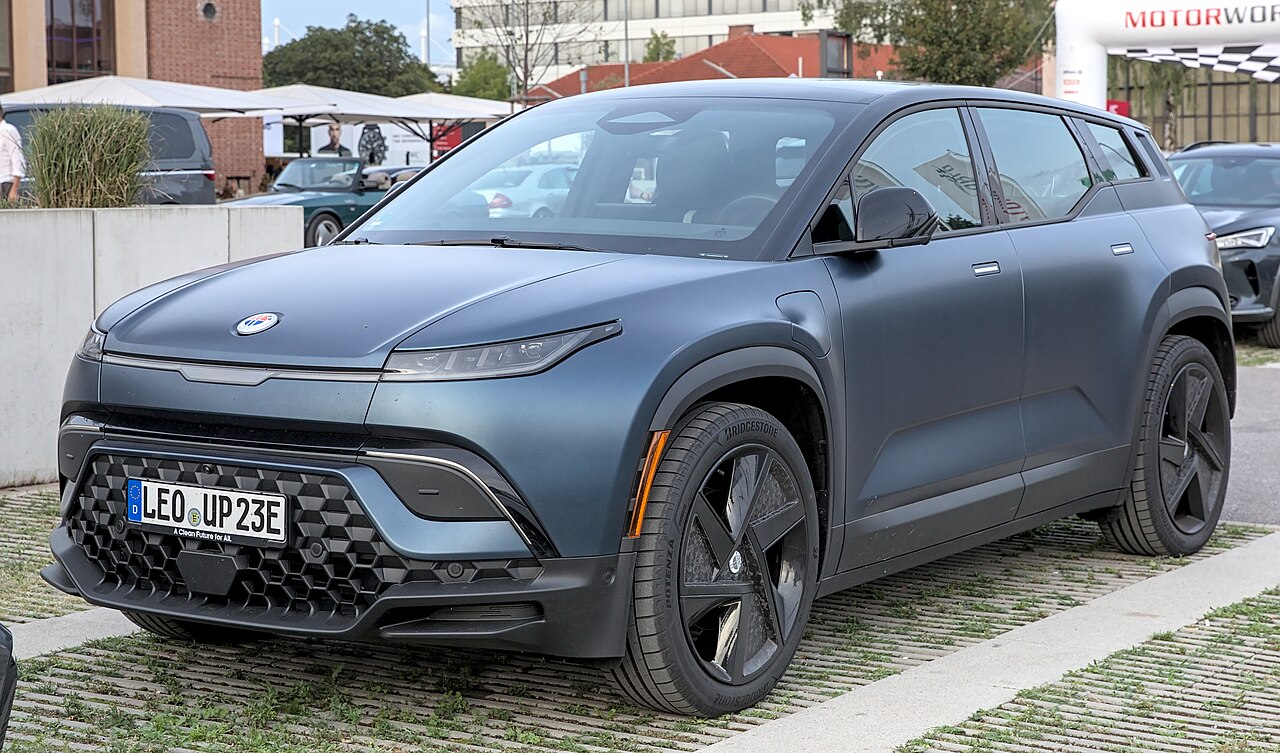 Licensed photo · Photo credit
MakeFisker
ClassStandard SUV
Model years (US)2023–2024
New registrations (EU)2023–2025
Generations and technical specifications
Fisker Ocean2022–2024
| Specification | Value |
|---|---|
| Production | 2022–2024 |
| Body styles | 5-door SUV |
| Layout | Dual-motor, all-wheel-drive (One/Extreme/Ultra) Front-motor, front-wheel-drive (Sport) |
| Electric motor | 420 kW 2x Permanent-Magnet Synchronous AC Motors (One/Extreme) 205 kW x1 Permanent-Magnet Synchronous AC Motor (Sport) |
| Transmissions | 1-speed EVT |
| Battery | 113 kWh Total Capacity 106.5 kWh Usable lithium-ion battery(One/Extreme/Ultra) 80 kWh Total Capacity 75 kWh Usable lithium iron phosphate battery(Sport) |
| Electric range | NEDC Cycle 708 km (One/Extreme) 463 km (Sport) EPA Cycle 579 km (One/Extreme) 563 km (Ultra) 372 km (Sport) |
| Wheelbase | 2,921 mm |
| Length | 4,774 mm |
| Width | 1,982 mm |
| Height | 1,631 mm 20" Wheel 1,654 mm 22" Wheel |
| Kerb weight | 2,435–2,509 kg |
| Class | Mid-size crossover SUV |
| Assembly | Austria: Graz (Magna Steyr) |
| Designer | Henrik Fisker |
Engines and transmissions
| Model years | Engine | Transmission | Drive | Fuel |
|---|---|---|---|---|
| 2024 | Electric motor | Single-speed | Front-wheel drive | Electricity |
| 2023 | Electric motor | Single-speed | Part-time four-wheel drive | Electricity |
Fuel economy (EPA)
| Model years | Configuration | Combined | City | Highway | Electric range |
|---|---|---|---|---|---|
| 2024 | Electric motor · Single-speed · Front-wheel drive | 22.7–26.6 kWh/100 km | 20.2–25.4 kWh/100 km | 25.9–28.0 kWh/100 km | 312–372 km |
| 2023 | Electric motor · Single-speed · Part-time four-wheel drive | 22.9 kWh/100 km | 21.2 kWh/100 km | 24.9 kWh/100 km | 579 km |
Values are the official EPA label figures for each model year, shown as the lowest and highest value for the configuration. Electric models show energy use per 100 km. Real-world consumption depends on driving style, weather and load. Luggage and passenger volumes follow the EPA measuring method and can differ from the VDA figures used in Europe.
EU type-approval data
| Years | Powertrain | Power | Mass | Electric range |
|---|---|---|---|---|
| 2023–2025 | Electric | 175 kW (238 PS) | 2509–2526 kg | 701 km · 183–185 Wh/km |
| 2023–2025 | Electric | 179 kW (243 PS) | 2509–2526 kg | 701–707 km · 183–185 Wh/km |
| 2023–2025 | Electric | 351 kW (477 PS) | 2526–2559 kg | 701 km · 183 Wh/km |
| 2023–2025 | Electric | 352 kW (479 PS) | 2508–2557 kg | 701–707 km · 183–185 Wh/km |
| 2023–2024 | Electric | 176 kW (239 PS) | 2509–2526 kg | 690–701 km · 183–190 Wh/km |
Years are registration years. Each range runs from the 10th to the 90th percentile of the values reported for new registrations; it is not an average. Mass is the mass in running order. For electric cars the power is the type-approval net power, which can be lower than the peak power in brochures.
Key specifications
| Specification | Value |
|---|---|
| EPA size class | Standard SUV |
| Model years in EPA data | 2023–2024 |
| Powertrains | Electric |
| Transmission types | Single-speed |
| Drive | Front-wheel drive, Part-time four-wheel drive |
| Fuel | Electricity |
| Configurations listed | 3 |
| Electric motor (EPA) | 207 kW AC PMSM; 207 and 207 kW AC Induction |
| Electric range (EPA) | 312–579 km |
| Powertrains (EU) | Electric |
| Power (EU) | 175–352 kW (238–479 PS) |
| Mass in running order (EU) | 2,508–2,559 kg |
Years and markets
| Specification | Value |
|---|---|
| Model years (US) | 2023–2024 |
| New registrations (EU) | 2023–2025 |