Rolls-Royce
Ghost
Rolls-Royce Ghost: official NHTSA recalls, fault code help and maintenance guides.
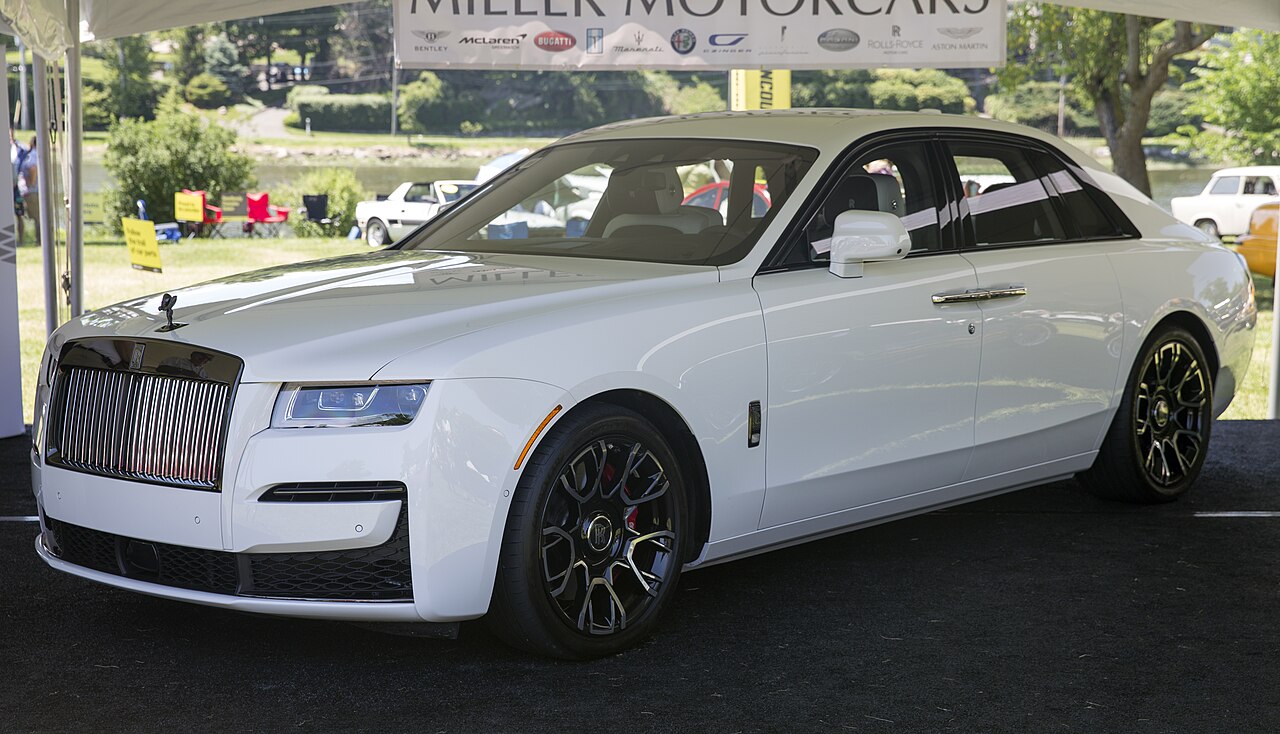 Licensed photo · Photo credit
MakeRolls-Royce
ClassLarge car
Model years (US)2010–2027
New registrations (EU)2009–2025
Recall dataNHTSA (United States)
Generations and technical specifications
Rolls-Royce Ghost – Second generation2020–present
| Specification | Value |
|---|---|
| Production | 2020–present |
| Model years | 2021–present |
| Platform | Architecture of Luxury |
| Engines | 6.75 L N74B68 twin-turbocharged V12 (petrol) |
| Transmissions | 8-speed 8HP90 automatic |
| Wheelbase | 3,295 mm 3,465 mm (Extended Wheelbase) |
| Length | 5,545 mm 5,715 mm (Extended Wheelbase) |
| Width | 1,979 mm |
| Height | 1,550–1,552 mm |
| Kerb weight | 2,553 kg 2,599 kg (Extended Wheelbase) |
| Designer | Henry Cloke |
Rolls-Royce Ghost – First generation2009–2020
| Specification | Value |
|---|---|
| Production | September 2009 – 2020 |
| Model years | 2010–2020 |
| Platform | BMW L6 |
| Engines | 6.6 L N74B66 V12-T |
| Transmissions | 8-speed 8HP90 automatic |
| Wheelbase | 3,295 mm 3,465 mm (Extended Wheelbase) |
| Length | 5,399 mm 5,569 mm (Extended Wheelbase) |
| Width | 1,948 mm |
| Height | 1,550 mm |
| Kerb weight | 2,490 kg 2,520 kg (Extended Wheelbase) |
| Designer | Andreas Thurner (2006) Charles Coldham (interior) |
Engines and transmissions
| Model years | Engine | Transmission | Drive | Fuel |
|---|---|---|---|---|
| 2021–2027 | 6.7 L, 12 cyl | 8-speed automatic | All-wheel drive | Petrol (premium) |
| 2010–2020 | 6.6 L, 12 cyl | 8-speed automatic | Rear-wheel drive | Petrol (premium) |
Fuel economy (EPA)
| Model years | Configuration | Combined | City | Highway |
|---|---|---|---|---|
| 2021–2027 | 6.7 L, 12 cyl · 8-speed automatic · All-wheel drive | 16.8–18.1 L/100 km | 19.6–21.4 L/100 km | 12.4–13.1 L/100 km |
| 2010–2020 | 6.6 L, 12 cyl · 8-speed automatic · Rear-wheel drive | 15.7–16.8 L/100 km | 18.1–19.6 L/100 km | 11.2–13.1 L/100 km |
Values are the official EPA label figures for each model year, shown as the lowest and highest value for the configuration. Electric models show energy use per 100 km. Real-world consumption depends on driving style, weather and load. Luggage and passenger volumes follow the EPA measuring method and can differ from the VDA figures used in Europe.
EU type-approval data
| Years | Powertrain | Engine | Power | Mass | CO₂ |
|---|---|---|---|---|---|
| 2020–2025 | Petrol | 6749 cm³ | 420 kW (571 PS) | 2565–2605 kg | 352–358 g/km (WLTP) |
| 2021–2025 | Petrol | 6749 cm³ | 441 kW (600 PS) | 2575 kg | 359 g/km (WLTP) |
| 2011–2020, 2024 | Petrol | 6592 cm³ | 420 kW (571 PS) | 2435–2525 kg | 363–373 g/km (WLTP) |
| 2019–2020 | Petrol | 6592 cm³ | 441 kW (600 PS) | 2435–2575 kg | 375–377 g/km (WLTP) |
| 2017–2019 | Petrol | 6592 cm³ | 450 kW (612 PS) | 2435 kg | 333 g/km (NEDC) |
Years are registration years. Each range runs from the 10th to the 90th percentile of the values reported for new registrations; it is not an average. Mass is the mass in running order. For electric cars the power is the type-approval net power, which can be lower than the peak power in brochures.
Key specifications
| Specification | Value |
|---|---|
| EPA size class | Large car |
| Model years in EPA data | 2010–2027 |
| Powertrains | Petrol |
| Engine displacement | 6.6–6.7 L |
| Cylinders | 12 |
| Transmission types | Automatic |
| Drive | All-wheel drive, Rear-wheel drive |
| Fuel | Petrol (premium) |
| Configurations listed | 41 |
| Forced induction | Turbocharged |
| Luggage volume (EPA) | 368–396 L |
| Passenger volume (EPA) | 3,143–3,398 L |
| Powertrains (EU) | Petrol |
| Engine displacement (EU) | 6,592–6,749 cm³ |
| Power (EU) | 420–450 kW (571–612 PS) |
| Mass in running order (EU) | 2,435–2,605 kg |
| Wheelbase (EU) | 3,112–3,465 mm |
Years and markets
| Specification | Value |
|---|---|
| Model years (US) | 2010–2027 |
| New registrations (EU) | 2009–2025 |