Acura
NSX
Acura NSX: official NHTSA recalls, fault code help and maintenance guides.
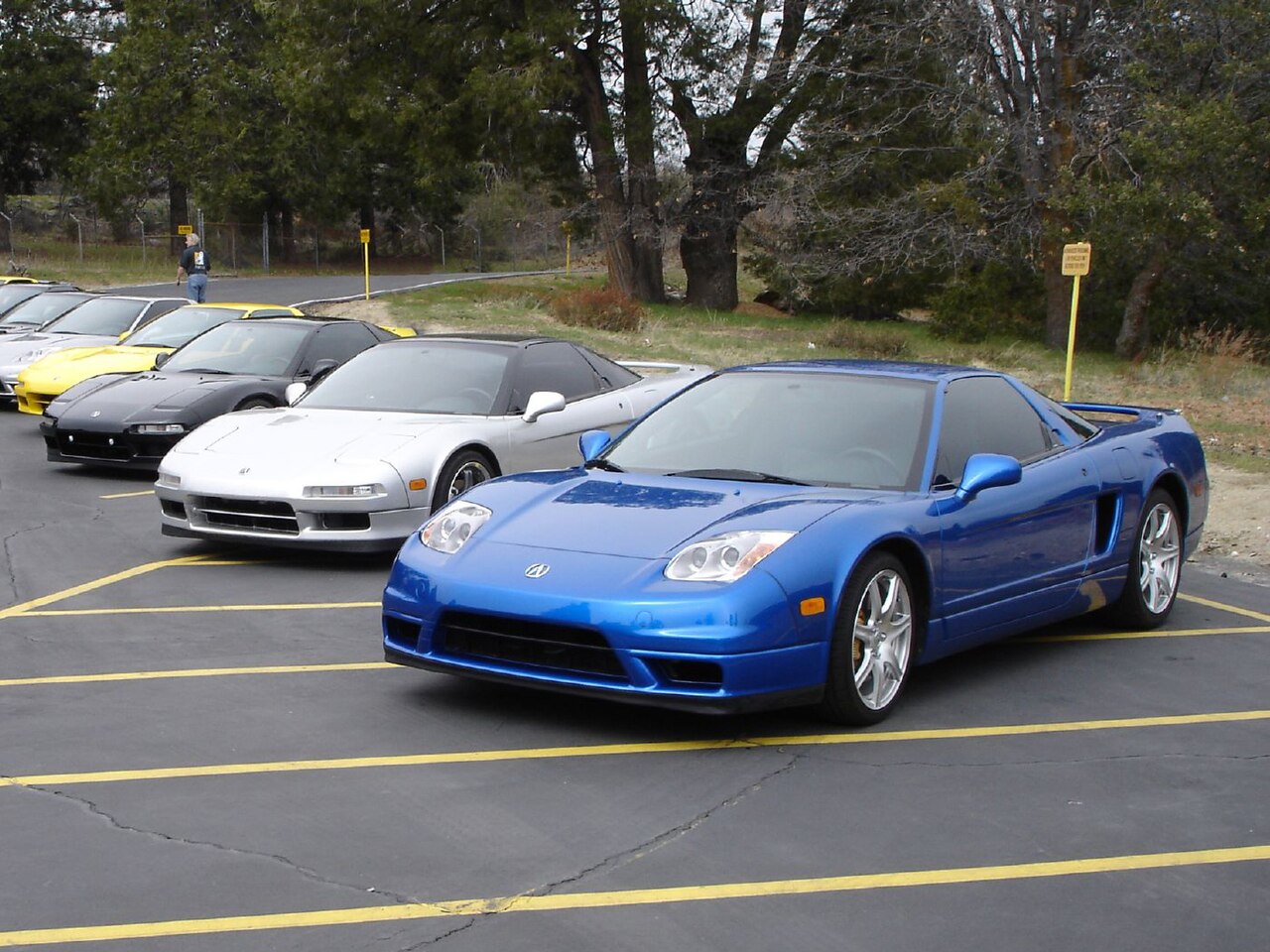 Licensed photo · Photo credit
MakeAcura
ClassTwo-seater
Model years (US)2000–2005, 2016–2022
Recall dataNHTSA (United States)
Generations and technical specifications
Honda NSX (second generation)2016–2026
| Specification | Value |
|---|---|
| Production | May 2016 – 2021 (regular models) 2022 (Type S models) 2026 (Tribute by Italdesign) |
| Model years | 2017–2022 2022 (Type S) |
| Body styles | 2-door coupé |
| Layout | Longitudinal mid-engine, all-wheel drive |
| Engines | 3,493 cc JNC1 twin-turbo V6 75° |
| Electric motor | Dual front Twin-motor Unit (TMU) electric motors, single rear Direct Drive electric motor |
| Transmissions | 9-speed dual-clutch |
| Drivetrain | Full hybrid |
| Battery | Lithium-ion |
| Wheelbase | 2,630 mm |
| Length | 4,470 mm (2016–2018) 4,490 mm (2019–2021) 4,535 mm (Type S) |
| Width | 1,938 mm |
| Height | 1,215 mm |
| Kerb weight | 1,725–1,796 kg |
| Class | Sports car (S) |
| Assembly | United States: Marysville, Ohio (Performance Manufacturing Center) |
| Designer | Jun Goto and Toshinobu Minami Michelle Christensen (production version) Dai Hara (Type S exterior) |
Honda NSX (first generation)1990–2005
| Specification | Value |
|---|---|
| Production | August 1990 – November 30, 2005 |
| Model years | 1991–2005 |
| Body styles | 2-door coupé 2-door targa top |
| Layout | Transverse Rear-mid-engine, rear-wheel drive |
| Engines | 2,977 cm³ Honda C30A V6 3,179 cm³ Honda C32B V6 |
| Transmissions | 4-speed automatic 5-speed manual 6-speed manual |
| Wheelbase | 2,530 mm |
| Length | 4,405 mm (1991–1993) 4,425 mm (1994–2005) |
| Width | 1,810 mm |
| Height | 1,170 mm 1,160 mm (1997 onwards) |
| Kerb weight | (1991–1992): 1,365 kg (1993–1994): 1,370 kg (1992–1995 NSX-R): 1,230 kg (1995–1996): 1,425 kg (1997–2001): 1,435 kg (1997–2001 Type S): 1,320 kg (1997–2001 Type S-Zero): 1,270 kg (2002–2005): 1,430 kg (2002–2005 NSX-R): 1,270 kg |
| Class | Sports car (S) |
| Assembly | Takanezawa R&D Plant, Tochigi, Japan (1990–2003) Suzuka R&D Plant, Suzuka, Japan (2004–2005) |
| Designer | Ken Okuyama (1987) Masahito Nakano (1987) Shigeru Uehara (1988) James Stevens (1988) |
Engines and transmissions
| Model years | Engine | Transmission | Drive | Fuel |
|---|---|---|---|---|
| 2017–2022 | 3.5 L, 6 cyl hybrid | 9-speed automated manual | All-wheel drive | Petrol (premium) |
| 2000–2005 | 3.0 L, 6 cyl | 4-speed automatic | Rear-wheel drive | Petrol (premium) |
| 2000–2005 | 3.2 L, 6 cyl | 6-speed manual | Rear-wheel drive | Petrol (premium) |
Fuel economy (EPA)
| Model years | Configuration | Combined | City | Highway |
|---|---|---|---|---|
| 2017–2022 | 3.5 L, 6 cyl hybrid · 9-speed automated manual · All-wheel drive | 11.2 L/100 km | 11.2 L/100 km | 10.7 L/100 km |
| 2000–2005 | 3.0 L, 6 cyl · 4-speed automatic · Rear-wheel drive | 13.1 L/100 km | 14.7–15.7 L/100 km | 10.7 L/100 km |
| 2000–2005 | 3.2 L, 6 cyl · 6-speed manual · Rear-wheel drive | 13.1 L/100 km | 14.7–15.7 L/100 km | 10.7 L/100 km |
Values are the official EPA label figures for each model year, shown as the lowest and highest value for the configuration. Electric models show energy use per 100 km. Real-world consumption depends on driving style, weather and load. Luggage and passenger volumes follow the EPA measuring method and can differ from the VDA figures used in Europe.
Key specifications
| Specification | Value |
|---|---|
| EPA size class | Two-seater |
| Model years in EPA data | 2000–2005, 2017–2022 |
| Powertrains | Hybrid, Petrol |
| Engine displacement | 3.0–3.5 L |
| Cylinders | 6 |
| Transmission types | Automated manual, Automatic, Manual |
| Drive | All-wheel drive, Rear-wheel drive |
| Fuel | Petrol (premium) |
| Configurations listed | 18 |
| Forced induction | Turbocharged (on some versions) |
| Start-stop system | Yes |
Years and markets
| Specification | Value |
|---|---|
| Model years (US) | 2000–2005, 2016–2022 |