Hyundai
H-1
Hyundai H-1: years registered new in Europe, fault code help, warning lights and maintenance guides.
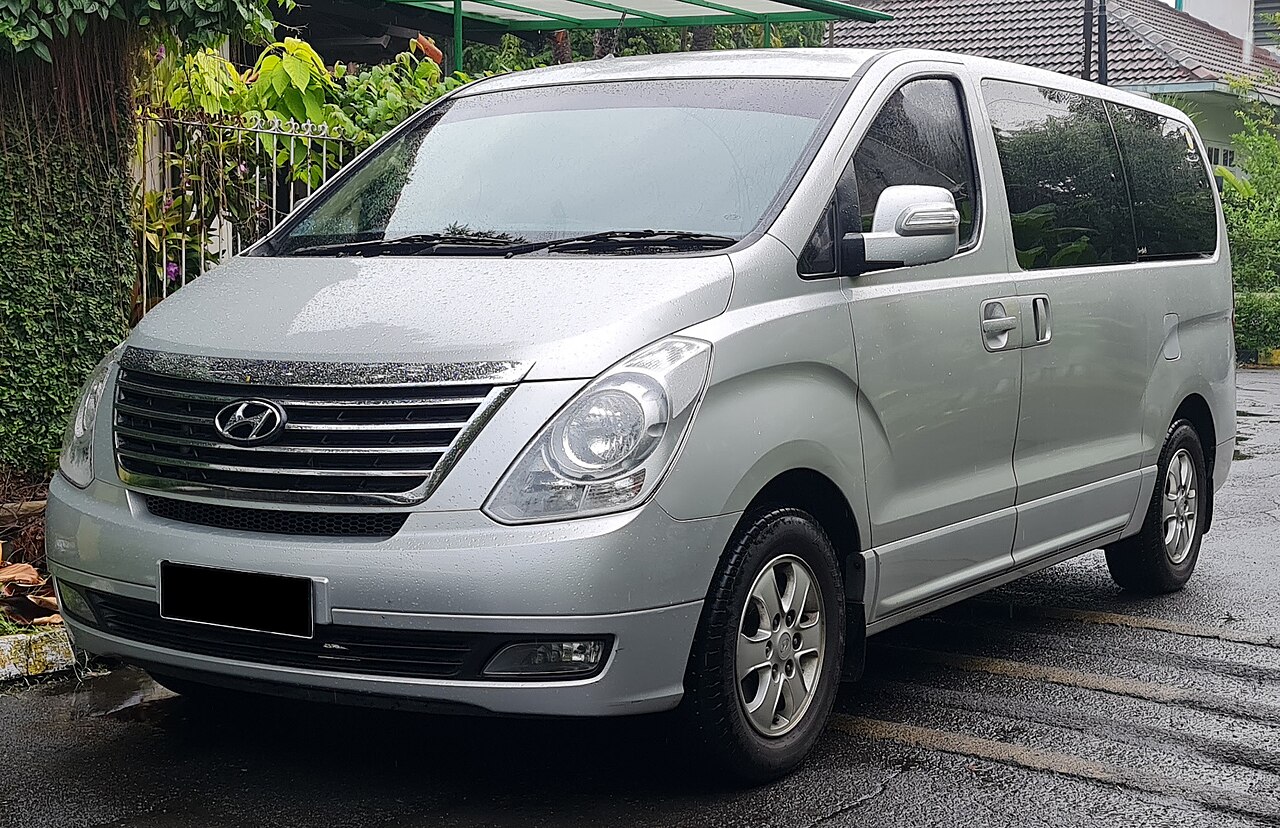 Licensed photo · Photo credit
MakeHyundai
New registrations (EU)2002, 2007, 2010–2021
EU type-approval data
| Years | Powertrain | Engine | Power | Mass | CO₂ |
|---|---|---|---|---|---|
| 2011–2020 | Diesel | 2497 cm³ | 85 kW (116 PS) | 2250–2313 kg | 234 g/km (WLTP) |
| 2011–2020 | Diesel | 2497 cm³ | 100 kW (136 PS) | 2250–2323 kg | 234 g/km (WLTP) |
| 2011–2020 | Diesel | 2497 cm³ | 125 kW (170 PS) | 2250–2323 kg | 265 g/km (WLTP) |
| 2011–2012 | Diesel | 2497 cm³ | 120 kW (163 PS) | 2250–2313 kg | 225 g/km (NEDC) |
| 2011 | Diesel | 2497 cm³ | 81 kW (110 PS) | 2313 kg | 220 g/km (NEDC) |
Years are registration years. Each range runs from the 10th to the 90th percentile of the values reported for new registrations; it is not an average. Mass is the mass in running order. For electric cars the power is the type-approval net power, which can be lower than the peak power in brochures.
Key specifications
| Specification | Value |
|---|---|
| Powertrains (EU) | Diesel |
| Engine displacement (EU) | 2,497 cm³ |
| Power (EU) | 85–125 kW (116–170 PS) |
| Mass in running order (EU) | 2,250–2,323 kg |
| Wheelbase (EU) | 3,200 mm |
Years and markets
| Specification | Value |
|---|---|
| New registrations (EU) | 2002, 2007, 2010–2021 |