9-3
Saab 9-3: official NHTSA recalls, fault code help and maintenance guides.
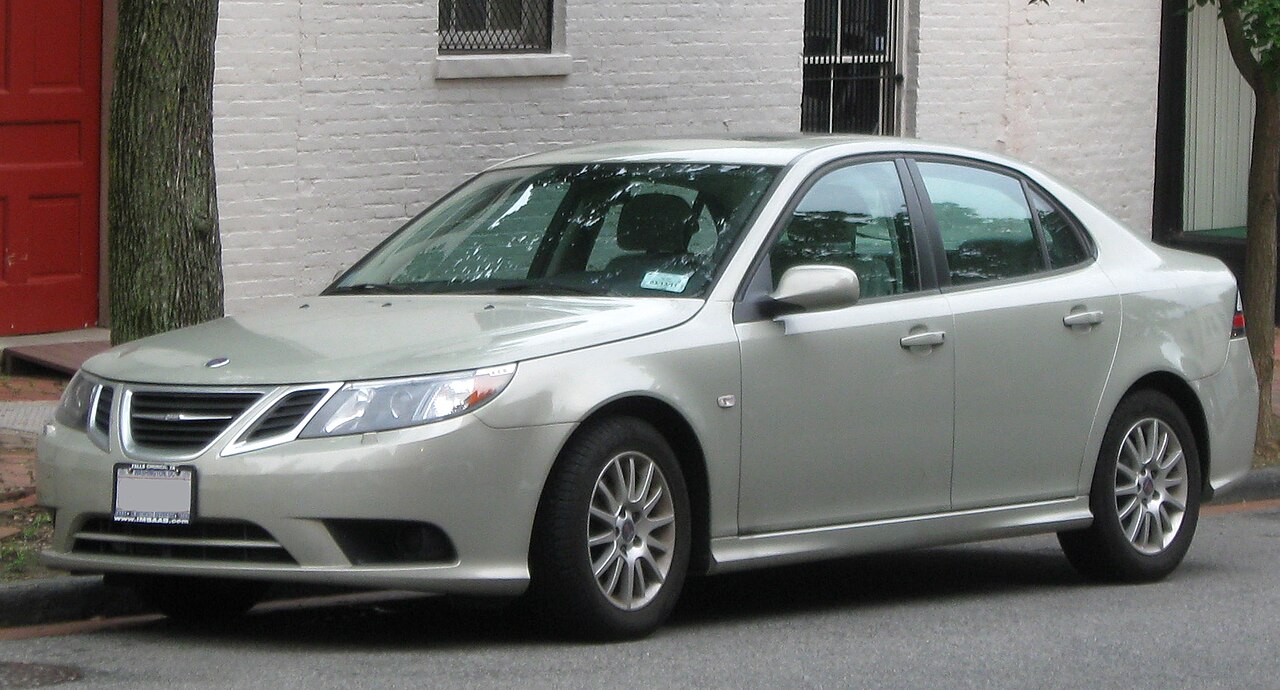 Licensed photo · Photo credit
Generations and technical specifications
Saab 9-3 Aero MY142013–2014
| Specification | Value |
|---|---|
| Production | December 2013 – May 2014 |
| Body styles | 4-door sedan |
| Layout | Transverse front-engine, front-wheel drive |
| Platform | GM Epsilon platform |
| Engines | 2.0 L A20NHT turbo I4 |
| Transmissions | 6-speed F40 manual 6-speed Aisin AF40-6 automatic |
| Wheelbase | 2,675 mm |
| Length | Sedan: 4,668 mm |
| Width | Sedan: 2,038 mm |
| Height | Sedan: 1,450 mm |
| Kerb weight | 1,410–1,690 kg |
| Assembly | Sweden: Trollhättan (NEVS) |
| Designer | Michael Mauer, Einar Hareide, Anders Gustafsson |
Saab 9-3 – Second generation (YS3F)2002–2014
| Specification | Value |
|---|---|
| Production | January 2002–2012 December 2013–2014 |
| Body styles | 2-door convertible 4-door sedan 5-door station wagon |
| Layout | Front-engine, front-wheel drive / all-wheel drive |
| Platform | GM Epsilon platform |
| Engines | Petrol 1.8 L Z18XE I4 2.0 L B207E Low-pressure-turbo I4 2.0 L B207L Mid-pressure-turbo I4 2.0 L B207R High-pressure-turbo I4 2.8 L B284 turbo V6 Diesel 1.9 L Z19DT/DTH turbo I4 1.9 L Z19DTR / A19DTR twin-turbo I4 2.2 L D223L turbo I4 |
| Transmissions | 5-speed F35 manual 6-speed F40 manual 5-speed Aisin AF33 automatic 6-speed Aisin AF40-6 automatic |
| Wheelbase | 2,675 mm |
| Length | 2003–07: 4,633 mm (convertible) 2003–07: 4,635 mm (sedan) 2003–09: 4,653 mm (wagon, Turbo X) 2008–09: 4,671 mm (convertible) 2008–14: 4,647 mm (sedan) 2010–14: 4,671–4,689 mm (wagon) |
| Width | 2008–09: 1,760 mm (convertible) 2008–09: 1,753 mm (sedan) 2010–14: 1,781 mm (convertible) 2010–14: 1,801 mm 1,763 mm (Turbo X, wagon) |
| Height | 2003–07: 1,433 mm (convertible) 2003–07: 1,443 mm (sedan) 2003–07: 1,540 mm (wagon) 2008–14: 1,438 mm (convertible) 2008–14: 1,450 mm (sedan) 2008–14: 1,496 mm (wagon, Turbo X) 2010–14: 1,529 mm (wagon) |
| Kerb weight | 2008–09 1,410–1,690 kg |
| Assembly | Sweden: Trollhättan (sedan; 2002–2011 and 2013–2014, wagon; 2005–2011 and convertible; 2010–2011) Sweden: Nyköping (ANA: convertible; 2012) Austria: Graz (Magna Steyr: convertible; 2003–2009) |
| Designer | Michael Mauer, Einar Hareide, Anders Gustafsson |
Engines and transmissions
| Model years | Engine | Transmission | Drive | Fuel |
|---|---|---|---|---|
| 2010–2012 | 2.0 L, 4 cyl | 6-speed automatic | All-wheel drive | Petrol (regular) |
| 2012 | 2.0 L, 4 cyl | 6-speed automatic | Front-wheel drive | Petrol or E85 (flex-fuel) |
| 2010–2012 | 2.0 L, 4 cyl | 6-speed manual | All-wheel drive | Petrol (regular) |
| 2012 | 2.0 L, 4 cyl | 6-speed manual | Front-wheel drive | Petrol or E85 (flex-fuel) |
| 2003–2005, 2009–2011 | 2.0 L, 4 cyl | 5-speed automatic | Front-wheel drive | Petrol (regular) |
| 2009–2011 | 2.0 L, 4 cyl | 6-speed manual | Front-wheel drive | Petrol (regular) |
| 2010 | 2.0 L, 4 cyl | 5-speed automatic | All-wheel drive | Petrol (premium) |
| 2009 | 2.0 L, 4 cyl | 6-speed automatic | Four-wheel or all-wheel drive | Petrol (regular) |
| 2009 | 2.0 L, 4 cyl | 6-speed manual | Four-wheel or all-wheel drive | Petrol (regular) |
| 2009 | 2.8 L, 6 cyl | 6-speed automatic | Four-wheel or all-wheel drive | Petrol (regular) |
| 2007, 2009 | 2.8 L, 6 cyl | 6-speed automatic | Front-wheel drive | Petrol (regular) |
| 2009 | 2.8 L, 6 cyl | 6-speed manual | Four-wheel or all-wheel drive | Petrol (regular) |
| +12 more configurations |
Fuel economy (EPA)
| Model years | Configuration | Combined | City | Highway |
|---|---|---|---|---|
| 2010–2012 | 2.0 L, 4 cyl · 6-speed automatic · All-wheel drive | 10.7–11.8 L/100 km | 13.1–13.8 L/100 km | 8.4–8.7 L/100 km |
| 2012 | 2.0 L, 4 cyl · 6-speed automatic · Front-wheel drive | 10.7–11.2 L/100 km | 12.4–13.1 L/100 km | 8.1–8.4 L/100 km |
| 2010–2012 | 2.0 L, 4 cyl · 6-speed manual · All-wheel drive | 10.2 L/100 km | 11.8 L/100 km | 7.8–8.1 L/100 km |
| 2003–2004, 2007–2012 | 2.0 L, 4 cyl · 6-speed manual · Front-wheel drive | 9.8–11.2 L/100 km | 11.2–13.1 L/100 km | 7.4–9.4 L/100 km |
| 2003–2011 | 2.0 L, 4 cyl · 5-speed automatic · Front-wheel drive | 10.2–12.4 L/100 km | 12.4–13.8 L/100 km | 8.1–9.8 L/100 km |
| 2010 | 2.0 L, 4 cyl · 5-speed automatic · All-wheel drive | 10.7 L/100 km | 12.4 L/100 km | 8.7 L/100 km |
| 2009 | 2.0 L, 4 cyl · 6-speed automatic · Four-wheel or all-wheel drive | 11.2 L/100 km | 13.8 L/100 km | 8.7 L/100 km |
| 2009 | 2.0 L, 4 cyl · 6-speed manual · Four-wheel or all-wheel drive | 11.2 L/100 km | 13.1 L/100 km | 9.0 L/100 km |
| 2008–2009 | 2.8 L, 6 cyl · 6-speed automatic · Four-wheel or all-wheel drive | 13.1 L/100 km | 15.7 L/100 km | 9.8 L/100 km |
| 2006–2009 | 2.8 L, 6 cyl · 6-speed automatic · Front-wheel drive | 12.4–13.1 L/100 km | 15.7 L/100 km | 9.0–9.8 L/100 km |
| 2008–2009 | 2.8 L, 6 cyl · 6-speed manual · Four-wheel or all-wheel drive | 12.4–13.1 L/100 km | 14.7–15.7 L/100 km | 9.8 L/100 km |
| 2006–2009 | 2.8 L, 6 cyl · 6-speed manual · Front-wheel drive | 12.4 L/100 km | 14.7 L/100 km | 9.0 L/100 km |
| +3 more configurations |
Values are the official EPA label figures for each model year, shown as the lowest and highest value for the configuration. Electric models show energy use per 100 km. Real-world consumption depends on driving style, weather and load. Luggage and passenger volumes follow the EPA measuring method and can differ from the VDA figures used in Europe.
EU type-approval data
| Years | Powertrain | Engine | Power | Mass | CO₂ |
|---|---|---|---|---|---|
| 2011, 2014–2015 | Petrol | 1998 cm³ | 162 kW (220 PS) | 1605–1618 kg | 170–200 g/km (NEDC) |
| 2011–2013 | Diesel | 1910 cm³ | 96 kW (131 PS) | 1600–1680 kg | 119–122 g/km (NEDC) |
| 2011–2013 | Diesel | 1910 cm³ | 118 kW (160 PS) | 1600–1765 kg | 119–159 g/km (NEDC) |
| 2011–2013 | Diesel | 1910 cm³ | 132 kW (179 PS) | 1635–1770 kg | 122–162 g/km (NEDC) |
| 2011–2012 | Petrol | 1998 cm³ | 110 kW (150 PS) | 1495–1680 kg | 164–214 g/km (NEDC) |
| 2011–2012 | Petrol | 1998 cm³ | 129 kW (175 PS) | 1495–1675 kg | 164–209 g/km (NEDC) |
| 2011–2012 | Petrol | 1998 cm³ | 154 kW (209 PS) | 1540–1755 kg | 169–242 g/km (NEDC) |
| 2011–2012 | E85 flex-fuel | 1998 cm³ | 129 kW (175 PS) | 1548–1618 kg | 169–199 g/km (NEDC) |
| 2010–2011 | Petrol | 2792 cm³ | – | 1765–1810 kg | 254–279 g/km (NEDC) |
| 2010–2011 | Natural gas (CNG) | 1998 cm³ | – | 1720–1725 kg | 152–174 g/km (NEDC) |
Years are registration years. Each range runs from the 10th to the 90th percentile of the values reported for new registrations; it is not an average. Mass is the mass in running order. For electric cars the power is the type-approval net power, which can be lower than the peak power in brochures.
Key specifications
| Specification | Value |
|---|---|
| EPA size class | Compact car, Small estate, Subcompact car, Midsize car |
| Model years in EPA data | 2000–2012 |
| Powertrains | Petrol, Flex-fuel |
| Engine displacement | 2.0–2.8 L |
| Cylinders | 4, 6 |
| Transmission types | Automatic, Manual |
| Drive | All-wheel drive, Front-wheel drive, Four-wheel or all-wheel drive |
| Fuel | Petrol (regular), Petrol or E85 (flex-fuel), Petrol (premium) |
| Configurations listed | 131 |
| Forced induction | Turbocharged |
| Luggage volume (EPA) | 340–850 L |
| Passenger volume (EPA) | 2,265–2,718 L |
| Powertrains (EU) | Petrol, Diesel, Natural gas (CNG), E85 flex-fuel |
| Engine displacement (EU) | 1,910–2,792 cm³ |
| Power (EU) | 96–162 kW (131–220 PS) |
| Mass in running order (EU) | 1,495–1,810 kg |
| Wheelbase (EU) | 2,675 mm |
Years and markets
| Specification | Value |
|---|---|
| Model years (US) | 2000–2026 |
| New registrations (EU) | 2000–2017 |
Owner complaints (NHTSA)
| Component | Complaints | Most reported model years |
|---|---|---|
| Airbags | 350 | 2006, 2007, 2008 |
| Engine and cooling | 215 | 2003, 2007, 2008 |
| Suspension | 168 | 2003, 2004, 2005 |
| Electrical system | 166 | 2000, 2001, 2003 |
| Seat belts | 159 | 2004, 2005, 2006 |
| Fuel and propulsion | 105 | 2001, 2003, 2008 |
| Brakes | 85 | 2003, 2006, 2007 |
| Transmission and drivetrain | 68 | 2003, 2006, 2008 |
| Steering | 38 | 2003, 2004, 2006 |
| Lights | 30 | 2003, 2004, 2008 |
Source: complaints filed by owners with the U.S. National Highway Traffic Safety Administration (NHTSA) for model years 2000–2011: 1283 complaints, 51 with a crash and 22 with a fire. Complaints are owner reports that NHTSA has not verified, and one complaint can name more than one component. More complaints can also mean more cars sold.