Volkswagen
ID. Buzz
Volkswagen ID. Buzz: official NHTSA recalls, fault code help and maintenance guides.
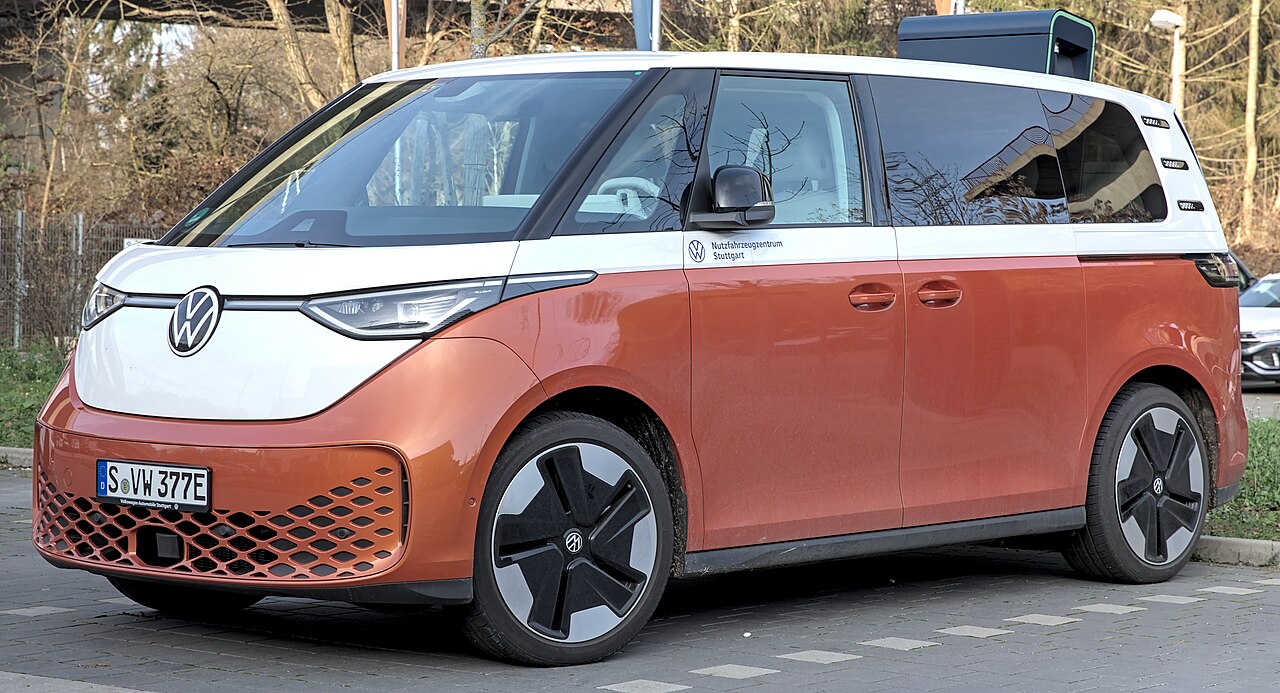 Licensed photo · Photo credit
MakeVolkswagen
ClassMinivan
Model years (US)2025–2027
New registrations (EU)2021–2026
Recall dataNHTSA (United States)
Generations and technical specifications
Volkswagen ID. BUZZ (concept)
| Specification | Value |
|---|---|
| Electric motor | APP 310 permanent magnet brushless motor |
| Battery | Lithium-ion 83 kWh (RWD) 111 kWh (4WD) |
| Wheelbase | 3,300 mm |
| Length | 4,942 mm |
| Width | 1,976 mm |
| Height | 1,963 mm |
| Designer | Einar Castillo |
Engines and transmissions
| Model years | Engine | Transmission | Drive | Fuel |
|---|---|---|---|---|
| 2025, 2027 | Electric motor | Single-speed | All-wheel drive | Electricity |
| 2025, 2027 | Electric motor | Single-speed | Rear-wheel drive | Electricity |
Fuel economy (EPA)
| Model years | Configuration | Combined | City | Highway | Electric range |
|---|---|---|---|---|---|
| 2025 | Electric motor · Single-speed · All-wheel drive | 26.1 kWh/100 km | 24.2 kWh/100 km | 28.4 kWh/100 km | 372 km |
| 2025 | Electric motor · Single-speed · Rear-wheel drive | 25.3 kWh/100 km | 23.2 kWh/100 km | 27.9 kWh/100 km | 377 km |
Values are the official EPA label figures for each model year, shown as the lowest and highest value for the configuration. Electric models show energy use per 100 km. Real-world consumption depends on driving style, weather and load. Luggage and passenger volumes follow the EPA measuring method and can differ from the VDA figures used in Europe.
EU type-approval data
| Years | Powertrain | Power | Mass | Electric range |
|---|---|---|---|---|
| 2021–2025 | Electric | 70 kW (95 PS) | 2325–2650 kg | 407–410 km · 212–214 Wh/km |
| 2024–2025 | Electric | 89 kW (121 PS) | 2492–2714 kg | 441–456 km · 192–198 Wh/km |
| 2024–2025 | Electric | 90 kW (122 PS) | 2803–2936 kg | – |
| 2025 | Electric | 125 kW (170 PS) | 2367–2391 kg | 318–330 km · 203–212 Wh/km |
| 2021–2025 | Electric | 150 kW (204 PS) | 2459–2520 kg | 404–415 km · 210–216 Wh/km |
| 2024–2025 | Electric | 210 kW (286 PS) | 2492–2802 kg | 197–452 km · 194–437 Wh/km |
| 2025 | Electric | 250 kW (340 PS) | 2631–2912 kg | 210–408 km · 212–407 Wh/km |
Years are registration years. Each range runs from the 10th to the 90th percentile of the values reported for new registrations; it is not an average. Mass is the mass in running order. For electric cars the power is the type-approval net power, which can be lower than the peak power in brochures.
Key specifications
| Specification | Value |
|---|---|
| EPA size class | Minivan |
| Model years in EPA data | 2025, 2027 |
| Powertrains | Electric |
| Transmission types | Single-speed |
| Drive | Rear-wheel drive, All-wheel drive |
| Fuel | Electricity |
| Configurations listed | 4 |
| Electric motor (EPA) | 210 kW AC 3-Phase; 80 and 210 kW AC 3-Phase |
| Electric range (EPA) | 372–377 km |
| Powertrains (EU) | Electric |
| Power (EU) | 89–250 kW (121–340 PS) |
| Mass in running order (EU) | 2,459–2,912 kg |
Years and markets
| Specification | Value |
|---|---|
| Model years (US) | 2025–2027 |
| New registrations (EU) | 2021–2026 |