Durango
Dodge Durango: official NHTSA recalls, fault code help and maintenance guides.
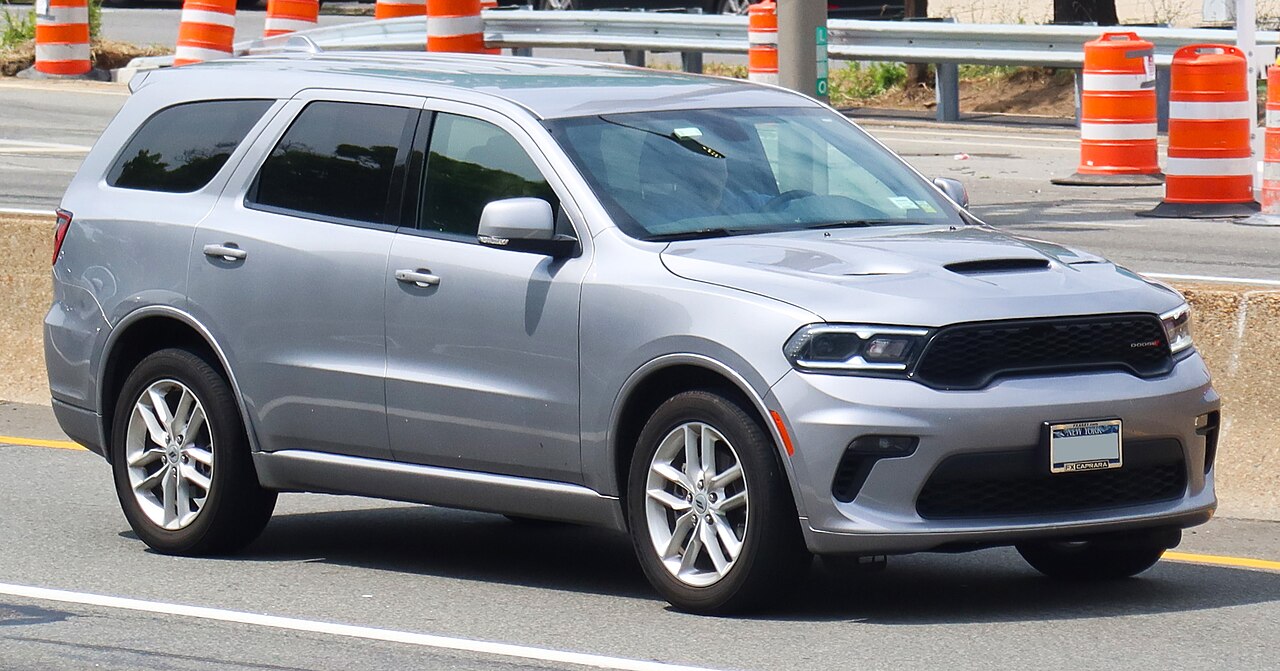 Licensed photo · Photo credit
Generations and technical specifications
Dodge Durango – Third generation2010–present
| Specification | Value |
|---|---|
| Production | 2010–present |
| Model years | 2011–present |
| Platform | Chrysler WK/WK2 |
| Engines | 3.6 L Pentastar V6 5.7 L Hemi V8 6.4 L Hemi 392 V8 6.2 L SRT Hellcat supercharged V8 |
| Transmissions | 5-speed W5A580 automatic 5-speed 545RFE automatic 6-speed 65RFE automatic 8-speed 845RE automatic (2014-17 Pentastar 2018-on 850RE ) 8-speed 8HP70 automatic (2014-24 Hemi) 8-speed 8HP95 automatic (2021, 2023-26 Hellcat) |
| Wheelbase | 3,045 mm |
| Length | 5,075 mm |
| Width | 1,925 mm |
| Height | 1,801 mm |
| Assembly | United States: Detroit, Michigan (Jefferson North Assembly) |
| Designer | Mark T. Allen and Don Renkert |
Dodge Durango – Second generation2003–2009
| Specification | Value |
|---|---|
| Production | September 2003–December 19, 2008 |
| Model years | 2004–2009 |
| Engines | 3.7 L Magnum V6 (gasoline) 4.7 L Magnum V8 (E85 / gasoline) 5.7 L Hemi V8 (gasoline) 5.7 L Hemi Eagle V8 (Hybrid) |
| Electric motor | electric motors 87 hp and 235 lb.-ft (Chrysler Aspen/Dodge Durango Hybrid) |
| Transmissions | 4-speed 42RLE automatic 5-speed 545RFE automatic CVT Two-Mode automatic |
| Wheelbase | 3,028 mm |
| Length | 5,100 mm Hybrid: 5,133 mm |
| Width | 1,930 mm |
| Height | 1,887 mm Hybrid: 1,869 mm |
| Assembly | United States: Newark, Delaware (Newark Assembly) |
Dodge Durango – First generation1997–2003
| Specification | Value |
|---|---|
| Production | 1997–2003 |
| Model years | 1998–2003 |
| Platform | Chrysler DN platform |
| Engines | 3,916.5 cm³ Magnum V6 4,703.1 cm³ Power Tech V8 5,211.1 cm³ Magnum V8 5,899.3 cm³ Magnum V8 |
| Transmissions | 4-speed TorqueFlite automatic 4-speed RFE automatic 5-speed RFE automatic |
| Wheelbase | 2,951 mm |
| Length | 4,915 mm (2001–2003) 4,910 mm (1997–2000) |
| Width | 1,816 mm (1997–2000) 1,811 mm (2000–2003) |
| Height | 1,778 mm (2001–2003) 1,852 mm (1997–2000) |
| Kerb weight | 2,127 kg |
| Assembly | Newark, Delaware, United States (Newark Assembly) |
| Designer | Dennis Myles (1995) |
Engines and transmissions
| Model years | Engine | Transmission | Drive | Fuel |
|---|---|---|---|---|
| 2018–2027 | 3.6 L, 6 cyl | 8-speed automatic | All-wheel drive | Petrol (regular) |
| 2016–2027 | 3.6 L, 6 cyl | 8-speed automatic | Rear-wheel drive | Petrol (regular) |
| 2015–2027 | 5.7 L, 8 cyl | 8-speed automatic | All-wheel drive | Petrol (midgrade) |
| 2021, 2023–2027 | 6.2 L, 8 cyl | 8-speed automatic | All-wheel drive | Petrol (premium) |
| 2018–2024, 2026–2027 | 6.4 L, 8 cyl | 8-speed automatic | All-wheel drive | Petrol (premium) |
| 2014–2025 | 5.7 L, 8 cyl | 8-speed automatic | Rear-wheel drive | Petrol (midgrade) |
| 2016–2017 | 3.6 L, 6 cyl | 8-speed automatic | Four-wheel drive | Petrol (regular) |
| 2014–2015 | 3.6 L, 6 cyl | 8-speed automatic | Four-wheel drive | Petrol or E85 (flex-fuel) |
| 2014–2015 | 3.6 L, 6 cyl | 8-speed automatic | Rear-wheel drive | Petrol or E85 (flex-fuel) |
| 2014 | 5.7 L, 8 cyl | 8-speed automatic | Four-wheel drive | Petrol (midgrade) |
| 2011, 2013 | 3.6 L, 6 cyl | 5-speed automatic | Four-wheel drive | Petrol or E85 (flex-fuel) |
| 2011–2013 | 3.6 L, 6 cyl | 5-speed automatic | Rear-wheel drive | Petrol or E85 (flex-fuel) |
| +17 more configurations |
Fuel economy (EPA)
| Model years | Configuration | Combined | City | Highway |
|---|---|---|---|---|
| 2018–2027 | 3.6 L, 6 cyl · 8-speed automatic · All-wheel drive | 11.2–11.8 L/100 km | 13.1–13.8 L/100 km | 9.4–9.8 L/100 km |
| 2014–2027 | 3.6 L, 6 cyl · 8-speed automatic · Rear-wheel drive | 11.2–11.8 L/100 km | 12.4–13.1 L/100 km | 9.0–9.4 L/100 km |
| 2015–2027 | 5.7 L, 8 cyl · 8-speed automatic · All-wheel drive | 13.8–14.7 L/100 km | 16.8 L/100 km | 10.7–11.2 L/100 km |
| 2021, 2023–2027 | 6.2 L, 8 cyl · 8-speed automatic · All-wheel drive | 18.1 L/100 km | 19.6 L/100 km | 13.8 L/100 km |
| 2018–2024, 2026–2027 | 6.4 L, 8 cyl · 8-speed automatic · All-wheel drive | 15.7 L/100 km | 18.1 L/100 km | 12.4 L/100 km |
| 2014–2025 | 5.7 L, 8 cyl · 8-speed automatic · Rear-wheel drive | 13.8 L/100 km | 16.8 L/100 km | 10.7 L/100 km |
| 2014–2017 | 3.6 L, 6 cyl · 8-speed automatic · Four-wheel drive | 11.2–12.4 L/100 km | 13.1–13.8 L/100 km | 9.4–9.8 L/100 km |
| 2014 | 5.7 L, 8 cyl · 8-speed automatic · Four-wheel drive | 14.7 L/100 km | 16.8 L/100 km | 10.7 L/100 km |
| 2011, 2013 | 3.6 L, 6 cyl · 5-speed automatic · Four-wheel drive | 12.4–13.1 L/100 km | 14.7 L/100 km | 10.2–10.7 L/100 km |
| 2011–2013 | 3.6 L, 6 cyl · 5-speed automatic · Rear-wheel drive | 12.4 L/100 km | 14.7 L/100 km | 10.2 L/100 km |
| 2012–2013 | 5.7 L, 8 cyl · 6-speed automatic · Four-wheel drive | 15.7 L/100 km | 18.1 L/100 km | 11.8 L/100 km |
| 2012–2013 | 5.7 L, 8 cyl · 6-speed automatic · Rear-wheel drive | 14.7 L/100 km | 16.8 L/100 km | 11.8 L/100 km |
| +13 more configurations |
Values are the official EPA label figures for each model year, shown as the lowest and highest value for the configuration. Electric models show energy use per 100 km. Real-world consumption depends on driving style, weather and load. Luggage and passenger volumes follow the EPA measuring method and can differ from the VDA figures used in Europe.
EU type-approval data
| Years | Powertrain | Engine | Power | Mass | CO₂ |
|---|---|---|---|---|---|
| 2016, 2018, 2025 | Petrol | 5654 cm³ | 268 kW (364 PS) | 2388–2677 kg | 356 g/km (WLTP) |
| 2023–2025 | Petrol | 6166 cm³ | 529 kW (719 PS) | 2604–2665 kg | 365 g/km (WLTP) |
| 2021, 2023–2025 | Petrol | 6417 cm³ | 354 kW (481 PS) | 2476 kg | 353 g/km (WLTP) |
| 2025 | LPG (bi-fuel) | 5654 cm³ | 268 kW (364 PS) | 2567 kg | 324–331 g/km (WLTP) |
| 2024 | LPG (bi-fuel) | 6417 cm³ | 354 kW (481 PS) | 2476–2557 kg | – |
| 2020 | Petrol | 6410 cm³ | 354 kW (481 PS) | 2677–2752 kg | 399 g/km (WLTP) |
| 2018–2019 | Petrol | 3604 cm³ | 220 kW (299 PS) | 2280–2320 kg | 233 g/km (NEDC) |
| 2016 | Petrol | 3604 cm³ | 216 kW (294 PS) | 2240–2420 kg | 233–322 g/km (NEDC) |
Years are registration years. Each range runs from the 10th to the 90th percentile of the values reported for new registrations; it is not an average. Mass is the mass in running order. For electric cars the power is the type-approval net power, which can be lower than the peak power in brochures.
Key specifications
| Specification | Value |
|---|---|
| EPA size class | Standard SUV, SUV |
| Model years in EPA data | 2000–2009, 2011–2027 |
| Powertrains | Petrol, Flex-fuel, Hybrid |
| Engine displacement | 3.6–6.4 L |
| Cylinders | 6, 8 |
| Transmission types | Automatic |
| Drive | Rear-wheel drive, All-wheel drive, Four-wheel drive, Four-wheel or all-wheel drive |
| Fuel | Petrol (regular), Petrol (midgrade), Petrol (premium), Petrol or E85 (flex-fuel) |
| Configurations listed | 135 |
| Forced induction | Supercharged (on some versions) |
| Start-stop system | On some versions |
| Powertrains (EU) | Petrol, LPG (bi-fuel) |
| Engine displacement (EU) | 3,604–6,417 cm³ |
| Power (EU) | 216–529 kW (294–719 PS) |
| Mass in running order (EU) | 2,240–2,752 kg |
| Wheelbase (EU) | 3,040–3,045 mm |
Years and markets
| Specification | Value |
|---|---|
| Model years (US) | 2000–2009, 2011–2027 |
| New registrations (EU) | 2000–2008, 2010–2025 |
Owner complaints (NHTSA)
| Component | Complaints | Most reported model years |
|---|---|---|
| Electrical system | 2523 | 2011, 2012, 2013 |
| Engine and cooling | 2078 | 2004, 2005, 2011 |
| Fuel and propulsion | 1972 | 2005, 2006, 2011 |
| Suspension | 1124 | 2000, 2001, 2002 |
| Lights | 1064 | 2014, 2015, 2021 |
| Transmission and drivetrain | 1052 | 2000, 2001, 2005 |
| Airbags | 780 | 2004, 2005, 2006 |
| Brakes | 695 | 2000, 2011, 2013 |
| Seats | 475 | 2013, 2014, 2015 |
| Steering | 471 | 2000, 2001, 2005 |
Source: complaints filed by owners with the U.S. National Highway Traffic Safety Administration (NHTSA) for model years 2000–2009, 2011–2025: 10993 complaints, 525 with a crash and 343 with a fire. Complaints are owner reports that NHTSA has not verified, and one complaint can name more than one component. More complaints can also mean more cars sold.