Sonata
Hyundai Sonata: official NHTSA recalls, fault code help and maintenance guides.
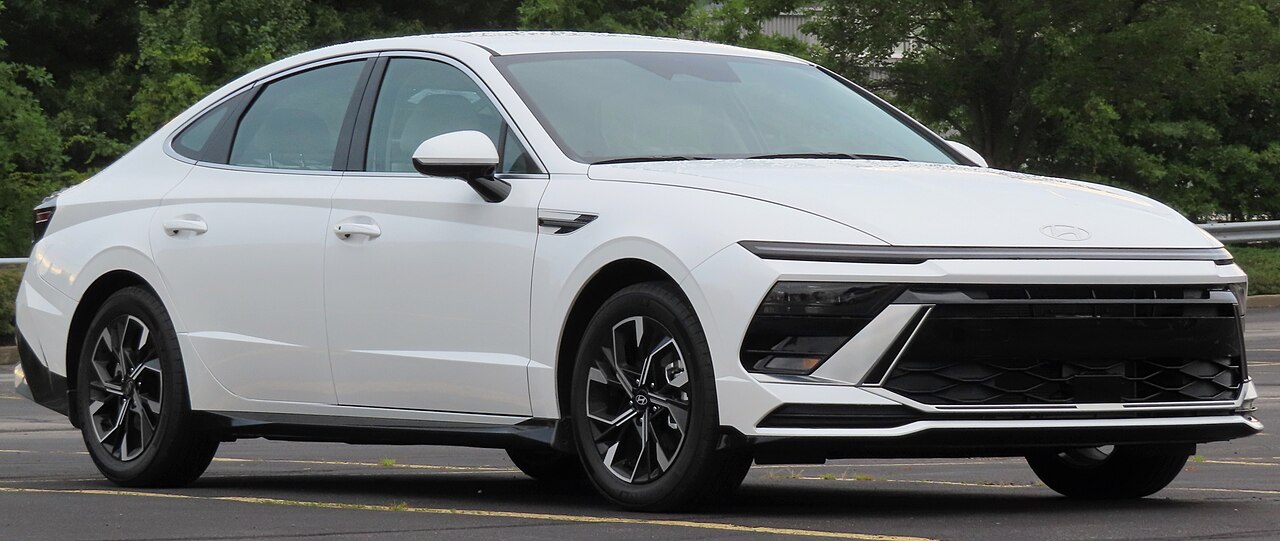 Licensed photo · Photo credit
Generations and technical specifications
Hyundai Sonata – Eighth generation2019–present
| Specification | Value |
|---|---|
| Model code | DN8 |
| Production | 2019–present |
| Model years | 2020–present |
| Platform | Hyundai-Kia N3/N4 |
| Engines | Gasoline 1.5 L Smartstream G1.5 T-GDi I4 1.6 L Smartstream G1.6 T-GDi I4 2.0 L Smartstream G2.0 MPi I4 2.0 L Smartstream G2.0 T-GDi I4 2.5 L Smartstream G2.5 MPi/GDi/T-GDi I4 Gasoline hybrid 2.0 L Smartstream G2.0 GDi I4 Gasoline/LPG 2.0 L Smartstream L2.0 LPi I4 |
| Electric motor | Permanent Magnet Synchronous Motor (Hybrid Version) |
| Transmissions | 6-speed automatic 8-speed automatic 7-speed D7UF1 DCT 8-speed D8LF1 DCT |
| Drivetrain | HEV |
| Battery | 1.62 kWh lithium-ion polymer battery (hybrid) |
| Wheelbase | 2,840 mm 2,890 mm (China) |
| Length | 4,900 mm (pre-facelift) 4,910 mm (facelift) 4,955 mm (China) |
| Width | 1,860 mm |
| Height | 1,445 mm |
| Kerb weight | 1,388–1,610 kg 1,495–1,615 kg (Hybrid) 1,715–1,730 kg (Plug-in Hybrid) |
| Assembly | South Korea: Asan (Asan Plant) United States: Montgomery, Alabama (HMMA, 2019–2022) China: Beijing (Beijing Hyundai) Pakistan: Faisalabad (Hyundai Nishat) Kazakhstan: Almaty Vietnam: Ninh Bình (HTMV) |
| Designer | Luc Donckerwolke SangYup Lee Ji-heon Lee Kevin Kang Song Hyun |
Hyundai Sonata – Seventh generation2014–2023
| Specification | Value |
|---|---|
| Model code | LF |
| Production | 2014–2023 2015–2020 (China) 2018–2020 (Russia) |
| Model years | 2015–2019 |
| Platform | Hyundai-Kia N1/N2 |
| Engines | Gasoline 1.6 L Gamma T-GDi I4 2.0 L Nu MPi I4 2.0 L Theta II T-GDi I4 2.4 L Theta II MPi I4 2.4 L Theta II GDi I4 Hybrid 2.0 L Nu GDI I4 Gasoline/LPG 2.0 L Nu LPi I4 Diesel 1.7 L U II CRDi I4 |
| Transmissions | 6-speed manual 6-speed automatic 8-speed automatic 7-speed dual-clutch automatic |
| Wheelbase | 2,805 mm |
| Length | 4,855 mm |
| Width | 1,865 mm |
| Height | 1,475 mm |
| Kerb weight | 1,435–1,640 kg |
| Assembly | South Korea: Asan (Asan Plant) United States: Montgomery, Alabama (HMMA) China: Beijing (Beijing Hyundai) Russia: Kaliningrad (Avtotor) |
| Designer | Tae-Hoon Kim (2011) |
Hyundai Sonata – Sixth generation2009–2015
| Specification | Value |
|---|---|
| Model code | YF |
| Production | 2009–2014 |
| Model years | 2010–2014 2011–2014 (North America) 2011–2015 (China) |
| Engines | petrol 2.0 L Nu I4 2.0 L Theta II I4 2.0 L Theta II Turbo GDi I4 2.4 L Theta II I4 2.4 L Theta II GDi I4 LPG 2.0 L Nu LPi I4 2.0 L Theta LPi I4 |
| Electric motor | 38 kW permanent magnet high-power density motor |
| Transmissions | 6-speed automatic 6-speed manual |
| Battery | Li-ion polymer |
| Wheelbase | 2,795 mm |
| Length | 4,820 mm |
| Width | 1,835 mm |
| Height | 1,470 mm |
| Kerb weight | 1,451–1,504 kg (2.4L) 1,514–1,566 kg (2.0L Turbo) |
| Assembly | South Korea: Asan (Asan Plant) United States: Montgomery, Alabama (HMMA) China: Beijing (Beijing Hyundai) |
| Designer | Andre Hudson (2007) |
Hyundai Sonata – Fifth generation2004–2011
| Specification | Value |
|---|---|
| Model code | NF |
| Production | 2004–2009 2005–2010 (North America) 2005–2010 (China) 2006–2010 (Thailand) |
| Model years | 2005–2009 2006–2010 (North America) 2006–2011 (China) 2007–2010 (Thailand) |
| Engines | 2.0 L Theta I4 2.0 L Theta II I4 2.4 L Theta I4 2.4 L Theta II I4 3.3 L Lambda V6 2.0 L Theta LPi I4 2.0 L D CRDi I4 |
| Transmissions | 4-speed F4A42 automatic by Mitsubishi 5-speed manual 6-speed manual (2.0 CRDI) 5-speed automatic |
| Wheelbase | 2,730 mm |
| Length | 4,800 mm 4,815 mm (Sonata Ling Xiang) |
| Width | 1,830 mm |
| Height | 1,475 mm |
| Kerb weight | 1,443–1,612 kg |
| Assembly | South Korea: Asan United States: Montgomery, Alabama (HMMA) India: Chennai (Hyundai India) China: Beijing (Beijing Hyundai) Turkey: İzmit (Hyundai Assan) Egypt: Cairo (Ghabbour Group) Thailand: Samut Prakan (TAAP) Sudan: Al Jazirah state (Giad) |
| Designer | Choi Jong Min (2002) |
Hyundai Sonata – Fourth generation1998–2017
| Specification | Value |
|---|---|
| Model code | EF |
| Production | 1998–2001 (South Korea, EF) 2001–2004 (South Korea, EF-B) 2001–2005 (India) 2002–2017 (China) 2005–2012 (Russia) |
| Model years | 1999–2001 (EF) 2002–2005 (EF-B) |
| Platform | Hyundai-Kia Y4 |
| Engines | petrol 1.8 L Beta II I4 1.8 L Sirius II I4 2.0 L Beta II I4 (China) 2.0 L Sirius II I4 2.4 L Sirius II I4 2.5 L Delta V6 2.7 L Delta V6 |
| Transmissions | 5-speed manual 4-speed automatic CVT |
| Wheelbase | 2,700 mm |
| Length | 4,710 mm (Pre-facelift) 4,745 mm (Facelift) |
| Width | 1,815 mm (Pre-facelift) 1,820 mm (Facelift) |
| Height | 1,410 mm (Pre-facelift) 1,420 mm (Facelift) |
| Kerb weight | 1,315–1,487 kg |
| Assembly | South Korea: Asan Botswana: Gaborone (TMBC) India: Chennai (Hyundai India) Egypt: Cairo (AAV) China: Beijing (Beijing Hyundai) Russia: Taganrog (TagAZ) Malaysia: Johor Bahru |
Engines and transmissions
| Model years | Engine | Transmission | Drive | Fuel |
|---|---|---|---|---|
| 2016–2027 | 2.0 L, 4 cyl hybrid | 6-speed automated manual | Front-wheel drive | Petrol (regular) |
| 2021–2027 | 2.5 L, 4 cyl | 8-speed automated manual | Front-wheel drive | Petrol (regular) |
| 2024–2027 | 2.5 L, 4 cyl | 8-speed automatic | All-wheel drive | Petrol (regular) |
| 2020–2027 | 2.5 L, 4 cyl | 8-speed automatic | Front-wheel drive | Petrol (regular) |
| 2020–2023 | 1.6 L, 4 cyl | 8-speed automatic | Front-wheel drive | Petrol (regular) |
| 2015–2019 | 1.6 L, 4 cyl | 7-speed automated manual | Front-wheel drive | Petrol (regular) |
| 2018–2019 | 2.0 L, 4 cyl | 8-speed automatic | Front-wheel drive | Petrol (regular) |
| 2016–2019 | 2.0 L, 4 cyl plug-in hybrid | 6-speed automated manual | Front-wheel drive | Petrol (regular) and electricity |
| 2011–2019 | 2.4 L, 4 cyl | 6-speed automatic | Front-wheel drive | Petrol (regular) |
| 2011–2017 | 2.0 L, 4 cyl | 6-speed automatic | Front-wheel drive | Petrol (regular) |
| 2013–2015 | 2.4 L, 4 cyl hybrid | 6-speed automated manual | Front-wheel drive | Petrol (regular) |
| 2011–2013 | 2.4 L, 4 cyl | 6-speed manual | Front-wheel drive | Petrol (regular) |
| +9 more configurations |
Fuel economy (EPA)
| Model years | Configuration | Combined | City | Highway | Electric range |
|---|---|---|---|---|---|
| 2016–2027 | 2.0 L, 4 cyl hybrid · 6-speed automated manual · Front-wheel drive | 4.5–5.9 L/100 km | 4.7–6.2 L/100 km | 4.2–5.7 L/100 km | – |
| 2021–2027 | 2.5 L, 4 cyl · 8-speed automated manual · Front-wheel drive | 8.7 L/100 km | 10.2 L/100 km | 7.1–7.4 L/100 km | – |
| 2024–2027 | 2.5 L, 4 cyl · 8-speed automatic · All-wheel drive | 8.4–9.0 L/100 km | 9.4–10.7 L/100 km | 6.9–7.4 L/100 km | – |
| 2020–2027 | 2.5 L, 4 cyl · 8-speed automatic · Front-wheel drive | 7.4–8.1 L/100 km | 8.4–9.4 L/100 km | 6.2–6.5 L/100 km | – |
| 2020–2023 | 1.6 L, 4 cyl · 8-speed automatic · Front-wheel drive | 7.6–7.8 L/100 km | 8.7 L/100 km | 6.4–6.5 L/100 km | – |
| 2015–2019 | 1.6 L, 4 cyl · 7-speed automated manual · Front-wheel drive | 7.6 L/100 km | 8.4 L/100 km | 6.4–6.5 L/100 km | – |
| 2018–2019 | 2.0 L, 4 cyl · 8-speed automatic · Front-wheel drive | 9.0 L/100 km | 10.2 L/100 km | 7.4 L/100 km | – |
| 2016–2019 | 2.0 L, 4 cyl plug-in hybrid · 6-speed automated manual · Front-wheel drive | 5.9–6.0 L/100 km | 6.2–6.4 L/100 km | 5.6–5.9 L/100 km | 43–45 km |
| 2011–2019 | 2.4 L, 4 cyl · 6-speed automatic · Front-wheel drive | 8.1–9.0 L/100 km | 9.0–10.7 L/100 km | 6.5–7.1 L/100 km | – |
| 2011–2017 | 2.0 L, 4 cyl · 6-speed automatic · Front-wheel drive | 9.0–9.8 L/100 km | 10.7–11.2 L/100 km | 7.1–7.8 L/100 km | – |
| 2013–2015 | 2.4 L, 4 cyl hybrid · 6-speed automated manual · Front-wheel drive | 6.4 L/100 km | 6.7 L/100 km | 6.2 L/100 km | – |
| 2011–2013 | 2.4 L, 4 cyl · 6-speed manual · Front-wheel drive | 8.7 L/100 km | 9.8 L/100 km | 6.9 L/100 km | – |
| +9 more configurations |
Values are the official EPA label figures for each model year, shown as the lowest and highest value for the configuration. Electric models show energy use per 100 km. Real-world consumption depends on driving style, weather and load. Luggage and passenger volumes follow the EPA measuring method and can differ from the VDA figures used in Europe.
EU type-approval data
| Years | Powertrain | Engine | Power | Mass | CO₂ |
|---|---|---|---|---|---|
| 2011 | Petrol | 1998 cm³ | 121 kW (165 PS) | 1635 kg | 183–188 g/km (NEDC) |
| 2010–2011 | Petrol | 2359 cm³ | – | 1538–1599 kg | 188–198 g/km (NEDC) |
| 2010–2011 | Diesel | 1991 cm³ | – | 1660–1735 kg | 159–184 g/km (NEDC) |
| 2010 | Petrol | 2350 cm³ | – | 1538–1546 kg | 198–210 g/km (NEDC) |
| 2010 | Petrol | 3340 cm³ | – | 1646 kg | 241 g/km (NEDC) |
| 2010 | Petrol | 3342 cm³ | – | 1659–1737 kg | 235–241 g/km (NEDC) |
Years are registration years. Each range runs from the 10th to the 90th percentile of the values reported for new registrations; it is not an average. Mass is the mass in running order. For electric cars the power is the type-approval net power, which can be lower than the peak power in brochures.
Key specifications
| Specification | Value |
|---|---|
| EPA size class | Large car, Midsize car |
| Model years in EPA data | 2000–2027 |
| Powertrains | Petrol, Hybrid, Plug-in hybrid |
| Engine displacement | 1.6–3.3 L |
| Cylinders | 4, 6 |
| Transmission types | Automatic, Automated manual, Manual |
| Drive | All-wheel drive, Front-wheel drive |
| Fuel | Petrol (regular), Petrol (regular) and electricity |
| Configurations listed | 137 |
| Forced induction | Turbocharged (on some versions) |
| Start-stop system | On some versions |
| Electric motor (EPA) | 50 kW IPMSM |
| Luggage volume (EPA) | 283–453 L |
| Passenger volume (EPA) | 2,832–3,002 L |
| Powertrains (EU) | Petrol, Diesel |
| Engine displacement (EU) | 1,991–2,359 cm³ |
| Mass in running order (EU) | 1,538–1,735 kg |
| Wheelbase (EU) | 2,730 mm |
Years and markets
| Specification | Value |
|---|---|
| Model years (US) | 2000–2027 |
| New registrations (EU) | 2000–2014, 2016, 2020, 2022 |
Owner complaints (NHTSA)
| Component | Complaints | Most reported model years |
|---|---|---|
| Engine and cooling | 5018 | 2011, 2013, 2015 |
| Steering | 2352 | 2011, 2012, 2013 |
| Airbags | 1983 | 2006, 2007, 2011 |
| Electrical system | 1946 | 2011, 2012, 2013 |
| Brakes | 1213 | 2011, 2012, 2013 |
| Fuel and propulsion | 1052 | 2011, 2012, 2013 |
| Body and structure | 1022 | 2000, 2002, 2010 |
| Lights | 1011 | 2011, 2012, 2013 |
| Transmission and drivetrain | 1000 | 2011, 2012, 2015 |
| Suspension | 671 | 2000, 2006, 2011 |
Source: complaints filed by owners with the U.S. National Highway Traffic Safety Administration (NHTSA) for model years 2000–2025: 15709 complaints, 698 with a crash and 513 with a fire. Complaints are owner reports that NHTSA has not verified, and one complaint can name more than one component. More complaints can also mean more cars sold.