CLS-Class
Mercedes-Benz CLS-Class: official NHTSA recalls, fault code help and maintenance guides.
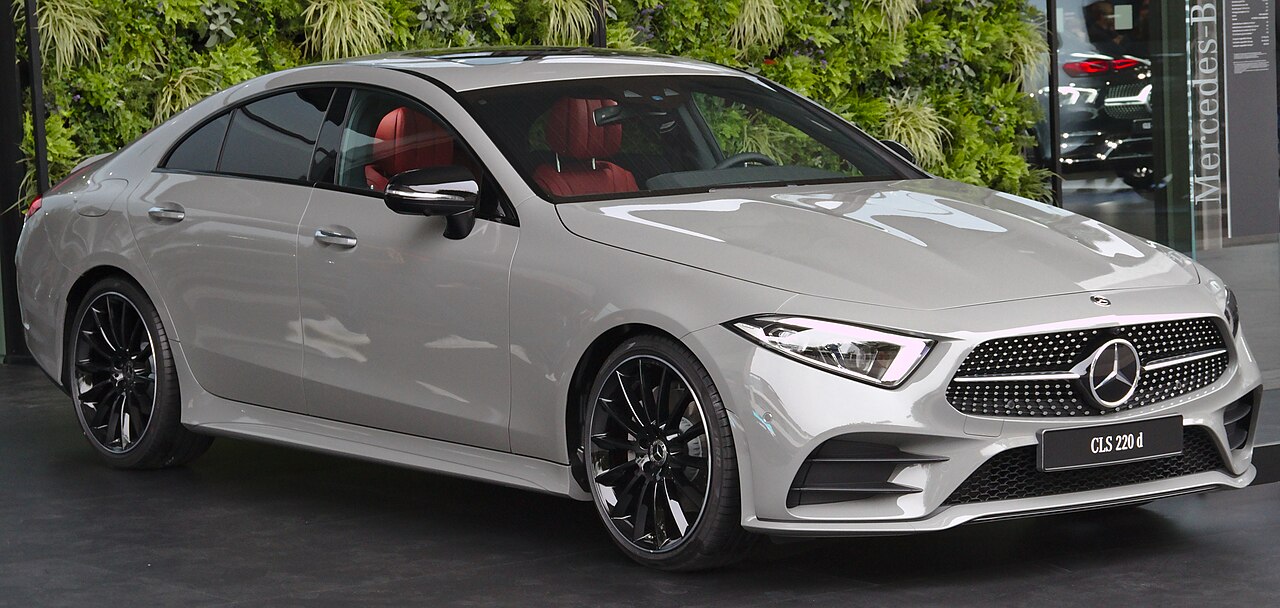 Licensed photo · Photo credit
Generations and technical specifications
Mercedes-Benz CLS (C257)2018–2023
| Specification | Value |
|---|---|
| Production | January 2018 – August 2023 |
| Model years | 2018–2023 |
| Body styles | 4-door sedan |
| Layout | Front-engine, rear-wheel-drive or all-wheel-drive (4Matic) |
| Platform | MRA |
| Engines | Petrol 1.5 L M264 Mild Hybrid turbo (EQ Boost) I4 (China) 2.0 L M264 Mild Hybrid turbo I4 3.0 L M256 Mild Hybrid turbo I6 Diesel 2.0 L OM654 Mild Hybrid turbo I4 2.9 L OM656 Mild Hybrid twin-turbo I6 |
| Transmissions | 9-speed 9G-Tronic automatic |
| Drivetrain | Mild Hybrid (EQ Boost) |
| Wheelbase | 2,938 mm |
| Length | 4,988–5,001 mm |
| Width | 1,890 mm |
| Height | 1,435 mm |
| Kerb weight | 1,825–1,980 kg |
| Class | Executive car (E) |
| Assembly | Germany: Sindelfingen Thailand: Samut Prakan (Thonburi Automotive Assembly Plant Co., Ltd.) |
| Designer | Robert Lešnik, Balázs Filczer and Laurent Olivier under Gorden Wagener |
Engines and transmissions
| Model years | Engine | Transmission | Drive | Fuel |
|---|---|---|---|---|
| 2023 | 3.0 L, 6 cyl mild hybrid | 9-speed automatic | All-wheel drive | Petrol (premium) |
| 2019–2022 | 3.0 L, 6 cyl mild hybrid | 9-speed automatic | Four-wheel drive | Petrol (premium) |
| 2019–2021 | 3.0 L, 6 cyl mild hybrid | 9-speed automatic | Rear-wheel drive | Petrol (premium) |
| 2016–2018 | 4.7 L, 8 cyl | 9-speed automatic | Four-wheel drive | Petrol (premium) |
| 2015–2018 | 4.7 L, 8 cyl | 9-speed automatic | Rear-wheel drive | Petrol (premium) |
| 2014–2018 | 5.5 L, 8 cyl | 7-speed automatic | Four-wheel drive | Petrol (premium) |
| 2015–2016 | 3.0 L, 6 cyl | 7-speed automatic | Four-wheel drive | Petrol (premium) |
| 2015–2016 | 3.0 L, 6 cyl | 7-speed automatic | Rear-wheel drive | Petrol (premium) |
| 2012–2015 | 4.7 L, 8 cyl | 7-speed automatic | Four-wheel drive | Petrol (premium) |
| 2012–2014 | 4.7 L, 8 cyl | 7-speed automatic | Rear-wheel drive | Petrol (premium) |
| 2007–2014 | 5.5 L, 8 cyl | 7-speed automatic | Rear-wheel drive | Petrol (premium) |
| 2010–2011 | 6.3 L, 8 cyl | 7-speed automatic | Rear-wheel drive | Petrol (premium) |
| +3 more configurations |
Fuel economy (EPA)
| Model years | Configuration | Combined | City | Highway |
|---|---|---|---|---|
| 2023 | 3.0 L, 6 cyl mild hybrid · 9-speed automatic · All-wheel drive | 9.4 L/100 km | 10.7 L/100 km | 7.8 L/100 km |
| 2019–2022 | 3.0 L, 6 cyl mild hybrid · 9-speed automatic · Four-wheel drive | 9.0–10.2 L/100 km | 10.2–11.2 L/100 km | 7.8–9.0 L/100 km |
| 2019–2021 | 3.0 L, 6 cyl mild hybrid · 9-speed automatic · Rear-wheel drive | 9.0 L/100 km | 9.8–10.2 L/100 km | 7.6–7.8 L/100 km |
| 2016–2018 | 4.7 L, 8 cyl · 9-speed automatic · Four-wheel drive | 11.8 L/100 km | 13.8 L/100 km | 9.4 L/100 km |
| 2015–2018 | 4.7 L, 8 cyl · 9-speed automatic · Rear-wheel drive | 11.2–11.8 L/100 km | 13.1 L/100 km | 9.0 L/100 km |
| 2014–2018 | 5.5 L, 8 cyl · 7-speed automatic · Four-wheel drive | 13.1 L/100 km | 14.7 L/100 km | 10.7 L/100 km |
| 2015–2016 | 3.0 L, 6 cyl · 7-speed automatic · Four-wheel drive | 10.7 L/100 km | 12.4 L/100 km | 9.0 L/100 km |
| 2015–2016 | 3.0 L, 6 cyl · 7-speed automatic · Rear-wheel drive | 9.8 L/100 km | 11.8 L/100 km | 7.8–8.1 L/100 km |
| 2012–2015 | 4.7 L, 8 cyl · 7-speed automatic · Four-wheel drive | 12.4 L/100 km | 13.8–14.7 L/100 km | 9.4–9.8 L/100 km |
| 2012–2014 | 4.7 L, 8 cyl · 7-speed automatic · Rear-wheel drive | 11.8 L/100 km | 13.8 L/100 km | 9.4 L/100 km |
| 2007–2014 | 5.5 L, 8 cyl · 7-speed automatic · Rear-wheel drive | 12.4–14.7 L/100 km | 14.7–16.8 L/100 km | 9.4–11.8 L/100 km |
| 2010–2011 | 6.3 L, 8 cyl · 7-speed automatic · Rear-wheel drive | 16.8 L/100 km | 19.6 L/100 km | 13.1 L/100 km |
| +3 more configurations |
Values are the official EPA label figures for each model year, shown as the lowest and highest value for the configuration. Electric models show energy use per 100 km. Real-world consumption depends on driving style, weather and load. Luggage and passenger volumes follow the EPA measuring method and can differ from the VDA figures used in Europe.
EU type-approval data
| Years | Powertrain | Engine | Power | Mass | CO₂ |
|---|---|---|---|---|---|
| 2019–2024 | Petrol hybrid | 2999 cm³ | 270 kW (367 PS) | 1925–1940 kg | 194–206 g/km (WLTP) |
| 2019–2024 | Petrol hybrid | 2999 cm³ | 320 kW (435 PS) | 1980 kg | 211–217 g/km (WLTP) |
| 2019–2024 | Diesel | 1950 cm³ | 143 kW (194 PS) | 1800 kg | 147–167 g/km (WLTP) |
| 2020–2024 | Diesel | 2925 cm³ | 243 kW (330 PS) | 1935 kg | 180–193 g/km (WLTP) |
| 2018–2021 | Diesel | 1950 cm³ | 180 kW (245 PS) | 1825 kg | 166–177 g/km (WLTP) |
| 2018–2021 | Diesel | 2925 cm³ | 250 kW (340 PS) | 1935 kg | 184–195 g/km (WLTP) |
| 2018–2020 | Petrol | 2999 cm³ | 320 kW (435 PS) | 1980 kg | 211–213 g/km (WLTP) |
| 2018–2020 | Diesel | 2925 cm³ | 210 kW (286 PS) | 1935 kg | 181–193 g/km (WLTP) |
| 2018–2019 | Petrol | 2999 cm³ | 270 kW (367 PS) | 1940 kg | 196–202 g/km (WLTP) |
| 2014–2018 | Petrol | 3498 cm³ | 245 kW (333 PS) | 1775–1915 kg | 167–190 g/km (NEDC) |
| 2013–2018 | Petrol | 5461 cm³ | 430 kW (585 PS) | 1945–2025 kg | 243–251 g/km (NEDC) |
| 2014–2018 | Diesel | 2143 cm³ | 125 kW (170 PS) | 1790–1845 kg | 122–127 g/km (NEDC) |
| 2011–2018 | Diesel | 2143 cm³ | 150 kW (204 PS) | 1785–1955 kg | 123–147 g/km (NEDC) |
| 2014–2018 | Diesel | 2987 cm³ | 190 kW (258 PS) | 1845–1995 kg | 142–172 g/km (NEDC) |
| 2011–2017 | Petrol | 4663 cm³ | 300 kW (408 PS) | 1890–2005 kg | 209–229 g/km (NEDC) |
| 2011–2017 | Petrol | 5461 cm³ | 410 kW (557 PS) | 1870–2025 kg | 231–248 g/km (NEDC) |
| 2013–2016 | Diesel | 2987 cm³ | 185 kW (252 PS) | 1845–1995 kg | 146–179 g/km (NEDC) |
| 2011–2015 | Diesel | 2987 cm³ | 195 kW (265 PS) | 1815–1970 kg | 160–179 g/km (NEDC) |
| 2011–2014 | Petrol | 3498 cm³ | 225 kW (306 PS) | 1735–1830 kg | 159–170 g/km (NEDC) |
Years are registration years. Each range runs from the 10th to the 90th percentile of the values reported for new registrations; it is not an average. Mass is the mass in running order. For electric cars the power is the type-approval net power, which can be lower than the peak power in brochures.
Key specifications
| Specification | Value |
|---|---|
| EPA size class | Compact car |
| Model years in EPA data | 2006–2023 |
| Powertrains | Mild hybrid, Petrol |
| Engine displacement | 3.0–6.3 L |
| Cylinders | 6, 8 |
| Transmission types | Automatic |
| Drive | All-wheel drive, Four-wheel drive, Rear-wheel drive |
| Fuel | Petrol (premium) |
| Configurations listed | 51 |
| Forced induction | Turbo- and supercharged (on some versions) |
| Start-stop system | On some versions |
| Luggage volume (EPA) | 311–368 L |
| Passenger volume (EPA) | 2,605–2,633 L |
| Powertrains (EU) | Petrol, Petrol hybrid, Diesel |
| Engine displacement (EU) | 1,950–4,663 cm³ |
| Power (EU) | 125–300 kW (170–408 PS) |
| Mass in running order (EU) | 1,735–2,005 kg |
| Wheelbase (EU) | 2,874–2,939 mm |
Years and markets
| Specification | Value |
|---|---|
| Model years (US) | 2005–2023 |
| New registrations (EU) | 2004–2025 |
Owner complaints (NHTSA)
| Component | Complaints | Most reported model years |
|---|---|---|
| Fuel and propulsion | 99 | 2006, 2007, 2012 |
| Brakes | 42 | 2006, 2012, 2019 |
| Wheels | 32 | 2006, 2008, 2019 |
| Electrical system | 29 | 2006, 2019, 2020 |
| Transmission and drivetrain | 23 | 2006, 2007, 2012 |
| Engine and cooling | 21 | 2006, 2007, 2012 |
| Airbags | 16 | 2006, 2007, 2008 |
| Suspension | 14 | 2006, 2007, 2008 |
| Tyres | 12 | 2006, 2007, 2019 |
| Steering | 12 | 2007, 2012, 2019 |
Source: complaints filed by owners with the U.S. National Highway Traffic Safety Administration (NHTSA) for model years 2006–2015, 2017, 2019–2023: 270 complaints, 8 with a crash and 2 with a fire. Complaints are owner reports that NHTSA has not verified, and one complaint can name more than one component. More complaints can also mean more cars sold.