Mercedes-Benz
AMG GT
Mercedes-Benz AMG GT: official NHTSA recalls, fault code help and maintenance guides.
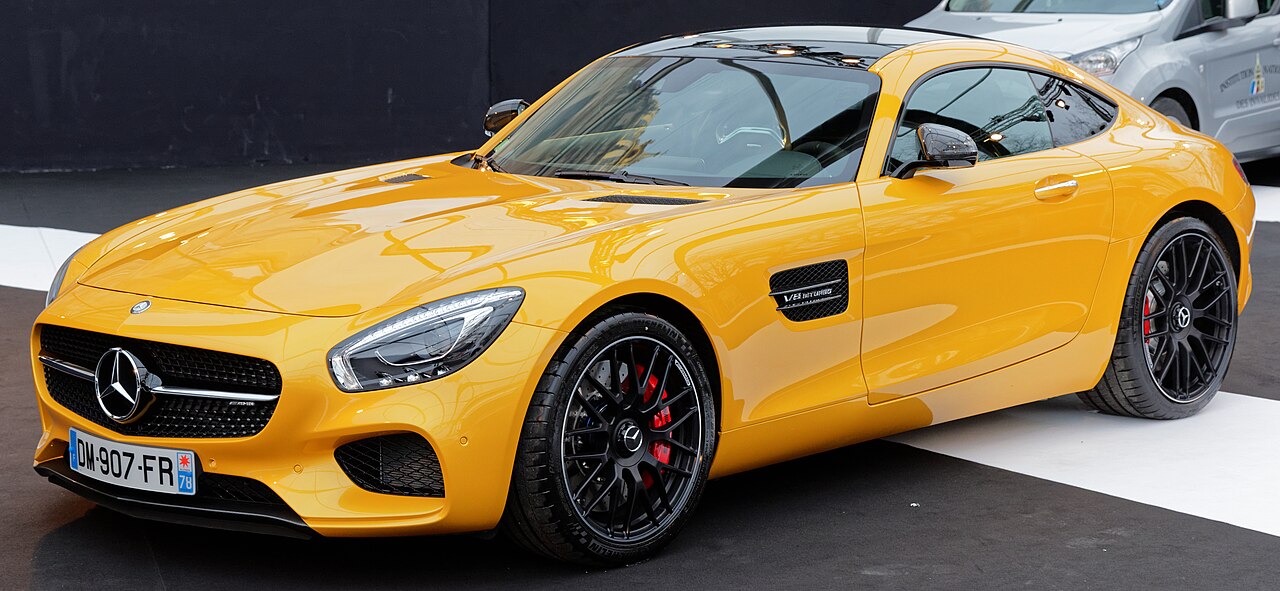 Licensed photo · Photo credit
MakeMercedes-Benz
ClassTwo-seater, Subcompact car
Model years (US)2016–2027
New registrations (EU)2014–2026
Recall dataNHTSA (United States)
Generations and technical specifications
Mercedes-AMG GT – Second generation (C192)2023–present
| Specification | Value |
|---|---|
| Model code | C192 |
| Production | 2023–present |
| Model years | 2024–present |
| Body styles | 2-door 2+2 liftback/fastback coupé |
| Layout | Front-engine, rear-wheel-drive Front-engine, all-wheel-drive (4MATIC+) |
| Platform | MSA |
| Engines | 2.0 L M139 mild hybrid turbo (EQ Boost) I4 4.0 L M177 twin-turbo V8 4.0 L M177 twin-turbo PHEV V8 (GT 63 S E Performance) |
| Electric motor | 14 hp electrically assisted turbocharger system by Garrett Motion 150 kW synchronous electric motor (63 S E Performance) |
| Transmissions | 9-speed Mercedes-AMG Speedshift MCT 9G-Tronic automatic |
| Drivetrain | Mild hybrid (EQ Boost) Plug-in (63 S E Performance) |
| Battery | AMG 400-volt high-performance battery, 4.8 kWh |
| Wheelbase | 2,700 mm |
| Length | 4,728 mm |
| Width | 1,984 mm |
| Height | 1,354 mm |
| Assembly | Sindelfingen, Germany |
| Designer | Slavche Tanevski |
Mercedes-AMG GT – First generation (C190/R190)2014–2023
| Specification | Value |
|---|---|
| Model code | C190 (Coupe) / R190 (Roadster) |
| Production | October 2014 – September 2022 2021–2023 (AMG GT Black Series; 1,700 produced) 2022 (AMG GT Track Series; Limited 55 units) |
| Model years | 2015–2023 2021–2023 (AMG GT Black Series) |
| Body styles | 2-door liftback/fastback coupé 2-door roadster |
| Layout | Front mid-engine, rear-wheel-drive |
| Platform | Mercedes-AMG Transaxle Spaceframe platform |
| Engines | 4.0 L M178 (Mercedes-AMG) twin-turbocharged V8 6.2 L M159 V8 (AMG GT3) |
| Transmissions | 7-speed AMG SPEEDSHIFT DCT 7G-Tronic dual-clutch |
| Wheelbase | 2,630 mm |
| Length | 4,546 mm |
| Width | 1,939 mm (GT, GT S) 2,007 mm (GT C, GT R) |
| Height | 1,288 mm |
| Kerb weight | 1,554–1,645 kg |
| Assembly | Sindelfingen, Germany |
| Designer | Robert Lešnik, Gabriel Nemeth, Huey Lee, Mark Fetherston (exterior) Jan Kaul (interior) |
Engines and transmissions
| Model years | Engine | Transmission | Drive | Fuel |
|---|---|---|---|---|
| 2025–2027 | 2.0 L, 4 cyl mild hybrid | 9-speed automatic | Rear-wheel drive | Petrol (premium) |
| 2023–2027 | 4.0 L, 8 cyl | 9-speed automatic | All-wheel drive | Petrol (premium) |
| 2023–2026 | 3.0 L, 6 cyl mild hybrid | 9-speed automatic | All-wheel drive | Petrol (premium) |
| 2025 | 4.0 L, 8 cyl plug-in hybrid | 9-speed automatic | All-wheel drive | Petrol (premium) and electricity |
| 2019–2022 | 3.0 L, 6 cyl mild hybrid | 9-speed automatic | Four-wheel drive | Petrol (premium) |
| 2016–2021 | 4.0 L, 8 cyl | 7-speed automated manual | Rear-wheel drive | Petrol (premium) |
| 2019–2021 | 4.0 L, 8 cyl | 9-speed automatic | Four-wheel drive | Petrol (premium) |
Fuel economy (EPA)
| Model years | Configuration | Combined | City | Highway | Electric range |
|---|---|---|---|---|---|
| 2025–2027 | 2.0 L, 4 cyl mild hybrid · 9-speed automatic · Rear-wheel drive | 10.7 L/100 km | 12.4 L/100 km | 8.7 L/100 km | – |
| 2023–2027 | 4.0 L, 8 cyl · 9-speed automatic · All-wheel drive | 13.8–16.8 L/100 km | 15.7–19.6 L/100 km | 11.2–12.4 L/100 km | – |
| 2023–2026 | 3.0 L, 6 cyl mild hybrid · 9-speed automatic · All-wheel drive | 11.2 L/100 km | 12.4 L/100 km | 9.8 L/100 km | – |
| 2025 | 4.0 L, 8 cyl plug-in hybrid · 9-speed automatic · All-wheel drive | 12.4–13.1 L/100 km | 14.7 L/100 km | 10.7–12.4 L/100 km | 16–18 km |
| 2019–2022 | 3.0 L, 6 cyl mild hybrid · 9-speed automatic · Four-wheel drive | 10.7–11.2 L/100 km | 11.8–12.4 L/100 km | 9.4–9.8 L/100 km | – |
| 2016–2021 | 4.0 L, 8 cyl · 7-speed automated manual · Rear-wheel drive | 13.1–14.7 L/100 km | 14.7–16.8 L/100 km | 10.7–12.4 L/100 km | – |
| 2019–2021 | 4.0 L, 8 cyl · 9-speed automatic · Four-wheel drive | 13.1–13.8 L/100 km | 14.7–15.7 L/100 km | 11.2–11.8 L/100 km | – |
Values are the official EPA label figures for each model year, shown as the lowest and highest value for the configuration. Electric models show energy use per 100 km. Real-world consumption depends on driving style, weather and load. Luggage and passenger volumes follow the EPA measuring method and can differ from the VDA figures used in Europe.
EU type-approval data
| Years | Powertrain | Engine | Power | Mass | CO₂ | Electric range |
|---|---|---|---|---|---|---|
| 2018–2025 | Petrol | 3982 cm³ | 430 kW (585 PS) | 1970–2100 kg | 293–319 g/km (WLTP) | – |
| 2024–2025 | Petrol | 3982 cm³ | 450 kW (612 PS) | 1930–1950 kg | 319–325 g/km (WLTP) | – |
| 2018–2025 | Petrol | 3982 cm³ | 470 kW (639 PS) | 2120–2135 kg | 293–300 g/km (WLTP) | – |
| 2024–2025 | Petrol hybrid | 1991 cm³ | 310 kW (421 PS) | 1790 kg | 235 g/km (WLTP) | – |
| 2019–2025 | Petrol hybrid | 2999 cm³ | 270 kW (367 PS) | 1990–2040 kg | 216–232 g/km (WLTP) | – |
| 2019–2025 | Petrol hybrid | 2999 cm³ | 320 kW (435 PS) | 2045 kg | 220–233 g/km (WLTP) | – |
| 2021–2025 | Petrol plug-in hybrid | 3982 cm³ | 450 kW (612 PS) | 2150–2195 kg | 160–241 g/km (WLTP) | 11–13 km · 126–372 Wh/km |
| 2020–2025 | Petrol plug-in hybrid | 3982 cm³ | 470 kW (639 PS) | 2380 kg | 180–198 g/km (WLTP) | 12–13 km · 127–347 Wh/km |
| 2019–2024 | Petrol | 3982 cm³ | 537 kW (730 PS) | 1615 kg | 292 g/km (WLTP) | – |
| 2017–2022 | Petrol | 3982 cm³ | 410 kW (557 PS) | 1700–1735 kg | 290–293 g/km (WLTP) | – |
| 2019–2021 | Petrol | 2999 cm³ | 270 kW (367 PS) | 1990–2040 kg | 215–233 g/km (WLTP) | – |
| 2018–2021 | Petrol | 2999 cm³ | 320 kW (435 PS) | 2045 kg | 227–234 g/km (WLTP) | – |
Years are registration years. Each range runs from the 10th to the 90th percentile of the values reported for new registrations; it is not an average. Mass is the mass in running order. For electric cars the power is the type-approval net power, which can be lower than the peak power in brochures.
Key specifications
| Specification | Value |
|---|---|
| EPA size class | Two-seater, Subcompact car, Small estate, Compact car |
| Model years in EPA data | 2016–2027 |
| Powertrains | Petrol, Mild hybrid, Plug-in hybrid |
| Engine displacement | 2.0–4.0 L |
| Cylinders | 4, 6, 8 |
| Transmission types | Automatic, Automated manual |
| Drive | All-wheel drive, Rear-wheel drive, Four-wheel drive |
| Fuel | Petrol (premium), Petrol (premium) and electricity |
| Configurations listed | 67 |
| Forced induction | Turbocharged (on some versions) |
| Start-stop system | On some versions |
| Electric motor (EPA) | 140 and 150 kW AC PMSM; 150 kW PMSM |
| Luggage volume (EPA) | 311–453 L |
| Passenger volume (EPA) | 2,294–2,718 L |
| Powertrains (EU) | Petrol, Petrol hybrid, Petrol plug-in hybrid |
| Engine displacement (EU) | 2,999–3,982 cm³ |
| Power (EU) | 270–537 kW (367–730 PS) |
| Mass in running order (EU) | 1,615–2,380 kg |
| Wheelbase (EU) | 2,630–2,951 mm |
Years and markets
| Specification | Value |
|---|---|
| Model years (US) | 2016–2027 |
| New registrations (EU) | 2014–2026 |
Recalls
Mercedes-Benz AMG GT recall: Seat BeltsMercedes-Benz AMG GT recall: Air Bags:frontal:driver Side:inflator ModuleMercedes-Benz AMG GT recall: Electrical System:softwareMercedes-Benz AMG GT recall: Air Bags:sensor:occupant ClassificationMercedes-Benz AMG GT recall: CommunicationMercedes-Benz AMG GT recall: Power Train:driveline:driveshaft