G-Class
Mercedes-Benz G-Class: official NHTSA recalls, fault code help and maintenance guides.
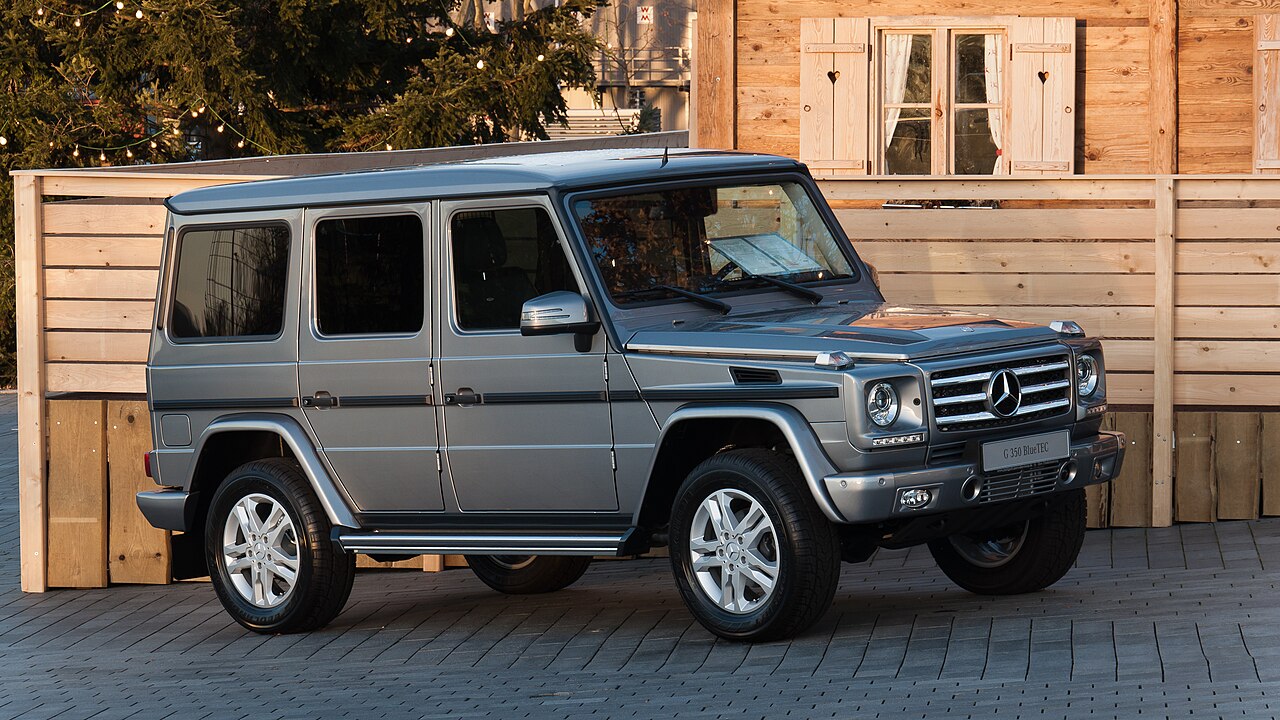 Licensed photo · Photo credit
Generations and technical specifications
Mercedes-Benz G-Class (W465)2024–present
| Specification | Value |
|---|---|
| Production | April 2024–present |
| Body styles | 5-door SUV |
| Layout | F4 (4MATIC) IWD (G 580 with EQ Technology) |
| Engines | Petrol 3.0 L M256 I6 turbocharged 4.0 L M177 V8 twin-turbo Diesel 3.0 L OM656 D30T M I6 turbocharged |
| Transmissions | 9-speed 9G-Tronic automatic 9-speed AMG SpeedShift TCT automatic 2-speed gearbox |
| Wheelbase | 2,890 mm |
| Length | 4,625–4,873 mm |
| Width | 1,931–1,948 mm |
| Height | 1,986–2,042 mm |
| Kerb weight | 2,485–3,085 kg |
| Class | Mid-size luxury SUV |
| Assembly | Austria: Graz (Magna Steyr) |
| Designer | Hans-Peter Bildhäuser |
Mercedes-Benz G-Class (W463)2018–2024
| Specification | Value |
|---|---|
| Production | May 2018–March 2024 |
| Model years | 2019–2024 |
| Body styles | 5-door SUV |
| Layout | F4 (4MATIC) |
| Engines | Petrol 2.0 L M264 turbo I4 3.0 L M256 turbo I6 4.0 L M176 twin-turbo V8 4.0 L M177 twin-turbo V8 Diesel 2.9 L OM656 D29T R SCR turbo I6 |
| Transmissions | 9-speed 9G-Tronic AMG SpeedShift TCT automatic |
| Wheelbase | 2,890 mm |
| Width | 1,931 mm |
| Height | 1,969 mm |
| Kerb weight | 2,354–2,485 kg |
| Class | Mid-size luxury SUV |
| Assembly | Austria: Graz (Magna Steyr) |
| Designer | Balázs Filczer |
Mercedes-Benz G-Class – W4631990–2018
| Specification | Value |
|---|---|
| Production | 1990–2018 |
| Model years | 1991–2018 |
| Body styles | 3-door SWB 2-door SWB convertible 5-door LWB station wagon 4-door LWB landaulet |
| Layout | Front engine, four-wheel drive |
| Engines | petrol 2.0 L M 102.965 E 20 I4 2.3 L M 102.989 E 23 I4 3.0 L M 103.987 E 30 I6 3.2 L M 104.996 E 32 I6 3.2 L M 112.945 E 32 V6 3.6 L M 104.992 E 36 I6 4.0 L M 176 DE 40 AL twin-turbo V8 5.0 L M 117.965 E 50 V8 5.0 L M 113.965 E 50 V8 5.4 L M 113 E 55 V8 5.4 L M 113 E 55 ML supercharged V8 5.5 L M 273 KE 55 V8 5.5 L M 157 DE 55 twin-turbo V8 6.0 L M 117.965 E 50 (bored out) V8 diesel +9 more |
| Transmissions | 5-speed manual 4-speed 4G-Tronic automatic 5-speed 5G-Tronic automatic 7-speed 7G-Tronic automatic |
| Wheelbase | 2,400 mm (2-door) 2,850 mm (4-door) |
| Length | Pre-2003: 4,661 mm 2004–09: 4,714 mm (LWB) 2010–18: 4,686 mm |
| Width | Pre-2003: 1,760 mm 2004–09: 1,811 mm 2004–09 AMG: 1,864 mm 2010–18: 1,824 mm 2010–18 AMG: 1,857 mm |
| Height | Pre-2002: 1,836 mm 2002–09: 1,976 mm 2010–18: 1,930 mm |
| Kerb weight | 2,580 kg (G 55 AMG) |
| Designer | Bruno Sacco |
Mercedes-Benz G-Class – W4611985–2022
| Specification | Value |
|---|---|
| Production | 1985–2022 (military variant) Civilian variant produced through 2019 |
| Body styles | 2-door SWB convertible 2-door cab chassis (pickup truck) 3-door SWB panel van 3-door LWB panel van 5-door LWB station wagon |
| Layout | Front engine, four-wheel drive |
| Engines | 2.3L M 102 E 23 I4 2.5L OM 602.930 I5 diesel 2.7L OM 612 DE 27 LA I5 turbodiesel 2.9L OM 602 D 29 I5 diesel 2.9L OM 602 DE 29 LA I5 turbodiesel 3.0L OM 642 DE 30 LA red. V6 turbodiesel |
| Transmissions | 4-speed 720.1 (W4A 018) automatic 5-speed manual 4-speed manual |
| Wheelbase | 2,400 mm (2-door) 2,850 mm (4-door) |
| Kerb weight | 2,145 kg |
| Designer | Bruno Sacco |
Engines and transmissions
| Model years | Engine | Transmission | Drive | Fuel |
|---|---|---|---|---|
| 2025–2027 | 4.0 L, 8 cyl mild hybrid | 9-speed automatic | Four-wheel drive | Petrol (premium) |
| 2025–2027 | Electric motor | 2-speed automatic | Four-wheel drive | Electricity |
| 2025–2026 | 3.0 L, 6 cyl mild hybrid | 9-speed automatic | Four-wheel drive | Petrol (premium) |
| 2019–2024 | 4.0 L, 8 cyl | 9-speed automatic | Four-wheel drive | Petrol (premium) |
| 2016–2018 | 4.0 L, 8 cyl | 7-speed automatic | Four-wheel drive | Petrol (premium) |
| 2010–2018 | 5.5 L, 8 cyl | 7-speed automatic | Four-wheel drive | Petrol (premium) |
| 2016–2018 | 6.0 L, 12 cyl | 7-speed automatic | Four-wheel drive | Petrol (premium) |
| 2010–2011 | 5.4 L, 8 cyl | 5-speed automatic | Four-wheel drive | Petrol (premium) |
| 2004–2009 | 5.4 L, 8 cyl | 5-speed automatic | Four-wheel or all-wheel drive | Petrol (premium) |
| 2007–2008 | 5.0 L, 8 cyl | 7-speed automatic | Four-wheel or all-wheel drive | Petrol (premium) |
| 2002–2006 | 5.0 L, 8 cyl | 5-speed automatic | Four-wheel or all-wheel drive | Petrol (premium) |
| 2003 | 5.5 L, 8 cyl | 5-speed automatic | Four-wheel or all-wheel drive | Petrol (premium) |
Fuel economy (EPA)
| Model years | Configuration | Combined | City | Highway | Electric range |
|---|---|---|---|---|---|
| 2025–2027 | 4.0 L, 8 cyl mild hybrid · 9-speed automatic · Four-wheel drive | 15.7 L/100 km | 16.8 L/100 km | 14.7 L/100 km | – |
| 2025–2027 | Electric motor · 2-speed automatic · Four-wheel drive | 29.7–33.6 kWh/100 km | 27.1–31.1 kWh/100 km | 32.9–37.3 kWh/100 km | 385–401 km |
| 2025–2026 | 3.0 L, 6 cyl mild hybrid · 9-speed automatic · Four-wheel drive | 13.1 L/100 km | 13.8 L/100 km | 12.4 L/100 km | – |
| 2019–2024 | 4.0 L, 8 cyl · 9-speed automatic · Four-wheel drive | 13.1–21.4 L/100 km | 13.8–23.5 L/100 km | 12.4–19.6 L/100 km | – |
| 2016–2018 | 4.0 L, 8 cyl · 7-speed automatic · Four-wheel drive | 18.1–21.4 L/100 km | 18.1–21.4 L/100 km | 16.8–21.4 L/100 km | – |
| 2010–2018 | 5.5 L, 8 cyl · 7-speed automatic · Four-wheel drive | 18.1 L/100 km | 19.6–21.4 L/100 km | 15.7–16.8 L/100 km | – |
| 2016–2018 | 6.0 L, 12 cyl · 7-speed automatic · Four-wheel drive | 19.6 L/100 km | 21.4 L/100 km | 18.1 L/100 km | – |
| 2010–2011 | 5.4 L, 8 cyl · 5-speed automatic · Four-wheel drive | 19.6 L/100 km | 21.4 L/100 km | 15.7–18.1 L/100 km | – |
| 2004–2009 | 5.4 L, 8 cyl · 5-speed automatic · Four-wheel or all-wheel drive | 18.1–19.6 L/100 km | 19.6–21.4 L/100 km | 15.7–18.1 L/100 km | – |
| 2007–2008 | 5.0 L, 8 cyl · 7-speed automatic · Four-wheel or all-wheel drive | 18.1 L/100 km | 19.6 L/100 km | 15.7 L/100 km | – |
| 2002–2006 | 5.0 L, 8 cyl · 5-speed automatic · Four-wheel or all-wheel drive | 19.6 L/100 km | 21.4 L/100 km | 18.1 L/100 km | – |
| 2003 | 5.5 L, 8 cyl · 5-speed automatic · Four-wheel or all-wheel drive | 18.1 L/100 km | 19.6 L/100 km | 16.8 L/100 km | – |
Values are the official EPA label figures for each model year, shown as the lowest and highest value for the configuration. Electric models show energy use per 100 km. Real-world consumption depends on driving style, weather and load. Luggage and passenger volumes follow the EPA measuring method and can differ from the VDA figures used in Europe.
EU type-approval data
| Years | Powertrain | Engine | Power | Mass | CO₂ | Electric range |
|---|---|---|---|---|---|---|
| 2018–2025 | Petrol | 3982 cm³ | 430 kW (585 PS) | 2560–2595 kg | 343–373 g/km (WLTP) | – |
| 2025 | Petrol hybrid | 2998 cm³ | 330 kW (449 PS) | 2485 kg | 255–264 g/km (WLTP) | – |
| 2024–2025 | Petrol hybrid | 2999 cm³ | 330 kW (449 PS) | 2485 kg | 256–261 g/km (WLTP) | – |
| 2024–2025 | Petrol hybrid | 3982 cm³ | 430 kW (585 PS) | 2640 kg | 337–338 g/km (WLTP) | – |
| 2024–2025 | Diesel hybrid | 2989 cm³ | 270 kW (367 PS) | 2555 kg | 234–240 g/km (WLTP) | – |
| 2024–2025 | Electric | – | 432 kW (587 PS) | 3085 kg | – | 415–459 km · 287–316 Wh/km |
| 2016–2021, 2023–2024 | Petrol | 3982 cm³ | 310 kW (421 PS) | 2429–2595 kg | 338–340 g/km (WLTP) | – |
| 2019–2024 | Diesel | 2925 cm³ | 243 kW (330 PS) | 2451–2508 kg | 281–290 g/km (WLTP) | – |
| 2019–2022 | Diesel | 2925 cm³ | 210 kW (286 PS) | 2451 kg | 281–290 g/km (WLTP) | – |
| 2015–2018 | Petrol | 5461 cm³ | 420 kW (571 PS) | 2555 kg | 322 g/km (NEDC) | – |
| 2015–2018 | Diesel | 2987 cm³ | 180 kW (245 PS) | 2610 kg | 261 g/km (NEDC) | – |
| 2011–2015 | Petrol | 5461 cm³ | 285 kW (387 PS) | 2315–2530 kg | 348 g/km (NEDC) | – |
| 2012–2015 | Petrol | 5461 cm³ | 400 kW (544 PS) | 2550 kg | 322 g/km (NEDC) | – |
| 2011–2015 | Diesel | 2987 cm³ | 155 kW (211 PS) | 2370–2580 kg | 295 g/km (NEDC) | – |
| 2011–2014 | Diesel | 2987 cm³ | 135 kW (184 PS) | 2540–2590 kg | 299 g/km (NEDC) | – |
| 2011–2013 | Petrol | 5439 cm³ | 373 kW (507 PS) | 2580 kg | 372 g/km (NEDC) | – |
Years are registration years. Each range runs from the 10th to the 90th percentile of the values reported for new registrations; it is not an average. Mass is the mass in running order. For electric cars the power is the type-approval net power, which can be lower than the peak power in brochures.
Key specifications
| Specification | Value |
|---|---|
| EPA size class | Standard SUV, SUV |
| Model years in EPA data | 2002–2027 |
| Powertrains | Mild hybrid, Electric, Petrol |
| Engine displacement | 3.0–6.0 L |
| Cylinders | 6, 8, 12 |
| Transmission types | Automatic |
| Drive | Four-wheel drive, Four-wheel or all-wheel drive |
| Fuel | Petrol (premium), Electricity |
| Configurations listed | 58 |
| Forced induction | Turbo- and supercharged (on some versions) |
| Start-stop system | On some versions |
| Electric motor (EPA) | 108 kW ACPM 3-Phase; 180 kW ACPM 6-Phase; 108, 108 and 108 kW ACPM 3-Phase |
| Luggage volume (EPA) | 1,388 L |
| Passenger volume (EPA) | 3,511 L |
| Electric range (EPA) | 385–401 km |
| Powertrains (EU) | Petrol, Petrol hybrid, Diesel, Diesel hybrid, Electric |
| Engine displacement (EU) | 2,925–5,461 cm³ |
| Power (EU) | 155–432 kW (211–587 PS) |
| Mass in running order (EU) | 2,315–3,085 kg |
| Wheelbase (EU) | 2,400–2,890 mm |
Years and markets
| Specification | Value |
|---|---|
| Model years (US) | 2002–2027 |
| New registrations (EU) | 2000–2026 |
Owner complaints (NHTSA)
| Component | Complaints | Most reported model years |
|---|---|---|
| Fuel and propulsion | 11 | 2011, 2022, 2023 |
| Electrical system | 9 | 2015, 2019, 2021 |
| Engine and cooling | 7 | 2015, 2021, 2023 |
| Brakes | 4 | 2005, 2017, 2019 |
| Body and structure | 4 | 2011, 2013, 2015 |
| Steering | 4 | 2013, 2014 |
| Stability and traction control | 4 | 2017, 2019 |
| Visibility and wipers | 3 | 2011, 2019 |
| Suspension | 3 | 2013, 2019, 2021 |
| Airbags | 3 | 2016, 2021 |
Source: complaints filed by owners with the U.S. National Highway Traffic Safety Administration (NHTSA) for model years 2005, 2009, 2011, 2013–2017, 2019–2023: 52 complaints, 2 with a crash and 2 with a fire. Complaints are owner reports that NHTSA has not verified, and one complaint can name more than one component. More complaints can also mean more cars sold.