Firebird
Pontiac Firebird: official NHTSA recalls, fault code help and maintenance guides.
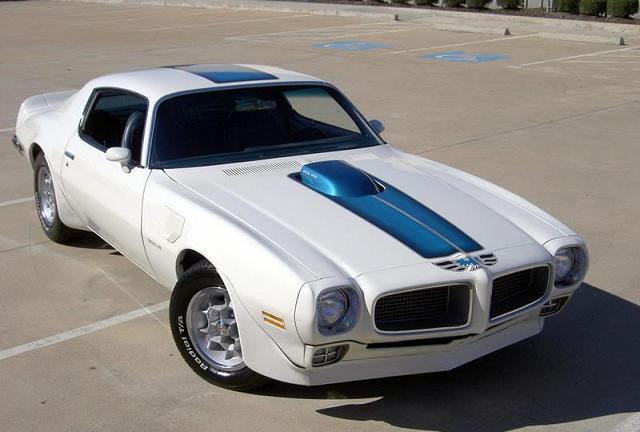 Licensed photo · Photo credit
Generations and technical specifications
Pontiac Firebird – Fourth generation1992–2002
| Specification | Value |
|---|---|
| Production | November 1992 – August 30, 2002 |
| Model years | 1993–2002 |
| Body styles | 2-door liftback 2-door convertible |
| Platform | F-body |
| Engines | 3,392.1 cm³ L32 V6 (160 hp) 3,785.4 cm³ L36 V6 (205 hp) 5,735.5 cm³ LT1 V8 (275-305 hp) 5,735.5 cm³ LT4 V8 (330 hp) 5,669.9 cm³ LS1 V8 (305-330 hp) 5,669.9 cm³ SLP Firehawk LS1 V8 (345-350 hp) |
| Transmissions | THM 4L60 4-speed automatic (1993) THM 4L60E 4-speed automatic (1994–2002) Borg Warner T-5 5-speed manual (V6 engine) Borg Warner T56 6-speed manual (V8 engine) |
| Wheelbase | 2,568 mm |
| Length | 1993–1997 Firebird: 4,968 mm 1998–2002 Firebird: 4,910 mm 1993–1997 Trans Am: 5,004 mm 1998–1999 Trans Am: 4,923 mm 2000–2002 Trans Am: 4,920 mm |
| Width | 1993–1997: 1,892 mm 1998–2002: 1,890 mm |
| Height | 1993–1999 Firebird 1,321 mm 2000–2002 Firebird: 1,300 mm 1993–1995 Trans Am: 1,313 mm 1996–1999 Trans Am: 1,321 mm 2000–2002 Trans Am: 1,316 mm 1993–1999 Firebird convertible: 1,339 mm 2000–2002 Firebird convertible 1,316 mm 1994–1999 Trans Am convertible: 1,331 mm |
| Kerb weight | 1,560 kg (5.7 L LT1 coupe) 1,490 kg (5.7 L LS1 coupe) |
| Assembly | Canada: Sainte-Thérèse, Quebec (Sainte-Thérèse Assembly) |
| Designer | John Folden |
Engines and transmissions
| Model years | Engine | Transmission | Drive | Fuel |
|---|---|---|---|---|
| 2000–2002 | 3.8 L, 6 cyl | 4-speed automatic | Rear-wheel drive | Petrol (regular) |
| 2000–2002 | 3.8 L, 6 cyl | 5-speed manual | Rear-wheel drive | Petrol (regular) |
| 2000–2002 | 5.7 L, 8 cyl | 4-speed automatic | Rear-wheel drive | Petrol (premium) |
| 2000–2002 | 5.7 L, 8 cyl | 6-speed manual | Rear-wheel drive | Petrol (premium) |
Fuel economy (EPA)
| Model years | Configuration | Combined | City | Highway |
|---|---|---|---|---|
| 2000–2002 | 3.8 L, 6 cyl · 4-speed automatic · Rear-wheel drive | 11.2–11.8 L/100 km | 13.8 L/100 km | 8.4–9.0 L/100 km |
| 2000–2002 | 3.8 L, 6 cyl · 5-speed manual · Rear-wheel drive | 11.2 L/100 km | 13.8 L/100 km | 8.1–8.4 L/100 km |
| 2000–2002 | 5.7 L, 8 cyl · 4-speed automatic · Rear-wheel drive | 12.4–13.1 L/100 km | 14.7–15.7 L/100 km | 10.2 L/100 km |
| 2000–2002 | 5.7 L, 8 cyl · 6-speed manual · Rear-wheel drive | 11.8–12.4 L/100 km | 13.8–14.7 L/100 km | 9.4 L/100 km |
Values are the official EPA label figures for each model year, shown as the lowest and highest value for the configuration. Electric models show energy use per 100 km. Real-world consumption depends on driving style, weather and load. Luggage and passenger volumes follow the EPA measuring method and can differ from the VDA figures used in Europe.
Key specifications
| Specification | Value |
|---|---|
| EPA size class | Subcompact car |
| Model years in EPA data | 2000–2002 |
| Powertrains | Petrol |
| Engine displacement | 3.8–5.7 L |
| Cylinders | 6, 8 |
| Transmission types | Automatic, Manual |
| Drive | Rear-wheel drive |
| Fuel | Petrol (regular), Petrol (premium) |
| Configurations listed | 12 |
| Luggage volume (EPA) | 340 L |
| Passenger volume (EPA) | 2,379 L |
Years and markets
| Specification | Value |
|---|---|
| Model years (US) | 2000–2002 |
Owner complaints (NHTSA)
| Component | Complaints | Most reported model years |
|---|---|---|
| Electrical system | 24 | 2000, 2001, 2002 |
| Engine and cooling | 22 | 2000, 2001, 2002 |
| Brakes | 18 | 2000, 2001, 2002 |
| Lights | 17 | 2000, 2001, 2002 |
| Tyres | 8 | 2000, 2001, 2002 |
| Visibility and wipers | 8 | 2000, 2001, 2002 |
| Body and structure | 7 | 2000, 2001, 2002 |
| Transmission and drivetrain | 7 | 2000, 2001, 2002 |
| Seat belts | 5 | 2000, 2001 |
| Steering | 5 | 2000, 2002 |
Source: complaints filed by owners with the U.S. National Highway Traffic Safety Administration (NHTSA) for model years 2000–2002: 106 complaints, 5 with a crash and 6 with a fire. Complaints are owner reports that NHTSA has not verified, and one complaint can name more than one component. More complaints can also mean more cars sold.