A3
Audi A3: official NHTSA recalls, fault code help and maintenance guides.
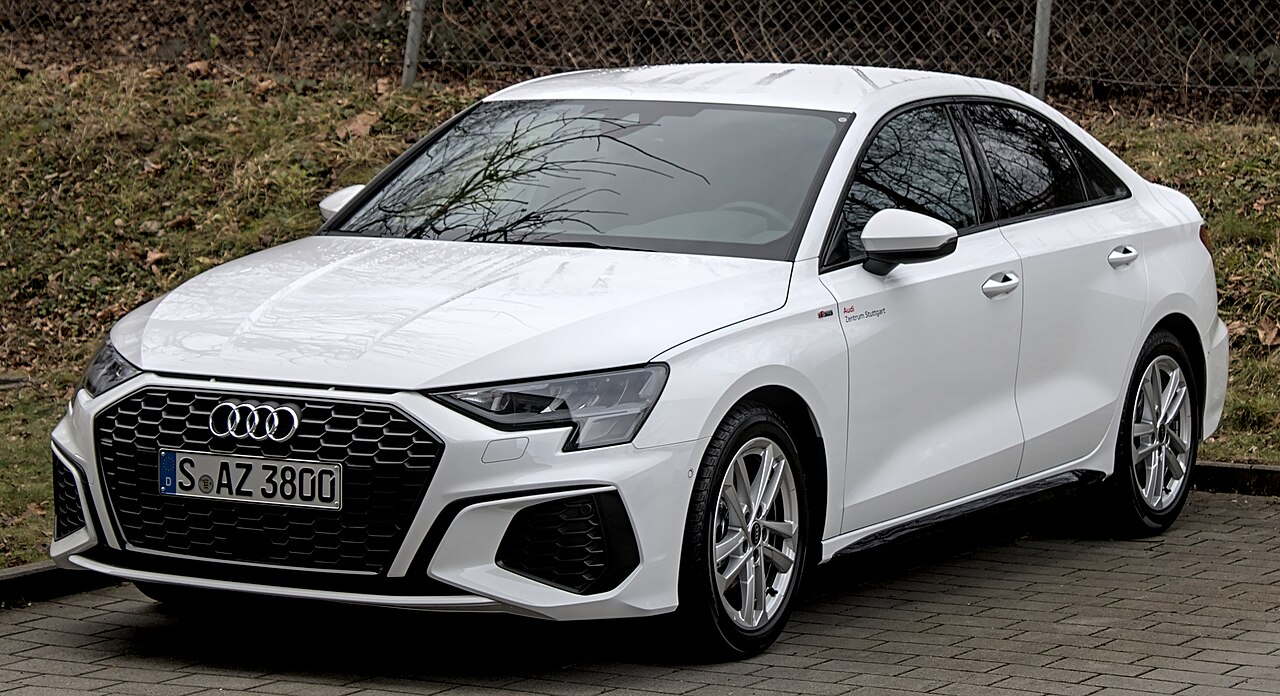 Licensed photo · Photo credit
Generations and technical specifications
Audi A3 – Fourth generation2020–present
| Specification | Value |
|---|---|
| Model code | 8Y |
| Production | May 2020–present |
| Model years | 2022–present |
| Body styles | 5-door hatchback (Sportback) 4-door saloon |
| Platform | Volkswagen Group MQB Evo |
| Engines | 1.0 L EA211 CHYB turbo 1.4 L EA211 I4 t/c ACDT PHEV System 1.5 L EA211 Evo turbo I4 (mild hybrid) 1.5 L EA211 Evo turbo I4 (PHEV) 2.0 L EA888 evo 2 turbo I4 (S3) 1.5 L EA211 TGI Evo turbo I4 (30 g-tron) 2.5 L EA855 R5 turbo I5 TFSI 2.0 L EA288 evo 4 TDI |
| Electric motor | 48 Volt belt-drive alternator starter (MHEV) 81 kW – 85 kW Permanent magnet AC synchronous motor |
| Transmissions | 6-speed manual MQ350 7-speed S-tronic DQ381 |
| Drivetrain | MHEV PHEV |
| Battery | 13 kWh Li-ion |
| Wheelbase | 2,640 mm (sportback) 2,636 mm (sedan) 2,680 mm (A3L) |
| Length | 4,337 mm (sportback) 4,495 mm (sedan) 4,548 mm (A3L) |
| Width | 1,816 mm |
| Height | 1,425 mm |
| Kerb weight | 1,651 kg RS3 |
| Assembly | Germany: Ingolstadt (Audi AG Werk Ingolstadt) China: Qingdao (FAW-VW Automotive Co. Ltd, A3L) |
| Designer | Jakob Hirzel, Juan Carlos Huerta |
Audi A3 – Third generation2012–2020
| Specification | Value |
|---|---|
| Model code | 8V |
| Production | 2012–2020 October 2013–2020 (Convertible) |
| Model years | 2015–2020 (saloon) 2015–2019 (convertible) |
| Body styles | 2-door convertible 3-door hatchback 4-door saloon 5-door hatchback |
| Platform | Volkswagen Group MQB platform |
| Engines | 1.0 L TFSi I3 1.2 L TFSi I4 1.4 L TFSi I4 1.4 L TFSi ACDT I4 1.4 L TFSi ACDT PHEV I4 1.5 L EA211 Evo TFSi ACDT I4 1.8 L EA888 TFSi I4 2.0 L EA888 TFSi I4 2.5 L TFSi I5 1.4 L TGi ACDT I4 (A3 g-tron) 1.6 L TDi I4 2.0 L TDi I4 |
| Transmissions | 6-speed manual MQ350 6-speed (S-Tronic) DQ250 7-speed (S-Tronic) DQ200 7-speed (S-Tronic) DQ381 7-speed (S-Tronic) DQ500 |
| Wheelbase | 2-door convertible: 2,595 mm 3-door: 2,601 mm 4-door: 2,636 mm 5-door: 2,636 mm |
| Length | 2-door convertible: 4,423 mm 3-door: 4,237 mm 4-door: 4,456 mm 5-door: 4,310 mm |
| Width | 2-door convertible: 1,793 mm 3-door: 1,777 mm 4-door: 1,796 mm 5-door: 1,785 mm |
| Height | 2-door convertible: 1,409 mm 3-door: 1,421 mm 4-door: 1,416 mm 5-door: 1,421 mm |
| Kerb weight | 1,150–1,520 kg |
| Assembly | Germany: Ingolstadt Hungary: Győr China: Foshan (FAW-Volkswagen) India: Aurangabad (Audi India) Brazil: São José dos Pinhais Algeria: Relizane |
| Designer | Dany Garand (2009) Markus Gleitz (saloon: 2010) |
Audi A3 – Second generation2003–2013
| Specification | Value |
|---|---|
| Model code | 8P |
| Production | 2003–2013 |
| Model years | 2004–2013 |
| Body styles | 3-door hatchback 5-door Sportback (hatchback) 2-door convertible |
| Platform | Volkswagen Group A5 (PQ35) |
| Engines | 1.2 L I4 Turbo FSI (TFSI) 1.4 L I4 Turbo FSI (TFSI) 1.6 L I4 1.6 L I4 FSI 1.8 L I4 TFSI 2.0 L I4 FSI 2.0 L I4 TFSI 2.5 L I5 TFSI 3.2 L VR6 (petrol) 1.6 L I4 TDI 1.9 L I4 TDI 2.0 L I4 TDI |
| Transmissions | 5-speed manual 6-speed manual 6-speed automatic 6-speed S-Tronic 7-speed S-Tronic |
| Wheelbase | 2,578 mm |
| Length | 3-door: 4,215 mm 5-door: 4,285 mm |
| Width | 1,765 mm |
| Height | 1,420 mm |
| Assembly | Germany: Ingolstadt Belgium: Brussels (2004–2005; 2007–May 2010) Hungary: Győr Brazil: Curitiba (Volkswagen do Brasil, CKD; 12/2012 – 03/2013) |
| Designer | Gary Telaak (2000) |
Audi A3 – First generation1996–2003
| Specification | Value |
|---|---|
| Model code | 8L |
| Production | September 1996–2003 |
| Body styles | 3-door hatchback 5-door hatchback |
| Platform | Volkswagen Group A4 (PQ34) |
| Engines | petrol 1.6 L I4 1.8 L 20v I4 1.8 L 20v turbo I4 diesel 1.9 L TDI PD I4 |
| Transmissions | 5/6-speed Manual 4/5-speed Automatic |
| Wheelbase | A3 2,513 mm quattro & S3: 2,519 mm |
| Length | A3 4,152 mm S3 4,159 mm |
| Width | A3 1,735 mm S3 1,763 mm |
| Height | A3 1,423 mm S3 1,415 mm |
| Assembly | Germany: Ingolstadt (1997 – 2003) Hungary: Győr (April 2001 – April 2003) Brazil: Curitiba (Volkswagen do Brasil: 1999–2006) |
| Designer | Dirk van Braeckel (1992) |
Engines and transmissions
| Model years | Engine | Transmission | Drive | Fuel |
|---|---|---|---|---|
| 2025–2027 | 2.0 L, 4 cyl | 7-speed automated manual | All-wheel drive | Petrol (premium) |
| 2024 | 2.0 L, 4 cyl mild hybrid | 7-speed automated manual | Four-wheel drive | Petrol (regular) |
| 2022–2024 | 2.0 L, 4 cyl mild hybrid | 7-speed automated manual | Front-wheel drive | Petrol (regular) |
| 2022–2023 | 2.0 L, 4 cyl mild hybrid | 7-speed automated manual | All-wheel drive | Petrol (regular) |
| 2019–2020 | 2.0 L, 4 cyl | 7-speed automated manual | All-wheel drive | Petrol (regular) |
| 2017–2020 | 2.0 L, 4 cyl | 7-speed automated manual | Front-wheel drive | Petrol (regular) |
| 2016–2018 | 1.4 L, 4 cyl plug-in hybrid | 6-speed automated manual | Front-wheel drive | Petrol (premium) and electricity |
| 2016–2018 | 2.0 L, 4 cyl | 6-speed automated manual | All-wheel drive | Petrol (regular) |
| 2016 | 1.8 L, 4 cyl | 6-speed automated manual | Front-wheel drive | Petrol (regular) |
| 2015 | 1.8 L, 4 cyl | 6-speed automated manual | Front-wheel drive | Petrol (premium) |
| 2013, 2015 | 2.0 L, 4 cyl | 6-speed automated manual | All-wheel drive | Petrol (premium) |
| 2013, 2015 | 2.0 L, 4 cyl | 6-speed automated manual | Front-wheel drive | Diesel |
| +7 more configurations |
Fuel economy (EPA)
| Model years | Configuration | Combined | City | Highway | Electric range |
|---|---|---|---|---|---|
| 2019–2020, 2025–2027 | 2.0 L, 4 cyl · 7-speed automated manual · All-wheel drive | 8.4–9.4 L/100 km | 9.8–10.7 L/100 km | 6.9–7.8 L/100 km | – |
| 2024 | 2.0 L, 4 cyl mild hybrid · 7-speed automated manual · Four-wheel drive | 7.8 L/100 km | 8.7 L/100 km | 6.9 L/100 km | – |
| 2022–2024 | 2.0 L, 4 cyl mild hybrid · 7-speed automated manual · Front-wheel drive | 7.4 L/100 km | 8.1–8.4 L/100 km | 6.2–6.4 L/100 km | – |
| 2022–2023 | 2.0 L, 4 cyl mild hybrid · 7-speed automated manual · All-wheel drive | 7.6–7.8 L/100 km | 8.4–8.7 L/100 km | 6.5–6.7 L/100 km | – |
| 2017–2020 | 2.0 L, 4 cyl · 7-speed automated manual · Front-wheel drive | 7.8–8.4 L/100 km | 8.7–9.4 L/100 km | 6.5–7.1 L/100 km | – |
| 2016–2018 | 1.4 L, 4 cyl plug-in hybrid · 6-speed automated manual · Front-wheel drive | 6.0–6.9 L/100 km | 6.4–7.1 L/100 km | 5.7–6.5 L/100 km | 26–27 km |
| 2013, 2015–2018 | 2.0 L, 4 cyl · 6-speed automated manual · All-wheel drive | 8.7–9.8 L/100 km | 9.8–11.2 L/100 km | 7.1–8.4 L/100 km | – |
| 2015–2016 | 1.8 L, 4 cyl · 6-speed automated manual · Front-wheel drive | 8.4–8.7 L/100 km | 9.8–10.2 L/100 km | 6.7–7.1 L/100 km | – |
| 2013, 2015 | 2.0 L, 4 cyl · 6-speed automated manual · Front-wheel drive | 6.7–9.8 L/100 km | 7.6–11.2 L/100 km | 5.7–8.4 L/100 km | – |
| 2006–2013 | 2.0 L, 4 cyl · 6-speed manual · Front-wheel drive | 9.8 L/100 km | 11.2–11.8 L/100 km | 7.8–8.1 L/100 km | – |
| 2010–2012 | 2.0 L, 4 cyl · 6-speed automatic · All-wheel drive | 9.8 L/100 km | 11.2 L/100 km | 8.4 L/100 km | – |
| 2006–2012 | 2.0 L, 4 cyl · 6-speed automatic · Front-wheel drive | 7.4–9.8 L/100 km | 8.1–10.7 L/100 km | 6.4–8.4 L/100 km | – |
| +2 more configurations |
Values are the official EPA label figures for each model year, shown as the lowest and highest value for the configuration. Electric models show energy use per 100 km. Real-world consumption depends on driving style, weather and load. Luggage and passenger volumes follow the EPA measuring method and can differ from the VDA figures used in Europe.
EU type-approval data
| Years | Powertrain | Engine | Power | Mass | CO₂ | Electric range |
|---|---|---|---|---|---|---|
| 2017–2025 | Petrol | 1498 cm³ | 110 kW (150 PS) | 1305–1455 kg | 132–154 g/km (WLTP) | – |
| 2020–2025 | Petrol hybrid | 1498 cm³ | 110 kW (150 PS) | 1395–1400 kg | 124–136 g/km (WLTP) | – |
| 2020–2025 | Diesel | 1968 cm³ | 85 kW (116 PS) | 1420–1450 kg | 114–127 g/km (WLTP) | – |
| 2012–2025 | Diesel | 1968 cm³ | 110 kW (150 PS) | 1380–1490 kg | 122–146 g/km (WLTP) | – |
| 2020–2024 | Petrol | 999 cm³ | 81 kW (110 PS) | 1295–1300 kg | 123–131 g/km (WLTP) | – |
| 2016–2024 | Petrol | 1984 cm³ | 140 kW (190 PS) | 1410–1645 kg | 159–175 g/km (WLTP) | – |
| 2020–2024 | Petrol hybrid | 999 cm³ | 81 kW (110 PS) | 1355–1360 kg | 116–124 g/km (WLTP) | – |
| 2020–2024 | Petrol plug-in hybrid | 1395 cm³ | 110 kW (150 PS) | 1625–1660 kg | 24–47 g/km (WLTP) | 46–78 km · 137–154 Wh/km |
| 2016–2020 | Petrol | 999 cm³ | 85 kW (116 PS) | 1255–1280 kg | 131–142 g/km (WLTP) | – |
| 2017–2020 | Diesel | 1598 cm³ | 85 kW (116 PS) | 1335–1385 kg | 138–143 g/km (WLTP) | – |
| 2013–2020 | Diesel | 1968 cm³ | 135 kW (184 PS) | 1395–1550 kg | 164–174 g/km (WLTP) | – |
| 2014–2018 | Petrol-electric | 1395 cm³ | 110 kW (150 PS) | 1615 kg | 36–40 g/km (NEDC) | 115–124 Wh/km |
| 2014–2018 | Natural gas (CNG) | 1395 cm³ | 81 kW (110 PS) | 1335–1355 kg | 88–124 g/km (NEDC) | – |
| 2014–2017 | Petrol | 1395 cm³ | 110 kW (150 PS) | 1300–1450 kg | 80–120 g/km (WLTP) | – |
| 2013–2017 | Diesel | 1598 cm³ | 81 kW (110 PS) | 1315–1360 kg | 88–107 g/km (NEDC) | – |
| 2014–2016 | Petrol | 1197 cm³ | 81 kW (110 PS) | 1245–1275 kg | 110–117 g/km (NEDC) | – |
| 2014–2016 | Petrol | 1395 cm³ | 92 kW (125 PS) | 1280–1384 kg | 114–124 g/km (NEDC) | – |
| 2012–2016 | Petrol | 1798 cm³ | 132 kW (179 PS) | 1325–1505 kg | 129–152 g/km (NEDC) | – |
| 2013–2015 | Petrol | 1395 cm³ | 103 kW (140 PS) | 1300–1440 kg | 109–114 g/km (NEDC) | – |
| 2011–2014 | Petrol | 1197 cm³ | 77 kW (105 PS) | 1245–1345 kg | 114–127 g/km (NEDC) | – |
| 2012–2014 | Petrol | 1395 cm³ | 90 kW (122 PS) | 1250–1300 kg | 116–123 g/km (NEDC) | – |
| 2011–2014 | Diesel | 1598 cm³ | 77 kW (105 PS) | 1335–1395 kg | 99–112 g/km (NEDC) | – |
| 2011–2013 | Petrol | 1390 cm³ | 92 kW (125 PS) | 1370–1485 kg | 127–139 g/km (NEDC) | – |
| 2011–2013 | Diesel | 1968 cm³ | 103 kW (140 PS) | 1435–1535 kg | 115–129 g/km (NEDC) | – |
| 2010–2012 | Petrol | 1595 cm³ | – | 1260–1300 kg | 162–164 g/km (NEDC) | – |
Years are registration years. Each range runs from the 10th to the 90th percentile of the values reported for new registrations; it is not an average. Mass is the mass in running order. For electric cars the power is the type-approval net power, which can be lower than the peak power in brochures.
Key specifications
| Specification | Value |
|---|---|
| EPA size class | Subcompact car, Compact car, Small estate |
| Model years in EPA data | 2006–2013, 2015–2020, 2022–2027 |
| Powertrains | Petrol, Mild hybrid, Plug-in hybrid, Diesel |
| Engine displacement | 1.4–3.2 L |
| Cylinders | 4, 6 |
| Transmission types | Automated manual, Manual, Automatic |
| Drive | All-wheel drive, Front-wheel drive, Four-wheel drive, Four-wheel or all-wheel drive |
| Fuel | Petrol (premium), Petrol (regular), Petrol (premium) and electricity, Diesel |
| Configurations listed | 66 |
| Forced induction | Turbocharged (on some versions) |
| Start-stop system | On some versions |
| Electric motor (EPA) | 80 kW DCPM |
| Luggage volume (EPA) | 227–566 L |
| Passenger volume (EPA) | 2,237–2,520 L |
| Powertrains (EU) | Petrol, Petrol hybrid, Petrol plug-in hybrid, Diesel |
| Engine displacement (EU) | 999–1,968 cm³ |
| Power (EU) | 77–135 kW (105–184 PS) |
| Mass in running order (EU) | 1,250–1,660 kg |
| Wheelbase (EU) | 2,578–2,624 mm |
Years and markets
| Specification | Value |
|---|---|
| Model years (US) | 2006–2013, 2015–2020, 2022–2027 |
| New registrations (EU) | 2000–2026 |
Owner complaints (NHTSA)
| Component | Complaints | Most reported model years |
|---|---|---|
| Airbags | 398 | 2006, 2015, 2016 |
| Transmission and drivetrain | 129 | 2006, 2007, 2009 |
| Fuel and propulsion | 125 | 2010, 2015, 2016 |
| Electrical system | 89 | 2015, 2016, 2017 |
| Engine and cooling | 85 | 2006, 2015, 2016 |
| Lights | 35 | 2006, 2012, 2015 |
| Seat belts | 20 | 2015, 2016, 2017 |
| Seats | 20 | 2015, 2016, 2017 |
| Brakes | 18 | 2009, 2010, 2015 |
| Tyres | 17 | 2007, 2016, 2018 |
Source: complaints filed by owners with the U.S. National Highway Traffic Safety Administration (NHTSA) for model years 2006–2013, 2015–2020, 2024–2025: 830 complaints, 21 with a crash and 7 with a fire. Complaints are owner reports that NHTSA has not verified, and one complaint can name more than one component. More complaints can also mean more cars sold.