Audi
A6 e-Tron
Audi A6 e-Tron: official NHTSA recalls, fault code help and maintenance guides.
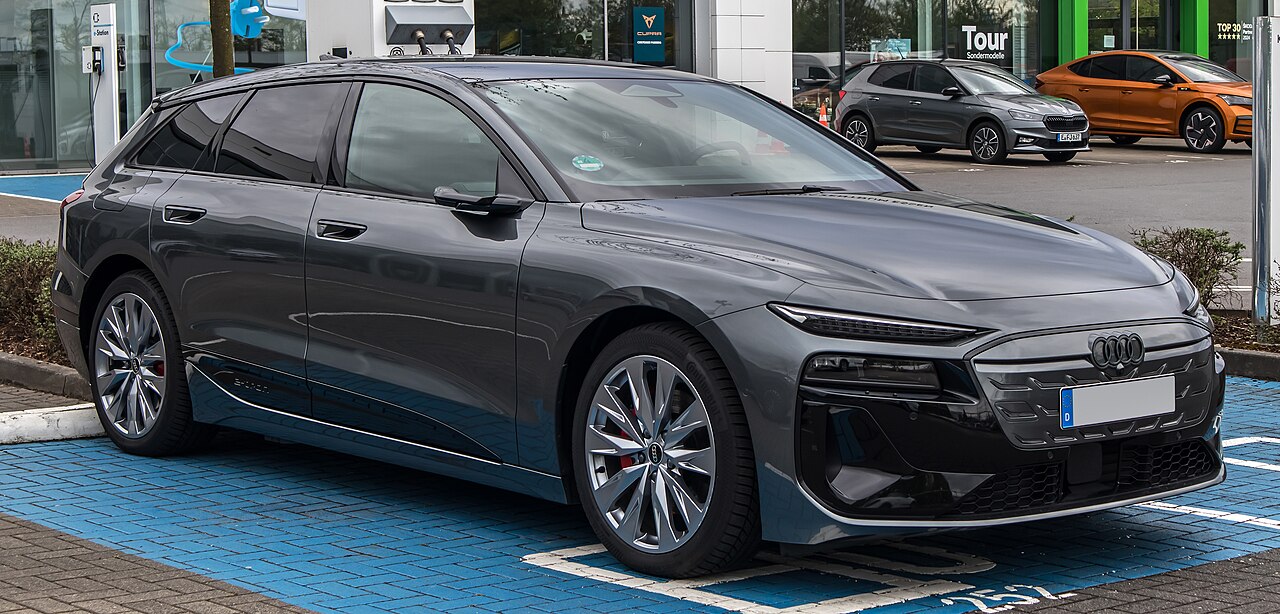 Licensed photo · Photo credit
MakeAudi
ClassLarge car
Model years (US)2027
New registrations (EU)2021–2026
Recall dataNHTSA (United States)
Generations and technical specifications
Audi A6 e-tron2024–present
| Specification | Value |
|---|---|
| Production | 2024–present |
| Body styles | 5-door liftback (Sportback) 4-door sedan (A6L e-tron) 5-door station wagon (Avant) |
| Layout | Rear-motor, rear-wheel-drive Dual-motor, four-wheel-drive |
| Platform | Premium Platform Electric (PPE) |
| Electric motor | 1× permanent magnet synchronous 2× permanent magnet synchronous (quattro) 1x permanent magnet synchronous + 1x induction motor (S6) |
| Transmissions | Single-speed gear reduction |
| Battery | 83 kWh NMC811 CATL 100 kWh NMC811 CATL |
| Charging | CCS Type1/2: 225270 kW DC SAE J1772/Type 2: 9.611 kW AC |
| Wheelbase | 2,946 mm 3,076 mm (A6L e-tron) |
| Length | 4,928 mm 5,073 mm (A6L e-tron) |
| Width | 1,923 mm 1,942 mm (A6L e-tron) |
| Height | (Sportback) (Avant) 1,522 mm (A6L e-tron) |
| Class | Executive car (E) |
| Assembly | Germany: Ingolstadt China: Changchun (Audi-FAW, A6L e-tron) |
| Designer | Sascha Heyde |
Engines and transmissions
| Model years | Engine | Transmission | Drive | Fuel |
|---|---|---|---|---|
| 2027 | Electric motor | Single-speed | All-wheel drive | Electricity |
| 2027 | Electric motor | Single-speed | Rear-wheel drive | Electricity |
Fuel economy (EPA)
| Model years | Configuration | Combined | City | Highway | Electric range |
|---|---|---|---|---|---|
| 2027 | Electric motor · Single-speed · All-wheel drive | 17.9–19.9 kWh/100 km | 17.3–19.2 kWh/100 km | 18.5–20.7 kWh/100 km | 526–579 km |
| 2027 | Electric motor · Single-speed · Rear-wheel drive | 16.4–18.9 kWh/100 km | 15.6–17.9 kWh/100 km | 17.4–20.0 kWh/100 km | 560–636 km |
Values are the official EPA label figures for each model year, shown as the lowest and highest value for the configuration. Electric models show energy use per 100 km. Real-world consumption depends on driving style, weather and load. Luggage and passenger volumes follow the EPA measuring method and can differ from the VDA figures used in Europe.
EU type-approval data
| Years | Powertrain | Power | Mass | Electric range |
|---|---|---|---|---|
| 2025 | Electric | 100 kW (136 PS) | 2175–2185 kg | 532–612 km · 140–162 Wh/km |
| 2024–2025 | Electric | 120 kW (163 PS) | 2250–2260 kg | 648–732 km · 145–165 Wh/km |
| 2025 | Electric | 138 kW (188 PS) | 2360–2370 kg | 612–693 km · 153–173 Wh/km |
| 2025 | Electric | 140 kW (190 PS) | 2175–2370 kg | 456–538 km · 183–192 Wh/km |
| 2025 | Electric | 210 kW (286 PS) | 2175–2185 kg | 534–611 km · 140–162 Wh/km |
| 2024–2025 | Electric | 270 kW (367 PS) | 2250–2296 kg | 641–729 km · 146–167 Wh/km |
| 2025 | Electric | 315 kW (428 PS) | 2360–2370 kg | 615–688 km · 154–173 Wh/km |
Years are registration years. Each range runs from the 10th to the 90th percentile of the values reported for new registrations; it is not an average. Mass is the mass in running order. For electric cars the power is the type-approval net power, which can be lower than the peak power in brochures.
Key specifications
| Specification | Value |
|---|---|
| EPA size class | Large car |
| Model years in EPA data | 2027 |
| Powertrains | Electric |
| Transmission types | Single-speed |
| Drive | Rear-wheel drive, All-wheel drive |
| Fuel | Electricity |
| Configurations listed | 4 |
| Electric motor (EPA) | 225 and 270 kW Asynchron 3-Phase |
| Luggage volume (EPA) | 736 L |
| Passenger volume (EPA) | 2,718 L |
| Electric range (EPA) | 526–636 km |
| Powertrains (EU) | Electric |
| Power (EU) | 138–315 kW (188–428 PS) |
| Mass in running order (EU) | 2,175–2,370 kg |
Years and markets
| Specification | Value |
|---|---|
| Model years (US) | 2027 |
| New registrations (EU) | 2021–2026 |