e-tron
Audi e-tron: official NHTSA recalls, fault code help and maintenance guides.
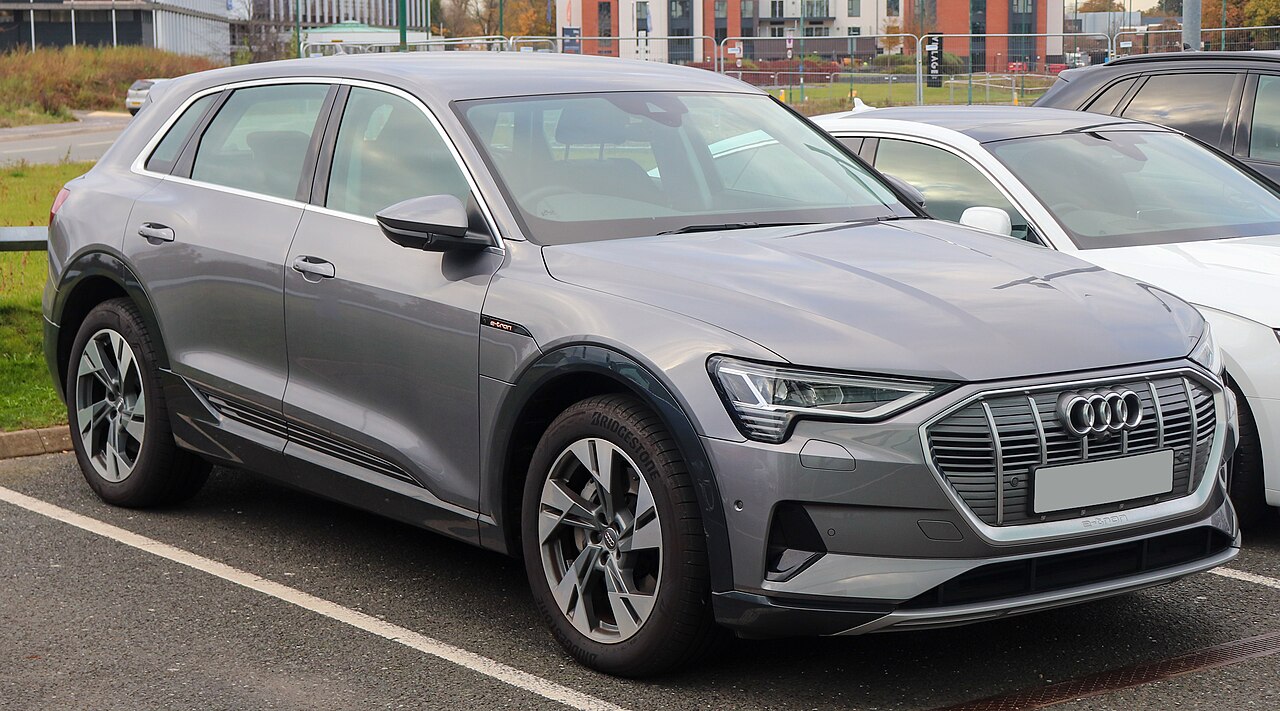 Licensed photo · Photo credit
Generations and technical specifications
Audi Q8 e-tron2018–2025
| Specification | Value |
|---|---|
| Production | September 2018 – February 2025 |
| Model years | 2019–2025 |
| Body styles | 5-door SUV 5-door coupé SUV (Sportback) |
| Layout | Dual or Triple-motors, four-wheel drive |
| Platform | Volkswagen Group MLB Evo |
| Electric motor | 2x asynchronous motors (ASMs) 3x asynchronous motors (ASMs) (SQ8 e-tron) |
| Transmissions | Single speed with fixed ratio |
| Battery | Current versions (Q8 e-tron) 55 e-tron: 114 kWh Li-ion (106 kWh usable) SQ8 e-tron: 114 kWh Li-ion (106 kWh usable) 50 e-tron: 95 kWh Li-ion (89 kWh usable) Previous versions (e-tron) 55 quattro, post-update: 95 kWh Li-ion (86.5 kWh usable) 55 quattro: 95 kWh Li-ion (83.6 kWh usable) 50 quattro: 71 kWh Li-ion (64.7 kWh usable) |
| Charging | EU: 11 kW AC 22 kW AC (optional) US: 9.6 kW AC (with supplied charger) US: 11 kW AC (with 48 amp J1772 charger) All markets 170 kW DC or 150 kW DC |
| Wheelbase | 2,928 mm |
| Length | 4,901 mm |
| Width | 1,935 mm |
| Height | 1,616 mm |
| Kerb weight | ~2,560 kg |
| Class | Mid-size luxury crossover SUV |
| Assembly | Belgium: Forest (Audi Brussels) China: Changchun (FAW-VW) |
| Designer | Jürgen Löffler |
Engines and transmissions
| Model years | Engine | Transmission | Drive | Fuel |
|---|---|---|---|---|
| 2023 | Electric motor | 2-speed automatic | All-wheel drive | Electricity |
| 2019–2022 | Electric motor | Single-speed | All-wheel drive | Electricity |
Fuel economy (EPA)
| Model years | Configuration | Combined | City | Highway | Electric range |
|---|---|---|---|---|---|
| 2023 | Electric motor · 2-speed automatic · All-wheel drive | 26.6–26.8 kWh/100 km | 26.8–27.3 kWh/100 km | 26.2–26.5 kWh/100 km | 362–364 km |
| 2019–2022 | Electric motor · Single-speed · All-wheel drive | 27.0–28.3 kWh/100 km | 26.9–28.2 kWh/100 km | 26.9–28.5 kWh/100 km | 328–357 km |
Values are the official EPA label figures for each model year, shown as the lowest and highest value for the configuration. Electric models show energy use per 100 km. Real-world consumption depends on driving style, weather and load. Luggage and passenger volumes follow the EPA measuring method and can differ from the VDA figures used in Europe.
EU type-approval data
| Years | Powertrain | Power | Mass | Electric range |
|---|---|---|---|---|
| 2019–2023, 2025 | Electric | 370 kW (503 PS) | 2695–2730 kg | 350–372 km · 255–277 Wh/km |
| 2021–2024 | Electric | 140 kW (190 PS) | 2350 kg | 457–481 km · 192–213 Wh/km |
| 2019, 2021, 2024 | Electric | 320 kW (435 PS) | 2350–2417 kg | 463–479 km · 202–241 Wh/km |
| 2021–2024 | Electric | 350 kW (476 PS) | 2350 kg | 458–489 km · 196–213 Wh/km |
| 2019–2023 | Electric | 230 kW (313 PS) | 2445 kg | 283–332 km · 218–252 Wh/km |
| 2019–2023 | Electric | 300 kW (408 PS) | 2565–2595 kg | 375–417 km · 230–255 Wh/km |
| 2019–2022 | Electric | 40 kW (54 PS) | 2445–2595 kg | 292–378 km · 249–260 Wh/km |
| 2020, 2022 | Electric | 115 kW (156 PS) | 2445 kg | 307–317 km · 232–239 Wh/km |
| 2019–2020, 2022 | Electric | 141 kW (192 PS) | 2555–2595 kg | 386–404 km · 242–281 Wh/km |
| 2019–2022 | Electric | 158 kW (215 PS) | 2445–2595 kg | 302–413 km · 220–257 Wh/km |
| 2020–2022 | Electric | 226 kW (307 PS) | 2695–2730 kg | 351–358 km · 259–282 Wh/km |
| 2019–2021 | Electric | 172 kW (234 PS) | 2445–2671 kg | 309–404 km · 220–248 Wh/km |
Years are registration years. Each range runs from the 10th to the 90th percentile of the values reported for new registrations; it is not an average. Mass is the mass in running order. For electric cars the power is the type-approval net power, which can be lower than the peak power in brochures.
Key specifications
| Specification | Value |
|---|---|
| EPA size class | Standard SUV |
| Model years in EPA data | 2019–2023 |
| Powertrains | Electric |
| Transmission types | Automatic, Single-speed |
| Drive | All-wheel drive |
| Fuel | Electricity |
| Configurations listed | 8 |
| Electric motor (EPA) | 141 and 172 kW Asynchron 3-Phase |
| Electric range (EPA) | 328–364 km |
| Powertrains (EU) | Electric |
| Power (EU) | 115–350 kW (156–476 PS) |
| Mass in running order (EU) | 2,350–2,671 kg |
| Wheelbase (EU) | 2,900–2,930 mm |
Years and markets
| Specification | Value |
|---|---|
| Model years (US) | 2019–2027 |
| New registrations (EU) | 2018–2026 |
Owner complaints (NHTSA)
| Component | Complaints | Most reported model years |
|---|---|---|
| Electrical system | 61 | 2019, 2020, 2021 |
| Transmission and drivetrain | 20 | 2019, 2021 |
| Engine and cooling | 18 | 2019, 2021 |
| Fuel and propulsion | 16 | 2019, 2021 |
| Driver assistance | 10 | 2019, 2021 |
| Brakes | 9 | 2019, 2021 |
| Visibility and wipers | 6 | 2019 |
| Body and structure | 4 | 2019, 2020, 2021 |
| Speed control and cruise | 3 | 2019, 2021 |
| Lights | 2 | 2019 |
Source: complaints filed by owners with the U.S. National Highway Traffic Safety Administration (NHTSA) for model years 2019–2021: 119 complaints, 4 with a crash and 4 with a fire. Complaints are owner reports that NHTSA has not verified, and one complaint can name more than one component. More complaints can also mean more cars sold.