i4
BMW i4: official NHTSA recalls, fault code help and maintenance guides.
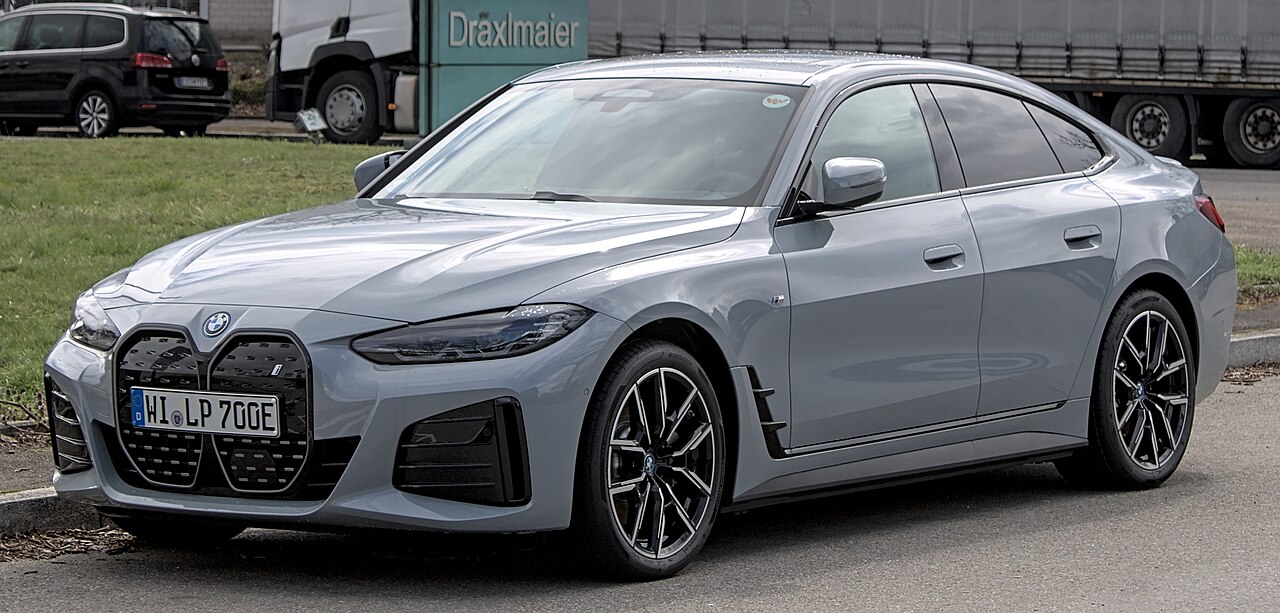 Licensed photo · Photo credit
Generations and technical specifications
BMW i42021–present
| Specification | Value |
|---|---|
| Model code | G26 BEV |
| Production | October 2021 – present |
| Model years | 2022–2026 |
| Body styles | 5-door liftback/fastback sedan |
| Layout | Rear-motor, rear-wheel drive (eDrive) Dual-motor, all-wheel drive (xDrive) |
| Platform | Cluster Architecture (CLAR) |
| Electric motor | Front and rear motor combined output, 3-phase electrically excited synchronous motor |
| Transmissions | Single-speed with fixed ratio |
| Battery | lithium-ion NMC chemistry 400V class (430V nominal) 83.9 kWh capacity |
| Electric range | Maximum 580 km NEDC Maximum 590 km WLTP |
| Charging | DC 205 kW AC 11 kW |
| Wheelbase | 2,856 mm |
| Length | 4,785 mm |
| Width | 1,852 mm |
| Height | 1,448 mm |
| Kerb weight | 2,125–2,290 kg |
| Class | Compact executive car (D) |
| Assembly | Germany: Munich |
| Designer | Seungmo Lim (concept & production exterior) Chris Lee (interior design) |
Engines and transmissions
| Model years | Engine | Transmission | Drive | Fuel |
|---|---|---|---|---|
| 2022–2023, 2025–2026 | Electric motor | Single-speed | All-wheel drive | Electricity |
| 2022–2026 | Electric motor | Single-speed | Rear-wheel drive | Electricity |
| 2024 | Electric motor | Single-speed | Four-wheel drive | Electricity |
Fuel economy (EPA)
| Model years | Configuration | Combined | City | Highway | Electric range |
|---|---|---|---|---|---|
| 2022–2023, 2025–2026 | Electric motor · Single-speed · All-wheel drive | 20.8–26.3 kWh/100 km | 21.1–26.4 kWh/100 km | 20.3–26.2 kWh/100 km | 365–462 km |
| 2022–2026 | Electric motor · Single-speed · Rear-wheel drive | 17.4–21.1 kWh/100 km | 17.2–20.9 kWh/100 km | 17.7–21.3 kWh/100 km | 378–536 km |
| 2024 | Electric motor · Single-speed · Four-wheel drive | 19.2–26.3 kWh/100 km | 19.5–26.4 kWh/100 km | 18.9–26.1 kWh/100 km | 365–494 km |
Values are the official EPA label figures for each model year, shown as the lowest and highest value for the configuration. Electric models show energy use per 100 km. Real-world consumption depends on driving style, weather and load. Luggage and passenger volumes follow the EPA measuring method and can differ from the VDA figures used in Europe.
EU type-approval data
| Years | Powertrain | Power | Mass | Electric range |
|---|---|---|---|---|
| 2022–2025 | Electric | 80 kW (109 PS) | 2065–2075 kg | 457–484 km · 157–167 Wh/km |
| 2021–2025 | Electric | 105 kW (143 PS) | 2125 kg | 552–586 km · 159–172 Wh/km |
| 2021–2025 | Electric | 125 kW (170 PS) | 2260–2290 kg | 424–517 km · 177–221 Wh/km |
| 2022–2025 | Electric | 190 kW (258 PS) | 2290 kg | 400–501 km · 189–231 Wh/km |
| 2023–2025 | Electric | 210 kW (286 PS) | 2065–2075 kg | 455–494 km · 153–168 Wh/km |
| 2022–2025 | Electric | 250 kW (340 PS) | 2125 kg | 550–585 km · 159–173 Wh/km |
| 2024–2025 | Electric | 295 kW (401 PS) | 2260 kg | 506–532 km · 172–181 Wh/km |
| 2022–2025 | Electric | 400 kW (544 PS) | 2290 kg | 424–509 km · 183–220 Wh/km |
| 2021, 2025 | Electric | 442 kW (601 PS) | 2285 kg | 443–535 km · 172–205 Wh/km |
Years are registration years. Each range runs from the 10th to the 90th percentile of the values reported for new registrations; it is not an average. Mass is the mass in running order. For electric cars the power is the type-approval net power, which can be lower than the peak power in brochures.
Key specifications
| Specification | Value |
|---|---|
| EPA size class | Compact car, Subcompact car |
| Model years in EPA data | 2022–2026 |
| Powertrains | Electric |
| Transmission types | Single-speed |
| Drive | Rear-wheel drive, All-wheel drive, Four-wheel drive |
| Fuel | Electricity |
| Configurations listed | 33 |
| Electric motor (EPA) | 210 kW EESM; 250 kW EESM; 200 and 250 kW EESM; 190 and 230 kW EESM |
| Luggage volume (EPA) | 283 L |
| Passenger volume (EPA) | 2,549 L |
| Electric range (EPA) | 365–536 km |
| Powertrains (EU) | Electric |
| Power (EU) | 105–442 kW (143–601 PS) |
| Mass in running order (EU) | 2,065–2,290 kg |
| Wheelbase (EU) | 2,856–2,860 mm |
Years and markets
| Specification | Value |
|---|---|
| Model years (US) | 2022–2026 |
| New registrations (EU) | 2020–2026 |
Owner complaints (NHTSA)
| Component | Complaints | Most reported model years |
|---|---|---|
| Electrical system | 4 | 2022 |
| Driver assistance | 2 | 2022 |
| Tyres | 2 | 2022 |
| Steering | 1 | 2022 |
| Transmission and drivetrain | 1 | 2022 |
| Engine and cooling | 1 | 2022 |
| Airbags | 1 | 2022 |
| Other or unknown | 2 | 2022 |
Source: complaints filed by owners with the U.S. National Highway Traffic Safety Administration (NHTSA) for model years 2022: 10 complaints, 3 with a crash and 1 with a fire. Complaints are owner reports that NHTSA has not verified, and one complaint can name more than one component. More complaints can also mean more cars sold.