BMW
i7
BMW i7: official NHTSA recalls, fault code help and maintenance guides.
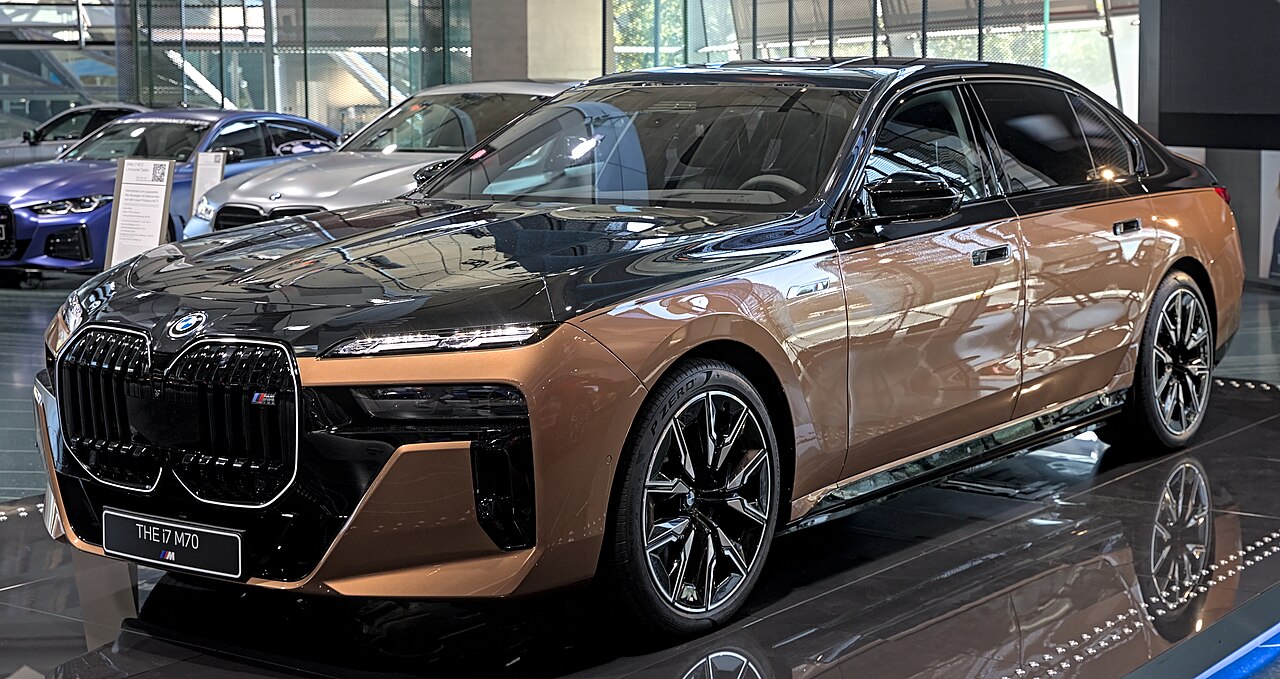 Licensed photo · Photo credit
MakeBMW
ClassLarge car
Model years (US)2023–2027
New registrations (EU)2020, 2022–2026
Recall dataNHTSA (United States)
Generations and technical specifications
BMW i72022
| Specification | Value |
|---|---|
| Production | 2022–2022 |
| Engines | Électriques : synchrone à excitation électrique 1 à l'avant et 1 à l'arrière |
| Wheelbase | 3,210 mm |
| Length | 5,390 mm |
| Width | 1,950 mm |
| Kerb weight | 2,700 kg |
Engines and transmissions
| Model years | Engine | Transmission | Drive | Fuel |
|---|---|---|---|---|
| 2023–2027 | Electric motor | Single-speed | All-wheel drive | Electricity |
| 2024–2026 | Electric motor | Single-speed | Rear-wheel drive | Electricity |
| 2024 | Electric motor | Single-speed | Four-wheel drive | Electricity |
Fuel economy (EPA)
| Model years | Configuration | Combined | City | Highway | Electric range |
|---|---|---|---|---|---|
| 2023–2027 | Electric motor · Single-speed · All-wheel drive | 22.1–28.0 kWh/100 km | 22.2–29.0 kWh/100 km | 21.9–26.7 kWh/100 km | 430–600 km |
| 2024–2026 | Electric motor · Single-speed · Rear-wheel drive | 23.2–24.8 kWh/100 km | 24.2–25.7 kWh/100 km | 22.0–23.7 kWh/100 km | 484–517 km |
| 2024 | Electric motor · Single-speed · Four-wheel drive | 23.4–25.0 kWh/100 km | 24.1–25.6 kWh/100 km | 22.6–24.2 kWh/100 km | 480–510 km |
Values are the official EPA label figures for each model year, shown as the lowest and highest value for the configuration. Electric models show energy use per 100 km. Real-world consumption depends on driving style, weather and load. Luggage and passenger volumes follow the EPA measuring method and can differ from the VDA figures used in Europe.
EU type-approval data
| Years | Powertrain | Power | Mass | Electric range |
|---|---|---|---|---|
| 2024–2025 | Electric | 125 kW (170 PS) | 2595 kg | 581–611 km · 191–201 Wh/km |
| 2022–2025 | Electric | 135 kW (184 PS) | 2715–2770 kg | 545–609 km · 190–214 Wh/km |
| 2023–2025 | Electric | 335 kW (455 PS) | 2595–2619 kg | 581–602 km · 194–201 Wh/km |
| 2022–2025 | Electric | 400 kW (544 PS) | 2715 kg | 591–612 km · 189–196 Wh/km |
| 2025 | Electric | 435 kW (591 PS) | 2785 kg | – |
| 2023–2025 | Electric | 485 kW (659 PS) | 2770 kg | 538–549 km · 213–217 Wh/km |
| 2022–2024 | Electric | 190 kW (258 PS) | 2715 kg | 585–608 km · 190–197 Wh/km |
| 2020, 2022–2024 | Electric | 500 kW (680 PS) | 2875–2945 kg | – |
Years are registration years. Each range runs from the 10th to the 90th percentile of the values reported for new registrations; it is not an average. Mass is the mass in running order. For electric cars the power is the type-approval net power, which can be lower than the peak power in brochures.
Key specifications
| Specification | Value |
|---|---|
| EPA size class | Large car |
| Model years in EPA data | 2023–2027 |
| Powertrains | Electric |
| Transmission types | Single-speed |
| Drive | All-wheel drive, Rear-wheel drive, Four-wheel drive |
| Fuel | Electricity |
| Configurations listed | 35 |
| Electric motor (EPA) | 190 and 230 kW EESM; 335 kW EESM; 190 and 360 kW EESM; 360 kW EESM |
| Luggage volume (EPA) | 311–396 L |
| Passenger volume (EPA) | 3,087–3,171 L |
| Electric range (EPA) | 430–600 km |
| Powertrains (EU) | Electric |
| Power (EU) | 135–485 kW (184–659 PS) |
| Mass in running order (EU) | 2,595–2,770 kg |
| Wheelbase (EU) | 3,215–3,220 mm |
Years and markets
| Specification | Value |
|---|---|
| Model years (US) | 2023–2027 |
| New registrations (EU) | 2020, 2022–2026 |