Focus
Ford Focus: official NHTSA recalls, fault code help and maintenance guides.
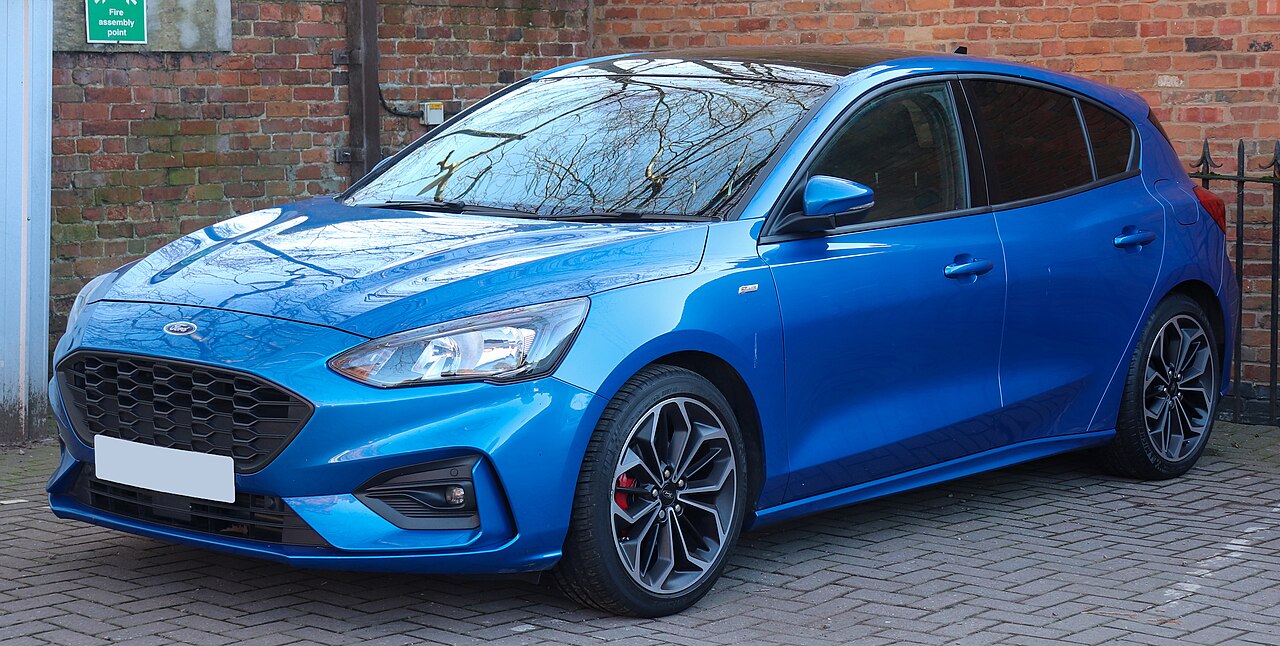 Licensed photo · Photo credit
Generations and technical specifications
Ford Focus (fourth generation)2018–2026
| Specification | Value |
|---|---|
| Model code | C519 / SA, ST (Australia) |
| Production | 2018 – November 2025 (Europe) 2018–2024 (China) 2019–2026 (Taiwan) |
| Body styles | 5-door hatchback 5-door wagon 4-door saloon |
| Layout | Front-engine, front-wheel-drive |
| Platform | Ford C2 |
| Engines | Petrol 1.0 L EcoBoost (Fox) turbo I3 1.0 L EcoBoost Hybrid Fox mHEV turbo I3 1.5 L EcoBoost (Dragon) turbo I3 1.5 L Ti-VCT I3 1.5 L EcoBoost turbo I4 (China market) 2.3 L EcoBoost turbo I4 Diesel 1.5 L EcoBlue (Panther) turbo I4 2.0 L Duratorq TDCi I4 2.0 L EcoBlue (Panther) turbo I4 |
| Electric motor | 11.5 kW belt-driven integrated starter/generator (BISG) |
| Transmissions | 6-speed manual 6-speed automatic (1.5 Ti-VCT only) 7-speed 7F40 automatic (ST) 8-speed 8F24 automatic 8-speed 8F35 automatic 7-speed Powershift DCT |
| Drivetrain | EcoBoost Hybrid mHEV |
| Battery | 48-volt battery pack |
| Wheelbase | 2,700 mm |
| Length | 4,378 mm (hatchback) 4,668 mm (estate) 4,647 mm (saloon) |
| Width | 1,825 mm |
| Height | 1,454 mm (hatchback) 1,481 mm (estate) 1,483 mm (saloon) |
| Class | Compact car/small family car (C) |
| Assembly | Germany: Saarlouis (SB&A) China: Chongqing (Changan Ford); Harbin (Changan Ford, Focus Active) Taiwan: Zhongli (Ford Lio Ho) |
| Designer | Jordan Demkiw |
Ford Focus (third generation)2010–2019
| Specification | Value |
|---|---|
| Model code | C346 / LW (2011–2015, Australia) / LZ (2015–2018, Australia) |
| Production | December 2010 – 2019 |
| Model years | 2011–2018 (Europe) 2012–2019 (North/South America) |
| Body styles | 5-door hatchback 4-door sedan 5-door station wagon |
| Layout | Front-engine, front-wheel-drive or four-wheel-drive (Focus RS only) |
| Platform | Ford global C-car platform |
| Engines | Petrol 1.0 L EcoBoost I3 1.5 L EcoBoost I4 1.6 L Duratec Ti-VCT I4 1.6 L EcoBoost I4 2.0 L Duratec Ti-VCT I4 GDI 2.0 L EcoBoost I4 (ST) 2.3 L EcoBoost I4 (RS) Diesel 1.6 L Duratorq TDCi I4 1.5 L Duratorq TDCi I4 2.0 L Duratorq TDCi I4 |
| Transmissions | 5-speed iB5 manual 5-speed MTX-75 manual 6-speed MMT6 B6 manual (ST, standard in LZ) 6-speed 6F15 automatic (1.0 L EcoBoost & 1.5 L EcoBoost) 6-speed PowerShift DCT |
| Wheelbase | 2,648 mm |
| Length | 4,358 mm (hatchback) 4,534 mm (sedan) 4,556 mm (wagon/estate) |
| Width | 1,823 mm |
| Height | 1,484 mm (sedan, hatchback) 1,505 mm (wagon) |
| Kerb weight | 1,270–1,471 kg RS: 1,569 kg |
| Class | Compact car / small family car (C) |
| Assembly | Germany: Saarlouis (SB&A) United States: Wayne, Michigan (Michigan Assembly Plant) Thailand: Rayong (FTM) China: Chongqing and Harbin (Changan Ford) Taiwan: Taoyuan (Ford Lio Ho) Argentina: General Pacheco (FMA) Russia: Vsevolozhsk (Ford Sollers) |
| Designer | Martin Smith, Stefan Lamm, Murat Güler (2008) Kemal Curić (wagon/5 door: 2008) Todd Willing (sedan: 2009) Tiago Dias, Ernst Reim (interior: 2008) |
Ford Focus (second generation, North America)2007–2011
| Specification | Value |
|---|---|
| Production | September 2007–December 2010 |
| Model years | 2008–2011 |
| Body styles | 4-door sedan 2-door coupe |
| Engines | 2.0 L Duratec I4 (gasoline) |
| Transmissions | 4-speed automatic 5-speed manual |
| Wheelbase | 2,614 mm |
| Length | 4,445 mm |
| Width | Coupe: 1,725 mm Sedan: 1,722 mm |
| Height | 1,488 mm |
| Kerb weight | 1,174–1,198 kg |
| Class | Compact car / Small family car (C) |
| Assembly | Wayne, Michigan, United States (Wayne Stamping & Assembly) |
| Designer | Lon Zaback (2005) |
Ford Focus (second generation, Europe)2004–2016
| Specification | Value |
|---|---|
| Production | August 2004–2010 2005–2014 (China) 2008–2016 (Argentina) |
| Model years | 2005–2010 (Europe) 2009–2016 (Argentina) |
| Body styles | 3- and 5-door hatchback 4-door saloon 5-door estate 2-door coupé cabriolet |
| Layout | Front-engine, front-wheel-drive |
| Platform | Ford C1 platform |
| Engines | Petrol 1.4 L Duratec I4 1.6 L Duratec I4 1.6 L Duratec Ti-VCT I4 1.8 L Duratec HE I4 1.8 L Duratec HE FFV I4 2.0 L Duratec HE I4 2.5 L Duratec turbo I5 Diesel 1.6 L DuraTorq TDCi I4 1.6 L DuraTorq DLD-416 TDCi DPF I4 1.8 L DuraTorq DLD-418 TDCi I4 2.0 L DW10 TDCi I4 |
| Transmissions | 4-speed 4F27E Durashift automatic (1.6 and 2.0 gasoline only) 5-speed iB5 Durashift manual (1.4 and 1.6 gasoline only) 5-speed MTX-75 Durashift manual (1.8 and 2.0 gasoline, 1.6 and 1.8 diesel only) 6-speed Durashift manual (2.5 gasoline and 2.0 diesel only) 6-speed PowerShift dual-clutch automatic (2.0 diesel only) Durashift CVT (1.6 diesel only) |
| Wheelbase | 2,640 mm |
| Length | 2004-07 Hatchback: 4,340 mm 2005-07 Saloon: 4,480 mm 2005-07 Estate: 4,470 mm 2005-07 ST: 4,360 mm 2007 Coupé cabriolet: 4,510 mm 2008–2010 Hatchback: 4,337 mm 2008–2010 Saloon: 4,481 mm 2008–2010 Estate: 4,468 mm 2008–2010 ST: 4,360 mm 2008–2010 Coupé cabriolet: 4,509 mm |
| Width | 2004-07 saloon, hatchback and estate: 1,840 mm 2007 Coupé cabriolet: 1,835 mm 2008–2010 Saloon, Hatchback and Estate: 1,839 mm 2008–2010 Coupé cabriolet: 1,834 mm |
| Height | 2004-07 Hatchback and Estate: 1,500 mm 2005-07 Saloon: 1,495 mm 2008–2010 Hatchback and Saloon: 1,497 mm 2008–2010 Estate: 1,503 mm and 1,537 mm 2005-07 Coupé cabriolet: 1,448 mm 2008–2010 Coupé cabriolet: 1,455 mm ST: 1,537 mm |
| Kerb weight | 1,229–1,630 kg |
| Class | Compact car / Small family car (C) |
| Assembly | Germany: Saarlouis Spain: Valencia Russia: Vsevolozhsk (Ford Sollers) Italy: Turin (Pininfarina: Coupé-Cabriolet) Taiwan: Chungli Argentina: General Pacheco Philippines: Santa Rosa South Africa: Pretoria (Samcor) China: Chongqing (Changan Ford Mazda) |
| Designer | Murat Güler (2001) |
Ford Focus (first generation)1998–2008
| Specification | Value |
|---|---|
| Production | 1998–2007 |
| Model years | 1998–2005 (Europe) 2000–2008 (Argentina) 2000–2007 (North America) |
| Body styles | 3- and 5-door hatchback 4-door saloon/sedan 5-door estate/station wagon |
| Layout | Front-engine, front-wheel-drive |
| Engines | See below |
| Transmissions | See below |
| Class | Compact car / small family car (C) |
| Assembly | Germany: Saarlouis (Saarlouis Body & Assembly) Spain: Valencia (Ford Valencia Plant) United States: Wayne, Michigan (Wayne Stamping & Assembly) Mexico: Hermosillo (Hermosillo Stamping & Assembly) Argentina: General Pacheco (Ford Argentina) Philippines: Santa Rosa, Laguna (FMCP) Venezuela: Valencia (Valencia Assembly) |
| Designer | John Doughty (1995) & Claude Lobo (1995) |
Engines and transmissions
| Model years | Engine | Transmission | Drive | Fuel |
|---|---|---|---|---|
| 2016–2018 | 1.0 L, 3 cyl | 6-speed automatic | Front-wheel drive | Petrol (regular) |
| 2015–2018 | 1.0 L, 3 cyl | 6-speed manual | Front-wheel drive | Petrol (regular) |
| 2000–2018 | 2.0 L, 4 cyl | 5-speed manual | Front-wheel drive | Petrol (regular) |
| 2012–2018 | 2.0 L, 4 cyl | 6-speed automated manual | Front-wheel drive | Petrol (regular) |
| 2003, 2013–2018 | 2.0 L, 4 cyl | 6-speed manual | Front-wheel drive | Petrol (regular) |
| 2016–2018 | 2.3 L, 4 cyl | 6-speed manual | All-wheel drive | Petrol (premium) |
| 2013–2018 | Electric motor | Single-speed | Front-wheel drive | Electricity |
| 2012–2017 | 2.0 L, 4 cyl | 5-speed manual | Front-wheel drive | Petrol or E85 (flex-fuel) |
| 2012–2017 | 2.0 L, 4 cyl | 6-speed automated manual | Front-wheel drive | Petrol or E85 (flex-fuel) |
| 2013–2015 | 2.0 L, 4 cyl | 6-speed automatic | Front-wheel drive | Petrol (regular) |
| 2013–2015 | 2.0 L, 4 cyl | 6-speed automatic | Front-wheel drive | Petrol or E85 (flex-fuel) |
| 2012 | Electric motor | CVT (continuously variable) | Front-wheel drive | Electricity |
| +4 more configurations |
Fuel economy (EPA)
| Model years | Configuration | Combined | City | Highway | Electric range |
|---|---|---|---|---|---|
| 2016–2018 | 1.0 L, 3 cyl · 6-speed automatic · Front-wheel drive | 7.4–7.6 L/100 km | 8.4–8.7 L/100 km | 6.0–6.2 L/100 km | – |
| 2015–2018 | 1.0 L, 3 cyl · 6-speed manual · Front-wheel drive | 6.9–7.4 L/100 km | 7.8–8.1 L/100 km | 5.7–6.2 L/100 km | – |
| 2000–2018 | 2.0 L, 4 cyl · 5-speed manual · Front-wheel drive | 8.1–9.8 L/100 km | 9.0–10.7 L/100 km | 6.5–8.1 L/100 km | – |
| 2012–2018 | 2.0 L, 4 cyl · 6-speed automated manual · Front-wheel drive | 7.4–8.4 L/100 km | 8.4–9.8 L/100 km | 6.0–6.9 L/100 km | – |
| 2002–2004, 2013–2018 | 2.0 L, 4 cyl · 6-speed manual · Front-wheel drive | 9.0–11.8 L/100 km | 10.2–13.1 L/100 km | 7.6–10.2 L/100 km | – |
| 2016–2018 | 2.3 L, 4 cyl · 6-speed manual · All-wheel drive | 10.7 L/100 km | 12.4 L/100 km | 9.0–9.4 L/100 km | – |
| 2013–2018 | Electric motor · Single-speed · Front-wheel drive | 19.3–19.9 kWh/100 km | 17.4–19.3 kWh/100 km | 21.1–21.9 kWh/100 km | 122–185 km |
| 2013–2015 | 2.0 L, 4 cyl · 6-speed automatic · Front-wheel drive | 7.8 L/100 km | 8.7–9.0 L/100 km | 6.4–6.5 L/100 km | – |
| 2012 | Electric motor · CVT (continuously variable) · Front-wheel drive | 19.9 kWh/100 km | 19.3 kWh/100 km | 21.1 kWh/100 km | 122 km |
| 2000–2011 | 2.0 L, 4 cyl · 4-speed automatic · Front-wheel drive | 8.4–9.8 L/100 km | 9.4–10.7 L/100 km | 6.9–8.4 L/100 km | – |
| 2003–2007 | 2.3 L, 4 cyl · 5-speed manual · Front-wheel drive | 9.4–10.2 L/100 km | 10.7–11.8 L/100 km | 7.8–8.4 L/100 km | – |
| 2003–2004 | 2.3 L, 4 cyl · 4-speed automatic · Front-wheel drive | 9.8–10.2 L/100 km | 11.2 L/100 km | 8.4–8.7 L/100 km | – |
Values are the official EPA label figures for each model year, shown as the lowest and highest value for the configuration. Electric models show energy use per 100 km. Real-world consumption depends on driving style, weather and load. Luggage and passenger volumes follow the EPA measuring method and can differ from the VDA figures used in Europe.
EU type-approval data
| Years | Powertrain | Engine | Power | Mass | CO₂ |
|---|---|---|---|---|---|
| 2019–2025 | Petrol | 2261 cm³ | 206 kW (280 PS) | 1508–1569 kg | 183–187 g/km (WLTP) |
| 2020–2025 | Petrol hybrid | 999 cm³ | 91 kW (124 PS) | 1344–1429 kg | 117–123 g/km (WLTP) |
| 2020–2025 | Petrol hybrid | 999 cm³ | 92 kW (125 PS) | 1344–1466 kg | 117–128 g/km (WLTP) |
| 2020–2025 | Petrol hybrid | 999 cm³ | 114 kW (155 PS) | 1377–1511 kg | 118–131 g/km (WLTP) |
| 2023–2025 | Diesel | 1499 cm³ | 85 kW (116 PS) | 1465–1533 kg | 130–137 g/km (WLTP) |
| 2014–2022 | Petrol | 999 cm³ | 74 kW (101 PS) | 1276–1383 kg | 121–130 g/km (WLTP) |
| 2015–2022 | Petrol | 999 cm³ | 92 kW (125 PS) | 1280–1393 kg | 127–150 g/km (WLTP) |
| 2018–2022 | Petrol | 1496 cm³ | 111 kW (151 PS) | 1369–1445 kg | 137–163 g/km (WLTP) |
| 2015–2022 | Diesel | 1499 cm³ | 88 kW (120 PS) | 1343–1454 kg | 113–137 g/km (WLTP) |
| 2015–2021 | Diesel | 1499 cm³ | 70 kW (95 PS) | 1338–1395 kg | 111–120 g/km (WLTP) |
| 2018–2021 | Diesel | 1995 cm³ | 110 kW (150 PS) | 1518–1559 kg | 127–158 g/km (WLTP) |
| 2014–2018 | Petrol | 1498 cm³ | 110 kW (150 PS) | 1325–1388 kg | 128–184 g/km (WLTP) |
| 2011–2018 | Petrol | 1596 cm³ | 77 kW (105 PS) | 1264–1323 kg | 136–139 g/km (NEDC) |
| 2011–2018 | Petrol | 1596 cm³ | 92 kW (125 PS) | 1276–1340 kg | 136–146 g/km (NEDC) |
| 2012–2018 | Petrol | 1999 cm³ | 184 kW (250 PS) | 1437–1461 kg | 159–169 g/km (NEDC) |
| 2015–2018 | Diesel | 1499 cm³ | 77 kW (105 PS) | 1293–1374 kg | 118–139 g/km (WLTP) |
| 2015–2018 | Diesel | 1997 cm³ | 110 kW (150 PS) | 1415–1471 kg | 105–115 g/km (NEDC) |
| 2012–2015 | Petrol | 998 cm³ | 92 kW (125 PS) | 1279–1332 kg | 114–117 g/km (NEDC) |
| 2011–2015 | Diesel | 1560 cm³ | 70 kW (95 PS) | 1338–1419 kg | 109–117 g/km (NEDC) |
| 2011–2015 | Diesel | 1560 cm³ | 85 kW (116 PS) | 1344–1400 kg | 109–117 g/km (NEDC) |
| 2012–2014 | Petrol | 998 cm³ | 74 kW (101 PS) | 1276–1329 kg | 109–112 g/km (NEDC) |
| 2011–2014 | Petrol | 1596 cm³ | 110 kW (150 PS) | 1333–1358 kg | 137–139 g/km (NEDC) |
| 2012–2014 | Diesel | 1560 cm³ | 77 kW (105 PS) | 1350–1431 kg | 88–99 g/km (NEDC) |
| 2011–2014 | Diesel | 1997 cm³ | 103 kW (140 PS) | 1421–1485 kg | 124–134 g/km (NEDC) |
| 2011 | Petrol | 1596 cm³ | 74 kW (101 PS) | 1249–1277 kg | 159 g/km (NEDC) |
| + 2 more configurations |
Years are registration years. Each range runs from the 10th to the 90th percentile of the values reported for new registrations; it is not an average. Mass is the mass in running order. For electric cars the power is the type-approval net power, which can be lower than the peak power in brochures.
Key specifications
| Specification | Value |
|---|---|
| EPA size class | Midsize car, Compact car, Midsize estate |
| Model years in EPA data | 2000–2018 |
| Powertrains | Petrol, Electric, Flex-fuel |
| Engine displacement | 1.0–2.3 L |
| Cylinders | 3, 4 |
| Transmission types | Manual, Automated manual, Automatic, Single-speed, CVT |
| Drive | All-wheel drive, Front-wheel drive |
| Fuel | Petrol (premium), Petrol (regular), Electricity, Petrol or E85 (flex-fuel) |
| Configurations listed | 138 |
| Forced induction | Turbocharged (on some versions) |
| Start-stop system | On some versions |
| Electric motor (EPA) | 107 kW AC PMSM; 107 kW AC Induction |
| Luggage volume (EPA) | 396–1,019 L |
| Passenger volume (EPA) | 2,549–2,718 L |
| Electric range (EPA) | 122–185 km |
| Powertrains (EU) | Petrol, Petrol hybrid, Diesel |
| Engine displacement (EU) | 998–1,995 cm³ |
| Power (EU) | 70–114 kW (95–155 PS) |
| Mass in running order (EU) | 1,264–1,559 kg |
| Wheelbase (EU) | 2,648–2,700 mm |
Years and markets
| Specification | Value |
|---|---|
| Model years (US) | 2000–2026 |
| New registrations (EU) | 2000–2026 |
Owner complaints (NHTSA)
| Component | Complaints | Most reported model years |
|---|---|---|
| Transmission and drivetrain | 6892 | 2012, 2013, 2014 |
| Electrical system | 4443 | 2000, 2001, 2003 |
| Engine and cooling | 3637 | 2000, 2012, 2014 |
| Fuel and propulsion | 2708 | 2000, 2012, 2014 |
| Steering | 2119 | 2012, 2013, 2014 |
| Speed control and cruise | 1110 | 2000, 2012, 2014 |
| Brakes | 1099 | 2000, 2001, 2002 |
| Body and structure | 1020 | 2000, 2012, 2013 |
| Suspension | 948 | 2000, 2001, 2002 |
| Airbags | 940 | 2000, 2001, 2007 |
Source: complaints filed by owners with the U.S. National Highway Traffic Safety Administration (NHTSA) for model years 2000–2018: 22576 complaints, 1121 with a crash and 319 with a fire. Complaints are owner reports that NHTSA has not verified, and one complaint can name more than one component. More complaints can also mean more cars sold.