Tucson
Hyundai Tucson: official NHTSA recalls, fault code help and maintenance guides.
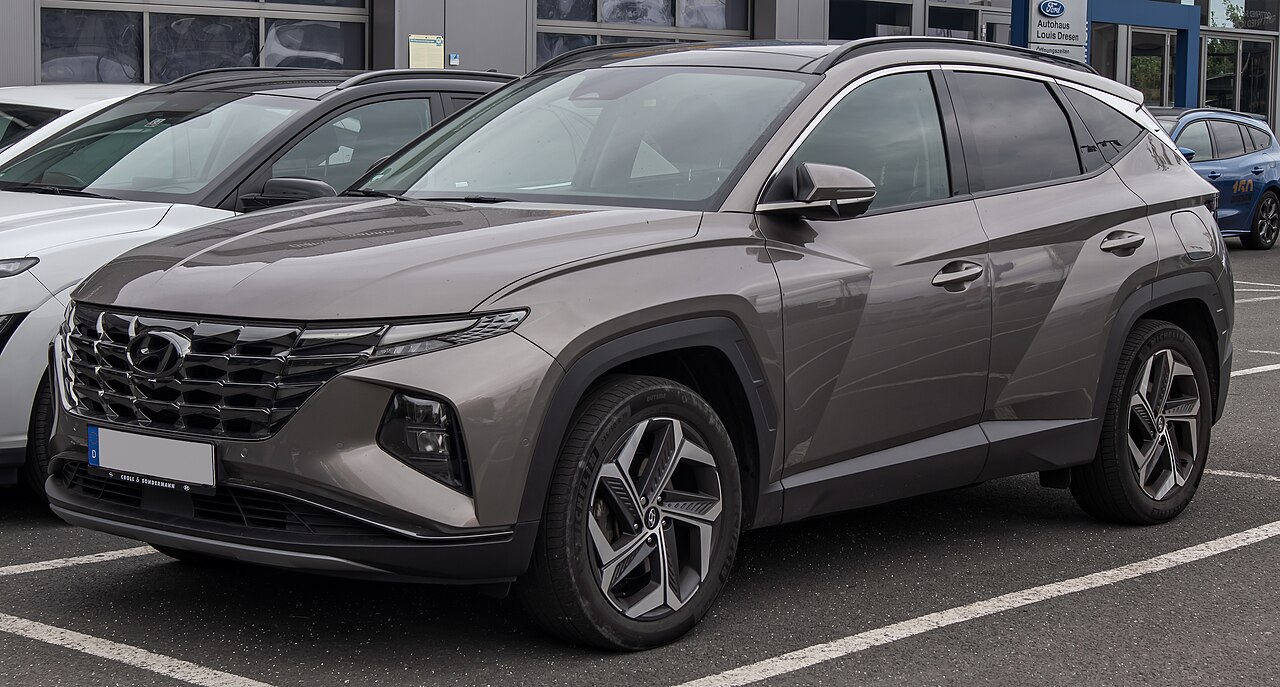 Licensed photo · Photo credit
Generations and technical specifications
Hyundai Tucson – Fifth generation2026–present
| Specification | Value |
|---|---|
| Model code | NX5 |
| Production | 2026–present |
| Model years | 2027 |
| Platform | Hyundai-Kia N3/N4 |
| Wheelbase | 2,720 mm (Short-wheelbase) 2,785 mm (Long-wheelbase) |
| Length | 4,560 mm (SWB) 4,700 mm (LWB) |
| Width | 1,900 mm (Short-wheelbase) 1,905 mm (Long-wheelbase) |
| Assembly | South Korea: Ulsan (Ulsan Plant 5) Czechia: Nošovice (HMMC) |
Hyundai Tucson – Fourth generation2020–present
| Specification | Value |
|---|---|
| Model code | NX4 |
| Production | 2020–present 2022–2025 (India) 2024–present (Mexico) 2025–present (Pakistan) |
| Model years | 2022–2026 |
| Platform | Hyundai-Kia N3/N4 |
| Engines | Petrol 1.5 L Smartstream G1.5 T-GDi I4 1.6 L Smartstream G1.6 T-GDi I4 2.0 L Smartstream G2.0 MPi I4 2.5 L Smartstream G2.5 GDi I4 Petrol hybrid 1.6 L Smartstream G1.6T HEV T-GDi I4 2.0 L Smartstream G2.0 HEV GDi I4 Petrol plug-in hybrid 1.6 L Smartstream G1.6T PHEV T-GDi I4 Diesel 1.6 L Smartstream D1.6 CRDi I4 2.0 L Smartstream D2.0 CRDi I4 |
| Electric motor | Permanent magnet synchronous (hybrid and PHEV) |
| Transmissions | 6-speed M6CF3 manual 6-speed M6CF3 clutchless manual 6-speed automatic 8-speed automatic 6-speed D6KF1 DCT 7-speed D7UF1 DCT |
| Drivetrain | 48 V mild hybrid (MHEV) Parallel hybrid (HEV) Plug-in hybrid (PHEV) |
| Battery | 1.49 kWh lithium-ion (HEV) 13.8 kWh lithium-ion (PHEV) |
| Wheelbase | 2,680 mm (Short-wheelbase) 2,755 mm (Long-wheelbase) |
| Width | 1,865 mm |
| Kerb weight | 1,491–1,700 kg |
| Assembly | South Korea: Ulsan (Ulsan Plant 3, 5) Czechia: Nošovice (HMMC) United States: Montgomery, Alabama (HMMA) Mexico: Pesquería (KMMX) China: Beijing (Beijing Hyundai) Taiwan: Hukou (Sanyang Motor) Vietnam: Ninh Bình (HTMV) India: Chennai (HMIL) Pakistan: Faisalabad (Hyundai Nishat) |
| Designer | Kim Jun-Ho Hong In-Soo (N-Line) |
Hyundai Tucson – Third generation2015–2025
| Specification | Value |
|---|---|
| Model code | TL |
| Production | 2015–2021 2017–2023 (Brazil) 2016–2022 (India) 2020–2025 (Pakistan) |
| Model years | 2016–2021 |
| Engines | Petrol 1.6 L Gamma GDi I4 1.6 L Gamma T-GDi I4 2.0 L Nu MPi I4 2.0 L Nu GDi I4 2.4 L Theta II MPi I4 2.4 L Theta II GDi I4 Diesel 1.6 L Smartstream D1.6 CRDi I4 1.7 L U II CRDi I4 2.0 L R II CRDi I4 |
| Transmissions | 6-speed manual 6-speed automatic 7-speed DCT |
| Wheelbase | 2,670 mm |
| Length | 4,475 mm 4,545 mm (China) |
| Width | 1,850 mm |
| Height | 1,645 mm 1,670 mm (China) |
| Kerb weight | 1,488–1,702 kg |
| Assembly | South Korea: Ulsan Czech Republic: Nošovice (HMMC) China: Beijing (Beijing Hyundai) Taiwan: Hukou (Sanyang Motor) Brazil: Anápolis (Hyundai Caoa) India: Chennai (HMIL) Malaysia: Kulim (Inokom) Russia: Kaliningrad (Avtotor) Vietnam: Ninh Bình (HTMV) Algeria: Tiaret (Tahkout Manufacturing Company) Pakistan: Faisalabad (Hyundai Nishat) |
| Designer | Kim Ki-Euk Shim Hyeon-Jung and Lee Seung-yeon (facelift) |
Hyundai Tucson – Second generation2009–2022
| Specification | Value |
|---|---|
| Model code | LM |
| Production | 2009–2015 2010–2022 (Brazil) |
| Model years | 2010–2015 |
| Engines | Petrol 1.6 L Gamma GDi I4 2.0 L Nu GDi I4 2.0 L Theta II MPi I4 2.4 L Theta II MPi I4 Diesel 1.7 L U II CRDi-VGT I4 2.0 L R II CRDi-VGT I4 |
| Transmissions | 5-speed manual 6-speed manual 6-speed automatic |
| Wheelbase | 2,640 mm |
| Length | 4,410 mm |
| Width | 1,820 mm |
| Height | 1,655–1,685 mm |
| Kerb weight | 1,410–1,643 kg |
| Assembly | South Korea: Ulsan Czech Republic: Nošovice (HMMC) Slovakia: Žilina (Kia Motors Slovakia) China: Beijing (Beijing Hyundai) Brazil: Anápolis (Hyundai Caoa) Taiwan: Hukou, Hsinchu (SYM Motors) Indonesia: Bekasi (Hyundai Indonesia Motor) Malaysia: Kulim, Kedah (Inokom) Egypt: Cairo (Ghabbour Group) |
| Designer | Cha Il-Hoei Kim Sung-No (facelift) Thomas Bürkle (chief designer) |
Hyundai Tucson – First generation2004–2019
| Specification | Value |
|---|---|
| Model code | JM |
| Production | 2004–2009 2005–2019 (Brazil) 2005–2010 (Taiwan) 2007–2010 (Ukraine) |
| Model years | 2005–2009 |
| Engines | Petrol 2.0 L Beta II DOHC CVVT I4 2.7 L Delta DOHC CVVT V6 Diesel 2.0 L D CRDi-VGT I4 |
| Transmissions | 5-speed manual 6-speed manual 4-speed automatic 5-speed automatic |
| Wheelbase | 2,630 mm |
| Length | 4,325 mm |
| Width | 1,795 mm |
| Height | 1,730 mm |
| Assembly | South Korea: Ulsan China: Beijing (Beijing Hyundai) India: Chennai (Hyundai India) Brazil: Anápolis (Hyundai Caoa) Egypt: Cairo (Ghabbour Group) Ukraine: Cherkasy (Bogdan) Taiwan: Hukou, Hsinchu (SYM Motors) |
Engines and transmissions
| Model years | Engine | Transmission | Drive | Fuel |
|---|---|---|---|---|
| 2022–2026 | 1.6 L, 4 cyl hybrid | 6-speed automated manual | All-wheel drive | Petrol (regular) |
| 2022–2026 | 1.6 L, 4 cyl plug-in hybrid | 6-speed automated manual | All-wheel drive | Petrol (regular) and electricity |
| 2022–2026 | 2.5 L, 4 cyl | 8-speed automatic | All-wheel drive | Petrol (regular) |
| 2022–2026 | 2.5 L, 4 cyl | 8-speed automatic | Front-wheel drive | Petrol (regular) |
| 2015–2021 | 2.0 L, 4 cyl | 6-speed automatic | All-wheel drive | Petrol (regular) |
| 2011–2021 | 2.0 L, 4 cyl | 6-speed automatic | Front-wheel drive | Petrol (regular) |
| 2015, 2018–2021 | 2.4 L, 4 cyl | 6-speed automatic | All-wheel drive | Petrol (regular) |
| 2010–2015, 2018–2021 | 2.4 L, 4 cyl | 6-speed automatic | Front-wheel drive | Petrol (regular) |
| 2016–2018 | 1.6 L, 4 cyl | 7-speed automated manual | All-wheel drive | Petrol (regular) |
| 2016–2018 | 1.6 L, 4 cyl | 7-speed automated manual | Front-wheel drive | Petrol (regular) |
| 2015–2017 | Hydrogen fuel cell | Single-speed | Front-wheel drive | Hydrogen |
| 2014 | 2.0 L, 4 cyl | 6-speed automatic | Four-wheel drive | Petrol (regular) |
| +8 more configurations |
Fuel economy (EPA)
| Model years | Configuration | Combined | City | Highway | Electric range |
|---|---|---|---|---|---|
| 2022–2026 | 1.6 L, 4 cyl hybrid · 6-speed automated manual · All-wheel drive | 6.2–6.7 L/100 km | 6.2–6.7 L/100 km | 6.2–6.7 L/100 km | – |
| 2022–2026 | 1.6 L, 4 cyl plug-in hybrid · 6-speed automated manual · All-wheel drive | 6.7 L/100 km | 6.7 L/100 km | 6.7 L/100 km | 51–53 km |
| 2022–2026 | 2.5 L, 4 cyl · 8-speed automatic · All-wheel drive | 9.0–9.4 L/100 km | 9.8–10.2 L/100 km | 7.8–8.4 L/100 km | – |
| 2022–2026 | 2.5 L, 4 cyl · 8-speed automatic · Front-wheel drive | 8.1–8.4 L/100 km | 9.0–9.4 L/100 km | 7.1–7.4 L/100 km | – |
| 2015–2021 | 2.0 L, 4 cyl · 6-speed automatic · All-wheel drive | 10.2–10.7 L/100 km | 10.7–11.2 L/100 km | 9.0–9.4 L/100 km | – |
| 2011–2021 | 2.0 L, 4 cyl · 6-speed automatic · Front-wheel drive | 9.0–9.4 L/100 km | 10.2–10.7 L/100 km | 7.8–8.4 L/100 km | – |
| 2015, 2018–2021 | 2.4 L, 4 cyl · 6-speed automatic · All-wheel drive | 10.2–10.7 L/100 km | 11.2–11.8 L/100 km | 9.0–9.4 L/100 km | – |
| 2010–2015, 2018–2021 | 2.4 L, 4 cyl · 6-speed automatic · Front-wheel drive | 9.0–10.2 L/100 km | 10.2–11.2 L/100 km | 7.6–8.4 L/100 km | – |
| 2016–2018 | 1.6 L, 4 cyl · 7-speed automated manual · All-wheel drive | 8.7–9.4 L/100 km | 9.4–9.8 L/100 km | 7.8–8.4 L/100 km | – |
| 2016–2018 | 1.6 L, 4 cyl · 7-speed automated manual · Front-wheel drive | 8.4–8.7 L/100 km | 9.0–9.4 L/100 km | 7.4–7.8 L/100 km | – |
| 2014 | 2.0 L, 4 cyl · 6-speed automatic · Four-wheel drive | 10.7 L/100 km | 11.2 L/100 km | 9.4 L/100 km | – |
| 2010–2014 | 2.4 L, 4 cyl · 6-speed automatic · Four-wheel drive | 9.8–10.7 L/100 km | 11.2–11.8 L/100 km | 8.4–9.4 L/100 km | – |
| +7 more configurations |
Values are the official EPA label figures for each model year, shown as the lowest and highest value for the configuration. Electric models show energy use per 100 km. Real-world consumption depends on driving style, weather and load. Luggage and passenger volumes follow the EPA measuring method and can differ from the VDA figures used in Europe.
EU type-approval data
| Years | Powertrain | Engine | Power | Mass | CO₂ | Electric range |
|---|---|---|---|---|---|---|
| 2020–2025 | Petrol | 1598 cm³ | 110 kW (150 PS) | 1500–1566 kg | 148–155 g/km (WLTP) | – |
| 2020–2021, 2025 | Petrol | 1598 cm³ | 132 kW (179 PS) | 1538–1709 kg | 130–162 g/km (WLTP) | – |
| 2024–2025 | Petrol hybrid | 1598 cm³ | 117 kW (159 PS) | 1581–1650 kg | 129–145 g/km (WLTP) | – |
| 2024–2025 | Petrol hybrid | 1598 cm³ | 118 kW (160 PS) | 1581–1720 kg | 130–150 g/km (WLTP) | – |
| 2024–2025 | Petrol plug-in hybrid | 1598 cm³ | 118 kW (160 PS) | 1581–1889 kg | 24–148 g/km (WLTP) | 63–69 km · 177–190 Wh/km |
| 2019–2025 | Diesel hybrid | 1598 cm³ | 100 kW (136 PS) | 1595–1665 kg | 132–152 g/km (WLTP) | – |
| 2020–2024 | Petrol hybrid | 1598 cm³ | 110 kW (150 PS) | 1538–1566 kg | 146–150 g/km (WLTP) | – |
| 2020–2024 | Petrol hybrid | 1598 cm³ | 132 kW (179 PS) | 1633–1709 kg | 127–158 g/km (WLTP) | – |
| 2021–2024 | Petrol plug-in hybrid | 1598 cm³ | 132 kW (179 PS) | 1893 kg | 31 g/km (WLTP) | 62 km · 177 Wh/km |
| 2018–2024 | Diesel | 1598 cm³ | 85 kW (116 PS) | 1552–1612 kg | 138–152 g/km (WLTP) | – |
| 2015–2021 | Petrol | 1591 cm³ | 97 kW (132 PS) | 1454–1489 kg | 178–184 g/km (WLTP) | – |
| 2018–2021 | Diesel | 1598 cm³ | 100 kW (136 PS) | 1600–1676 kg | 141–167 g/km (WLTP) | – |
| 2019–2021 | Diesel hybrid | 1598 cm³ | 85 kW (116 PS) | 1612 kg | 136–145 g/km (WLTP) | – |
| 2015–2020 | Petrol | 1591 cm³ | 130 kW (177 PS) | 1524–1637 kg | 176–197 g/km (WLTP) | – |
| 2015–2020 | Diesel | 1995 cm³ | 136 kW (185 PS) | 1687–1816 kg | 178–184 g/km (WLTP) | – |
| 2011–2019 | Diesel | 1685 cm³ | 85 kW (116 PS) | 1490–1558 kg | 119–139 g/km (NEDC) | – |
| 2016–2018 | Diesel | 1685 cm³ | 104 kW (141 PS) | 1545 kg | 129 g/km (NEDC) | – |
| 2011–2018 | Diesel | 1995 cm³ | 100 kW (136 PS) | 1600–1770 kg | 183–185 g/km (WLTP) | – |
| 2011–2015 | Petrol | 1591 cm³ | 99 kW (135 PS) | 1380 kg | 149–158 g/km (NEDC) | – |
| 2011–2015 | Diesel | 1995 cm³ | 135 kW (184 PS) | 1600–1676 kg | 157–187 g/km (NEDC) | – |
| 2011–2013 | Petrol | 1998 cm³ | 120 kW (163 PS) | 1455–1544 kg | 177–195 g/km (NEDC) | – |
Years are registration years. Each range runs from the 10th to the 90th percentile of the values reported for new registrations; it is not an average. Mass is the mass in running order. For electric cars the power is the type-approval net power, which can be lower than the peak power in brochures.
Key specifications
| Specification | Value |
|---|---|
| EPA size class | Small SUV, SUV |
| Model years in EPA data | 2005–2026 |
| Powertrains | Petrol, Hybrid, Plug-in hybrid, Hydrogen fuel cell |
| Engine displacement | 1.6–2.7 L |
| Cylinders | 4, 6 |
| Transmission types | Automatic, Automated manual, Single-speed, Manual |
| Drive | Front-wheel drive, All-wheel drive, Four-wheel drive, Four-wheel or all-wheel drive |
| Fuel | Petrol (regular), Petrol (regular) and electricity, Hydrogen |
| Configurations listed | 113 |
| Forced induction | Turbocharged (on some versions) |
| Start-stop system | On some versions |
| Electric motor (EPA) | 72 kW AC PMSM; 72 kW PMSM; 67 kW PMSM; 67 kW AC PMSM |
| Luggage volume (EPA) | 651 L |
| Passenger volume (EPA) | 2,917 L |
| Powertrains (EU) | Petrol, Petrol hybrid, Petrol plug-in hybrid, Diesel, Diesel hybrid |
| Engine displacement (EU) | 1,591–1,995 cm³ |
| Power (EU) | 85–136 kW (116–185 PS) |
| Mass in running order (EU) | 1,380–1,893 kg |
| Wheelbase (EU) | 2,640–2,680 mm |
Years and markets
| Specification | Value |
|---|---|
| Model years (US) | 2005–2027 |
| New registrations (EU) | 2003–2026 |
Owner complaints (NHTSA)
| Component | Complaints | Most reported model years |
|---|---|---|
| Engine and cooling | 2472 | 2016, 2017, 2018 |
| Transmission and drivetrain | 1214 | 2016, 2017, 2018 |
| Electrical system | 722 | 2016, 2017, 2025 |
| Brakes | 712 | 2014, 2015, 2019 |
| Fuel and propulsion | 417 | 2016, 2017, 2022 |
| Body and structure | 382 | 2005, 2016, 2017 |
| Speed control and cruise | 358 | 2016, 2017, 2019 |
| Driver assistance | 320 | 2022, 2023, 2025 |
| Latches and locks | 193 | 2005, 2016, 2017 |
| Airbags | 188 | 2005, 2006, 2016 |
Source: complaints filed by owners with the U.S. National Highway Traffic Safety Administration (NHTSA) for model years 2005–2025: 6247 complaints, 233 with a crash and 143 with a fire. Complaints are owner reports that NHTSA has not verified, and one complaint can name more than one component. More complaints can also mean more cars sold.