IS
Lexus IS: official NHTSA recalls, fault code help and maintenance guides.
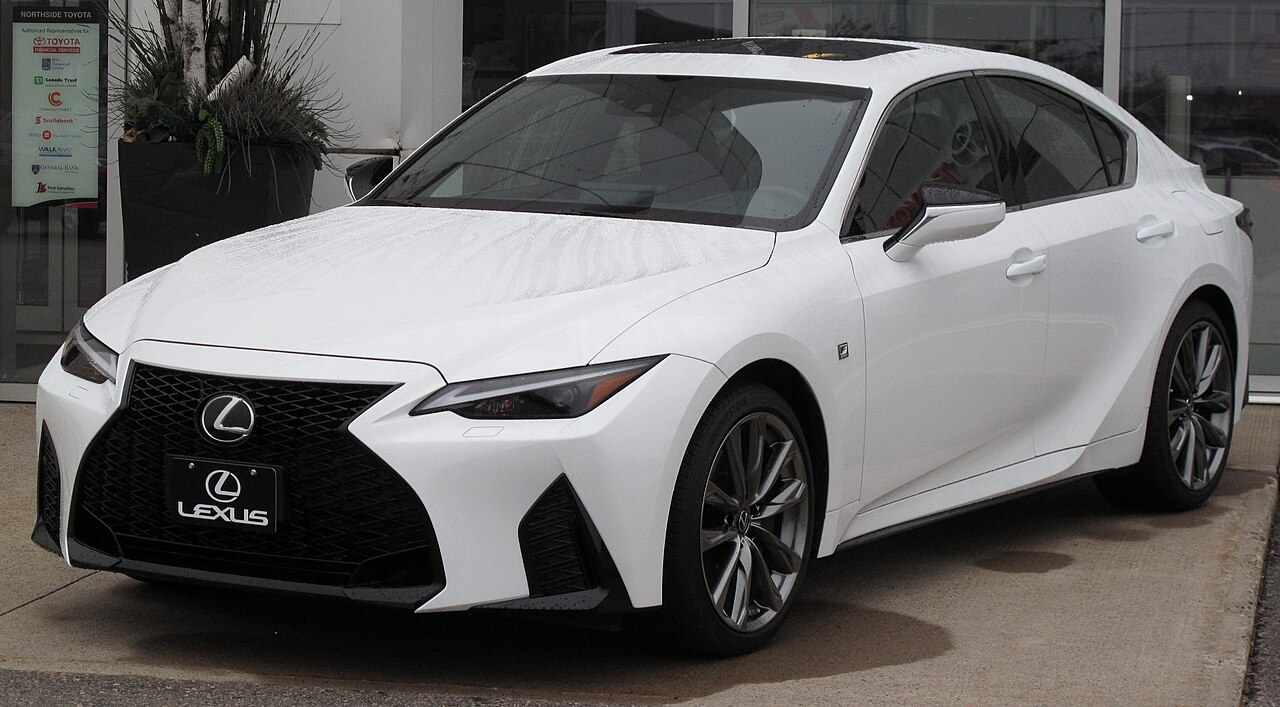 Licensed photo · Photo credit
Generations and technical specifications
Lexus IS – Third generation2013–present
| Specification | Value |
|---|---|
| Model code | XE30 |
| Production | April 2013 –present |
| Model years | 2014–present |
| Body styles | 4-door sedan |
| Platform | Toyota New N platform |
| Engines | Petrol 2.0 L 8AR-FTS I4-T (ASE30; IS 200t/300) 2.5 L 4GR-FSE V6 (GSE30/35; IS 250) 3.5 L 2GR-FSE V6 (GSE31/36/37; IS 300 AWD/350) 3.5 L 2GR-FKS V6 (GSE31/36/37; IS 300 AWD/350) 5.0 L 2UR-GSE V8 (USE30; IS 500) Petrol hybrid 2.5 L 2AR-FSE I4 (AVE30/35; IS 300h) |
| Electric motor | 1KM permanent magnet synchronous (IS 300h) |
| Transmissions | 6-speed A960E automatic (GSE30; IS 250) 6-speed A760H automatic (GSE35/36/37; IS 250 AWD/300 AWD/350 AWD) 8-speed AA81E "Direct Shift" automatic (ASE30/GSE31; IS 200t/300/350) 8-speed AA80E "Direct Shift" automatic (USE30; IS 500) eCVT L210/L210F with sequential shift mode (AVE30/35; IS 300h) |
| Battery | 230.4 – 650 V nickel metal hydride 192 cells |
| Wheelbase | 2,800 mm |
| Length | 4,665 mm (2013–2020) 4,710 mm (2020–2025) 4,720 mm (2025–present) |
| Width | 1,810 mm (2013–2020) 1,840 mm (2020–present) |
| Height | 1,430 mm (2013–2020) 1,435–1,440 mm (2020–present) |
| Kerb weight | 1,590–1,720 kg 1,620–1,780 kg (hybrid) |
| Assembly | Japan: Tahara, Aichi (Tahara plant) |
| Designer | Masanari Sakae (2010) Yuki Isogai (2011) 2021 facelift: Kenichi Hirai |
Lexus IS (XE20)2005–2013
| Specification | Value |
|---|---|
| Production | September 2005 – April 2013 |
| Body styles | 4-door sedan 2-door coupé convertible |
| Layout | Front-engine, rear-wheel drive Front-engine, all-wheel drive |
| Platform | Toyota N platform |
| Engines | 2.2 L 2AD-FHV I4 (diesel) 2.5 L 4GR-FSE V6 3.0 L 3GR-FE V6 3.5 L 2GR-FSE V6 5.0 L 2UR-GSE V8 (IS F) |
| Transmissions | 6-speed RA62 manual 6-speed RA63 manual 6-speed A960E automatic 6-speed A760E automatic 8-speed AA80E automatic |
| Wheelbase | 2,730 mm |
| Length | 4,575–4,580 mm (sedan) 4,636 mm (convertible) 4,661 mm (IS F) |
| Width | 1,800–1,815 mm |
| Height | 1,415–1,440 mm |
| Kerb weight | 1,558–1,685 kg |
| Class | Compact executive car |
| Assembly | Japan: Tahara, Aichi (Tahara plant) Japan: Miyawaka, Fukuoka (TMK) |
Lexus IS – Second generation2005–2015
| Specification | Value |
|---|---|
| Model code | XE20 |
| Production | September 2005 – April 2013 (sedan) December 2007 – 2014 (IS F) April 2009 – 2015 (IS C) |
| Model years | 2006 – 2013 |
| Body styles | 4-door sedan 2-door coupé convertible |
| Platform | Toyota N platform |
| Engines | Petrol 2.5 L 4GR-FSE V6 (GSE20/25; IS 250) 3.0 L 3GR-FE V6 (GSE22; IS 300) 3.5 L 2GR-FSE V6 (GSE21/26; IS 350) 5.0 L 2UR-GSE V8 (USE20; IS F) Diesel 2.2 L 2AD-FHV/2AD-FTV I4-T (ALE20; IS 200d/220d) |
| Transmissions | 6-speed RA62/RA63 manual 6-speed A760E/A760H/A960E automatic 8-speed AA80E automatic (IS F) |
| Wheelbase | 2,730 mm |
| Length | 4,575–4,590 mm |
| Width | 1,800–1,816 mm |
| Height | 1,410–1,425 mm |
| Kerb weight | 1,558–1,741 kg |
| Assembly | Japan: Tahara, Aichi (Tahara plant) Japan: Miyawaka, Fukuoka (Toyota Motor Kyushu) |
| Designer | Sedan: Kengo Matsumoto, Hiroyuki Tada (2003) IS F: Kengo Matsumoto (chief designer: 2005), Hiroshi Okamoto (exterior: 2005) Cabriolet: Katsuhiro Suzuki (2006, 2007) 2008 facelift: Takahiro Kanno (2007) 2010 facelift: Masanari Sakae (2009) |
Engines and transmissions
| Model years | Engine | Transmission | Drive | Fuel |
|---|---|---|---|---|
| 2011–2026 | 3.5 L, 6 cyl | 6-speed automatic | All-wheel drive | Petrol (premium) |
| 2014–2026 | 3.5 L, 6 cyl | 8-speed automatic | Rear-wheel drive | Petrol (premium) |
| 2016–2025 | 2.0 L, 4 cyl | 8-speed automatic | Rear-wheel drive | Petrol (premium) |
| 2008–2014, 2022–2025 | 5.0 L, 8 cyl | 8-speed automatic | Rear-wheel drive | Petrol (premium) |
| 2010–2015 | 2.5 L, 6 cyl | 6-speed automatic | All-wheel drive | Petrol (premium) |
| 2006–2015 | 2.5 L, 6 cyl | 6-speed automatic | Rear-wheel drive | Petrol (premium) |
| 2006–2015 | 3.5 L, 6 cyl | 6-speed automatic | Rear-wheel drive | Petrol (premium) |
| 2006–2012 | 2.5 L, 6 cyl | 6-speed manual | Rear-wheel drive | Petrol (premium) |
| 2006–2009 | 2.5 L, 6 cyl | 6-speed automatic | Four-wheel or all-wheel drive | Petrol (premium) |
| 2001–2005 | 3.0 L, 6 cyl | 5-speed automatic | Rear-wheel drive | Petrol (premium) |
| 2002–2005 | 3.0 L, 6 cyl | 5-speed manual | Rear-wheel drive | Petrol (premium) |
Fuel economy (EPA)
| Model years | Configuration | Combined | City | Highway |
|---|---|---|---|---|
| 2011–2026 | 3.5 L, 6 cyl · 6-speed automatic · All-wheel drive | 10.7–11.8 L/100 km | 12.4–13.1 L/100 km | 9.0–9.8 L/100 km |
| 2014–2026 | 3.5 L, 6 cyl · 8-speed automatic · Rear-wheel drive | 10.2–10.7 L/100 km | 11.8–12.4 L/100 km | 8.4–8.7 L/100 km |
| 2016–2025 | 2.0 L, 4 cyl · 8-speed automatic · Rear-wheel drive | 9.0–9.8 L/100 km | 10.7–11.2 L/100 km | 7.4–7.8 L/100 km |
| 2008–2014, 2022–2025 | 5.0 L, 8 cyl · 8-speed automatic · Rear-wheel drive | 11.8–13.1 L/100 km | 13.8–14.7 L/100 km | 9.4–10.2 L/100 km |
| 2010–2015 | 2.5 L, 6 cyl · 6-speed automatic · All-wheel drive | 10.2–10.7 L/100 km | 11.2–11.8 L/100 km | 8.7–9.0 L/100 km |
| 2006–2015 | 2.5 L, 6 cyl · 6-speed automatic · Rear-wheel drive | 9.8 L/100 km | 11.2 L/100 km | 7.8–8.1 L/100 km |
| 2006–2015 | 3.5 L, 6 cyl · 6-speed automatic · Rear-wheel drive | 10.7–11.8 L/100 km | 11.8–13.1 L/100 km | 8.7–9.4 L/100 km |
| 2006–2012 | 2.5 L, 6 cyl · 6-speed manual · Rear-wheel drive | 10.7–11.2 L/100 km | 12.4–13.1 L/100 km | 8.7–9.0 L/100 km |
| 2006–2009 | 2.5 L, 6 cyl · 6-speed automatic · Four-wheel or all-wheel drive | 10.7 L/100 km | 11.8 L/100 km | 9.0 L/100 km |
| 2001–2005 | 3.0 L, 6 cyl · 5-speed automatic · Rear-wheel drive | 13.1 L/100 km | 14.7 L/100 km | 10.2–11.2 L/100 km |
| 2002–2005 | 3.0 L, 6 cyl · 5-speed manual · Rear-wheel drive | 12.4–13.1 L/100 km | 14.7 L/100 km | 10.2 L/100 km |
Values are the official EPA label figures for each model year, shown as the lowest and highest value for the configuration. Electric models show energy use per 100 km. Real-world consumption depends on driving style, weather and load. Luggage and passenger volumes follow the EPA measuring method and can differ from the VDA figures used in Europe.
EU type-approval data
| Years | Powertrain | Engine | Power | Mass | CO₂ |
|---|---|---|---|---|---|
| 2013–2021 | Petrol | 2494 cm³ | 133 kW (181 PS) | 1695–1754 kg | 131–143 g/km (WLTP) |
| 2019–2021 | Petrol hybrid | 2494 cm³ | 133 kW (181 PS) | 1695 kg | 131–143 g/km (WLTP) |
| 2015–2019 | Petrol | 1998 cm³ | 180 kW (245 PS) | 1630–1705 kg | 162–177 g/km (NEDC) |
| 2017 | Petrol | 1998 cm³ | 270 kW (367 PS) | 1665–1715 kg | 177–191 g/km (NEDC) |
| 2010–2015 | Petrol | 2499 cm³ | – | 1660–1815 kg | 194–219 g/km (NEDC) |
| 2011–2015 | Petrol | 2500 cm³ | 153 kW (208 PS) | 1605–1805 kg | 194–213 g/km (NEDC) |
| 2013–2015 | Petrol-electric | 2494 cm³ | 133 kW (181 PS) | 1695 kg | 101–109 g/km (NEDC) |
| 2010–2013 | Petrol | 4969 cm³ | – | 1775–1805 kg | 270 g/km (NEDC) |
| 2011–2013 | Diesel | 2231 cm³ | 110 kW (150 PS) | 1640–1710 kg | 134 g/km (NEDC) |
Years are registration years. Each range runs from the 10th to the 90th percentile of the values reported for new registrations; it is not an average. Mass is the mass in running order. For electric cars the power is the type-approval net power, which can be lower than the peak power in brochures.
Key specifications
| Specification | Value |
|---|---|
| EPA size class | Compact car, Subcompact car |
| Model years in EPA data | 2001–2026 |
| Powertrains | Petrol |
| Engine displacement | 2.0–5.0 L |
| Cylinders | 4, 6, 8 |
| Transmission types | Automatic, Manual |
| Drive | Rear-wheel drive, All-wheel drive, Four-wheel or all-wheel drive |
| Fuel | Petrol (premium) |
| Configurations listed | 108 |
| Forced induction | Turbocharged (on some versions) |
| Luggage volume (EPA) | 311–623 L |
| Passenger volume (EPA) | 2,180–2,549 L |
| Powertrains (EU) | Petrol, Petrol hybrid, Petrol-electric |
| Engine displacement (EU) | 1,998–2,500 cm³ |
| Power (EU) | 133–180 kW (181–245 PS) |
| Mass in running order (EU) | 1,605–1,815 kg |
| Wheelbase (EU) | 2,600–2,800 mm |
Years and markets
| Specification | Value |
|---|---|
| Model years (US) | 2001–2027 |
| New registrations (EU) | 2000–2025 |
Owner complaints (NHTSA)
| Component | Complaints | Most reported model years |
|---|---|---|
| Fuel and propulsion | 13 | 2014, 2016, 2017 |
| Engine and cooling | 9 | 2014, 2017, 2020 |
| Electrical system | 8 | 2014, 2015, 2017 |
| Steering | 5 | 2015, 2017, 2020 |
| Airbags | 3 | 2014, 2017 |
| Body and structure | 3 | 2014, 2015, 2017 |
| Visibility and wipers | 3 | 2014, 2015, 2019 |
| Latches and locks | 2 | 2014, 2018 |
| Tyres | 2 | 2015, 2019 |
| Lights | 1 | 2015 |
Source: complaints filed by owners with the U.S. National Highway Traffic Safety Administration (NHTSA) for model years 2014–2021: 47 complaints, 2 with a crash and 0 with a fire. Complaints are owner reports that NHTSA has not verified, and one complaint can name more than one component. More complaints can also mean more cars sold.