ES
Lexus ES: official NHTSA recalls, fault code help and maintenance guides.
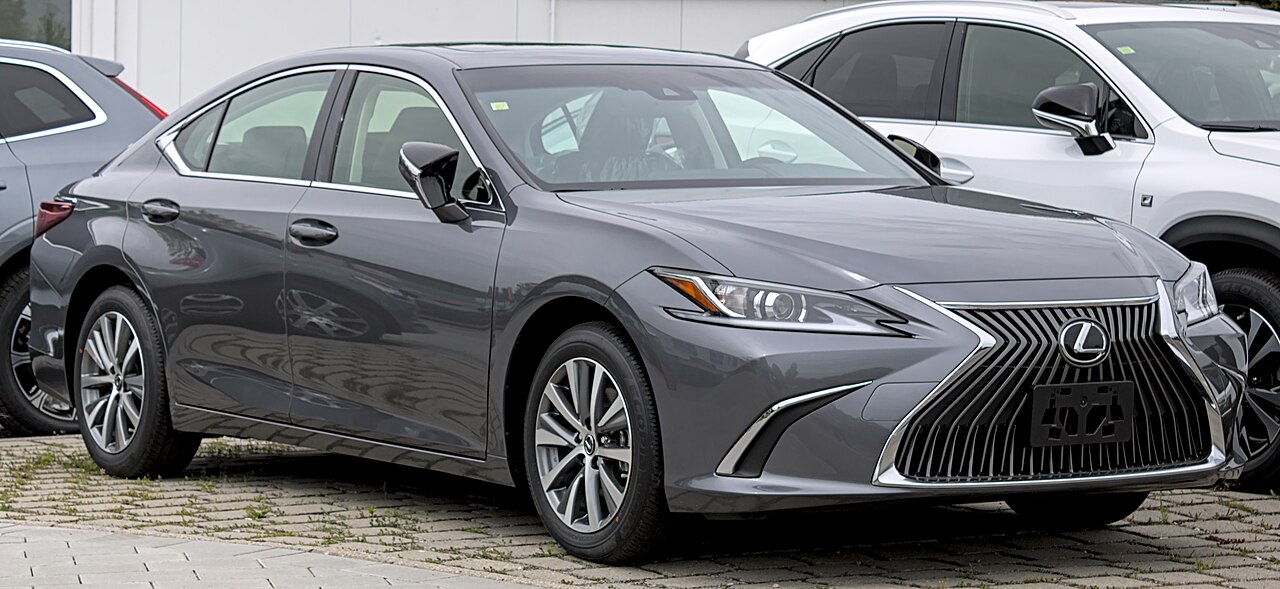 Licensed photo · Photo credit
Generations and technical specifications
Lexus ES – Eighth generation2025–present
| Specification | Value |
|---|---|
| Model code | XZ20 |
| Production | December 2025 – present |
| Model years | 2026–present |
| Body styles | 4-door sedan |
| Layout | Front-engine, front-wheel-drive (ES 300h/350h) Front-engine, four-wheel-drive (ES 300h/350h) Front-motor, front-wheel-drive (ES 350e) Dual-motor, all-wheel-drive (ES 500e) |
| Platform | TNGA: GA-K |
| Engines | Gasoline hybrid 2.0 L M20A-FXS I4 (ES 300h) 2.5 L A25A-FXS I4 (ES 350h, AXZH21/26) |
| Electric motor | Front-wheel-drive hybrid 1× 119 kW 2VM AC permanent magnet synchronous (ES 350h) All-wheel-drive hybrid 1× 119 kW 2VM front and 1× 41 kW 4NM rear AC permanent magnet synchronous (ES 350h AWD) Front-wheel-drive EV 1× 167 kW 2XM AC permanent magnet synchronous (ES 350e, XXZM21) All-wheel-drive EV 1× 167 kW 2XM front and 1× 88 kW 3XM rear AC permanent magnet synchronous (ES 500e, XXZM26) |
| Transmissions | eCVT (ES 300h/350h) eAxle (ES 350e/500e) |
| Drivetrain | Power-split (ES 300h/350h) |
| Battery | 1 kWh lithium-ion (ES 300h/350h) 74.69 – 77.4 kWh PPES NMC (ES 350e/500e) |
| Electric range | 670 km (ES 350e) (WLTC) 620 km (ES 350e) (NEDC) 685 km (ES 350e) (CLTC) 636 km (ES 500e) (WLTC) 610 km (ES 500e) (CLTC) |
| Charging | 3–6 kW (AC) 50–150 kW (DC) |
| Wheelbase | 2,950 mm |
| Length | 5,140 mm |
| Width | 1,920 mm |
| Height | 1,555–1,560 mm |
| Kerb weight | 1,785–2,285 kg |
| Assembly | Japan: Miyawaka, Fukuoka (TMK) India: Bidadi, Karnataka (CKD, TKMPL) |
| Designer | Yahiko Kumai |
Lexus ES – Seventh generation2018–2026
| Specification | Value |
|---|---|
| Model code | XZ10 |
| Production | August 2018 – December 2025 August 2018 – February 2026 (US manufacturing) |
| Model years | 2019–2025 |
| Body styles | 4-door sedan |
| Layout | Front-engine, front-wheel-drive Front-engine, four-wheel-drive (2020–present) |
| Platform | TNGA: GA-K |
| Engines | Gasoline 2.0 L 6AR-FSE I4 (ES 200) 2.0 L M20A-FKS I4 (ES 200) 2.5 L A25A-FKS I4 (ES 250/ES 260 in China) 3.5 L 2GR-FKS V6 (ES 350) Gasoline hybrid 2.5 L A25A-FXS I4 (ES 300h) 2.5 L A25B-FXS I4 (ES 300h, China) |
| Electric motor | 88 kW 3NM synchronous (ES 300h) |
| Transmissions | 6-speed automatic (ES 200; 6AR-FSE) 8-speed "Direct Shift" automatic (ES 250/260/ES 350) K120 CVT with physical first gear (ES 200; M20A-FKS) eCVT with sequential shift mode (ES 300h) |
| Drivetrain | Power-split |
| Battery | 1.6 kWh NiMH (ES 300h, up to 2020) 1.6 kWh Li-ion (ES 300h, 2021 onward) |
| Wheelbase | 2,870 mm |
| Width | 1,865 mm |
| Assembly | Japan: Miyawaka, Fukuoka (Toyota Motor Kyushu) United States: Georgetown, Kentucky (TMMK) India: Bidadi, Karnataka (2020–2026, CKD, TKMPL) |
| Designer | Yasuo Kajino (chief: 2013–2016) |
Lexus ES – Sixth generation2012–2018
| Specification | Value |
|---|---|
| Model code | XV60 |
| Production | July 2012 – August 2018 October 2015 – August 2018 (US manufacturing) |
| Model years | 2013–2018 |
| Body styles | 4-door sedan |
| Layout | Front-engine, front-wheel-drive |
| Platform | Toyota K platform |
| Engines | Gasoline 2.0 L 6AR-FSE I4 2.5 L 2AR-FE I4 3.5 L 2GR-FE V6 Gasoline hybrid 2.5 L 2AR-FXE I4 |
| Transmissions | 6-speed automatic eCVT (hybrid) |
| Wheelbase | 2,820 mm |
| Length | 4,895 mm |
| Width | 1,820 mm |
| Height | 1,450 mm |
| Assembly | Japan: Miyawaka, Fukuoka (Toyota Motor Kyushu) United States: Georgetown, Kentucky (TMMK: 2015–2018) |
| Designer | Pansoo Kwon, Yuji Fujiwara (2010) |
Lexus ES – Fifth generation2006–2012
| Specification | Value |
|---|---|
| Model code | XV40 |
| Production | March 2006 – June 2012 |
| Model years | 2007–2012 |
| Body styles | 4-door sedan |
| Layout | Front-engine, front-wheel-drive |
| Platform | Toyota K platform |
| Engines | Gasoline 2.4 L 2AZ-FE I4 3.5 L 2GR-FE V6 |
| Transmissions | 6-speed U660E automatic |
| Wheelbase | 2,776 mm |
| Length | 4,854 mm |
| Width | 1,821 mm |
| Height | 1,450 mm |
| Assembly | Japan: Miyawaka, Fukuoka (Toyota Motor Kyushu) |
| Designer | Kengo Matsumoto (2004) |
Lexus ES – Fourth generation2001–2006
| Specification | Value |
|---|---|
| Model code | XV30 |
| Production | July 2001 – February 2006 |
| Model years | 2002–2006 |
| Body styles | 4-door sedan |
| Layout | Front-engine, front-wheel-drive |
| Platform | Toyota K platform |
| Engines | Gasoline 3.0 L 1MZ-FE V6 3.3 L 3MZ-FE V6 (MCV31; N.America) |
| Transmissions | 5-speed U151E automatic |
| Wheelbase | 2,720 mm |
| Length | 4,854 mm |
| Width | 1,811 mm |
| Height | 1,455 mm |
| Assembly | Japan: Miyawaka, Fukuoka (Toyota Motor Kyushu) Japan: Susono, Shizuoka (Kanto Auto Works) Japan: Toyota, Aichi (Tsutsumi plant) |
| Designer | Kengo Matsumoto (1998) |
Lexus ES – Third generation1996–2001
| Specification | Value |
|---|---|
| Model code | XV20 |
| Production | August 1996 – July 2001 |
| Model years | 1997–2001 |
| Body styles | 4-door hardtop sedan |
| Layout | Front-engine, front-wheel-drive |
| Engines | Gasoline 2.5 L 2MZ-FE V6 (Japan) 3.0 L 1MZ-FE V6 |
| Transmissions | (1996–1999) 4-speed A541E automatic (1999–2001) 4-speed U140E automatic |
| Wheelbase | 2,670 mm |
| Length | 4,831 mm |
| Width | 1,791 mm |
| Height | 1,394 mm |
| Assembly | Japan: Toyota, Aichi (Tsutsumi plant) Japan: Miyawaka, Fukuoka (Toyota Motor Kyushu) |
| Designer | Hiroshi Okamoto (1993) |
Engines and transmissions
| Model years | Engine | Transmission | Drive | Fuel |
|---|---|---|---|---|
| 2026 | 2.5 L, 4 cyl hybrid | CVT (continuously variable) | All-wheel drive | Petrol (premium) |
| 2026 | 2.5 L, 4 cyl hybrid | CVT (continuously variable) | Front-wheel drive | Petrol (premium) |
| 2026 | Electric motor | Single-speed | All-wheel drive | Electricity |
| 2026 | Electric motor | Single-speed | Front-wheel drive | Electricity |
| 2021–2025 | 2.5 L, 4 cyl | 8-speed automatic | All-wheel drive | Petrol (regular) |
| 2013–2025 | 2.5 L, 4 cyl hybrid | CVT (continuously variable) | Front-wheel drive | Petrol (regular) |
| 2019–2025 | 3.5 L, 6 cyl | 8-speed automatic | Front-wheel drive | Petrol (regular) |
| 2011–2018 | 3.5 L, 6 cyl | 6-speed automatic | Front-wheel drive | Petrol (regular) |
| 2007–2010 | 3.5 L, 6 cyl | 6-speed automatic | Front-wheel drive | Petrol (premium) |
| 2006 | 3.3 L, 6 cyl | 5-speed automatic | Front-wheel drive | Petrol (premium) |
| 2004–2005 | 3.3 L, 6 cyl | 5-speed automatic | Front-wheel drive | Petrol (regular) |
| 2002–2003 | 3.0 L, 6 cyl | 5-speed automatic | Front-wheel drive | Petrol (regular) |
| +1 more configurations |
Fuel economy (EPA)
| Model years | Configuration | Combined | City | Highway | Electric range |
|---|---|---|---|---|---|
| 2026 | 2.5 L, 4 cyl hybrid · CVT (continuously variable) · All-wheel drive | 5.3 L/100 km | 5.0 L/100 km | 5.6 L/100 km | – |
| 2013–2026 | 2.5 L, 4 cyl hybrid · CVT (continuously variable) · Front-wheel drive | 5.1–5.9 L/100 km | 4.9–5.9 L/100 km | 5.2–6.0 L/100 km | – |
| 2026 | Electric motor · Single-speed · All-wheel drive | 18.6 kWh/100 km | 17.1–17.2 kWh/100 km | 19.0–19.9 kWh/100 km | 438–444 km |
| 2026 | Electric motor · Single-speed · Front-wheel drive | 16.8–17.1 kWh/100 km | 15.3–16.0 kWh/100 km | 18.0–18.5 kWh/100 km | 470–494 km |
| 2021–2025 | 2.5 L, 4 cyl · 8-speed automatic · All-wheel drive | 8.4 L/100 km | 9.4–9.8 L/100 km | 6.9–7.1 L/100 km | – |
| 2019–2025 | 3.5 L, 6 cyl · 8-speed automatic · Front-wheel drive | 9.0–9.4 L/100 km | 10.7 L/100 km | 7.1–7.6 L/100 km | – |
| 2007–2018 | 3.5 L, 6 cyl · 6-speed automatic · Front-wheel drive | 9.8–10.7 L/100 km | 11.2–12.4 L/100 km | 7.6–8.7 L/100 km | – |
| 2004–2006 | 3.3 L, 6 cyl · 5-speed automatic · Front-wheel drive | 11.2 L/100 km | 13.1 L/100 km | 8.7 L/100 km | – |
| 2002–2003 | 3.0 L, 6 cyl · 5-speed automatic · Front-wheel drive | 11.2 L/100 km | 13.1 L/100 km | 8.7 L/100 km | – |
| 2000–2001 | 3.0 L, 6 cyl · 4-speed automatic · Front-wheel drive | 11.8 L/100 km | 13.8 L/100 km | 9.8 L/100 km | – |
Values are the official EPA label figures for each model year, shown as the lowest and highest value for the configuration. Electric models show energy use per 100 km. Real-world consumption depends on driving style, weather and load. Luggage and passenger volumes follow the EPA measuring method and can differ from the VDA figures used in Europe.
EU type-approval data
| Years | Powertrain | Engine | Power | Mass | CO₂ |
|---|---|---|---|---|---|
| 2018–2021, 2025 | Petrol | 2487 cm³ | 131 kW (178 PS) | 1755 kg | 123–127 g/km (WLTP) |
| 2019–2025 | Petrol hybrid | 2487 cm³ | 131 kW (178 PS) | 1755 kg | 119–126 g/km (WLTP) |
| 2019–2020 | Petrol hybrid | 2494 cm³ | – | 1759–1786 kg | 119–126 g/km (WLTP) |
Years are registration years. Each range runs from the 10th to the 90th percentile of the values reported for new registrations; it is not an average. Mass is the mass in running order. For electric cars the power is the type-approval net power, which can be lower than the peak power in brochures.
Key specifications
| Specification | Value |
|---|---|
| EPA size class | Midsize car, Compact car |
| Model years in EPA data | 2000–2026 |
| Powertrains | Hybrid, Electric, Petrol |
| Engine displacement | 2.5–3.5 L |
| Cylinders | 4, 6 |
| Transmission types | CVT, Single-speed, Automatic |
| Drive | Front-wheel drive, All-wheel drive |
| Fuel | Petrol (premium), Electricity, Petrol (regular) |
| Configurations listed | 57 |
| Start-stop system | On some versions |
| Electric motor (EPA) | 167 kW AC Synchronous; 88 and 167 kW AC Synchronous |
| Luggage volume (EPA) | 340–425 L |
| Passenger volume (EPA) | 2,605–2,860 L |
| Electric range (EPA) | 438–494 km |
| Powertrains (EU) | Petrol, Petrol hybrid |
| Engine displacement (EU) | 2,487–2,494 cm³ |
| Power (EU) | 131 kW (178 PS) |
| Mass in running order (EU) | 1,755–1,786 kg |
| Wheelbase (EU) | 2,870 mm |
Years and markets
| Specification | Value |
|---|---|
| Model years (US) | 2000–2027 |
| New registrations (EU) | 2010, 2012, 2018–2026 |
Owner complaints (NHTSA)
| Component | Complaints | Most reported model years |
|---|---|---|
| Airbags | 37 | 2015, 2020, 2021 |
| Brakes | 8 | 2014, 2016, 2020 |
| Steering | 4 | 2015, 2016, 2021 |
| Engine and cooling | 4 | 2016, 2017, 2018 |
| Electrical system | 3 | 2014, 2015, 2020 |
| Suspension | 3 | 2015, 2016, 2020 |
| Body and structure | 2 | 2015, 2018 |
| Transmission and drivetrain | 2 | 2016, 2018 |
| Tyres | 2 | 2016, 2018 |
| Fuel and propulsion | 2 | 2018, 2020 |
Source: complaints filed by owners with the U.S. National Highway Traffic Safety Administration (NHTSA) for model years 2014–2018, 2020–2021: 72 complaints, 9 with a crash and 0 with a fire. Complaints are owner reports that NHTSA has not verified, and one complaint can name more than one component. More complaints can also mean more cars sold.