X1
BMW X1: official NHTSA recalls, fault code help and maintenance guides.
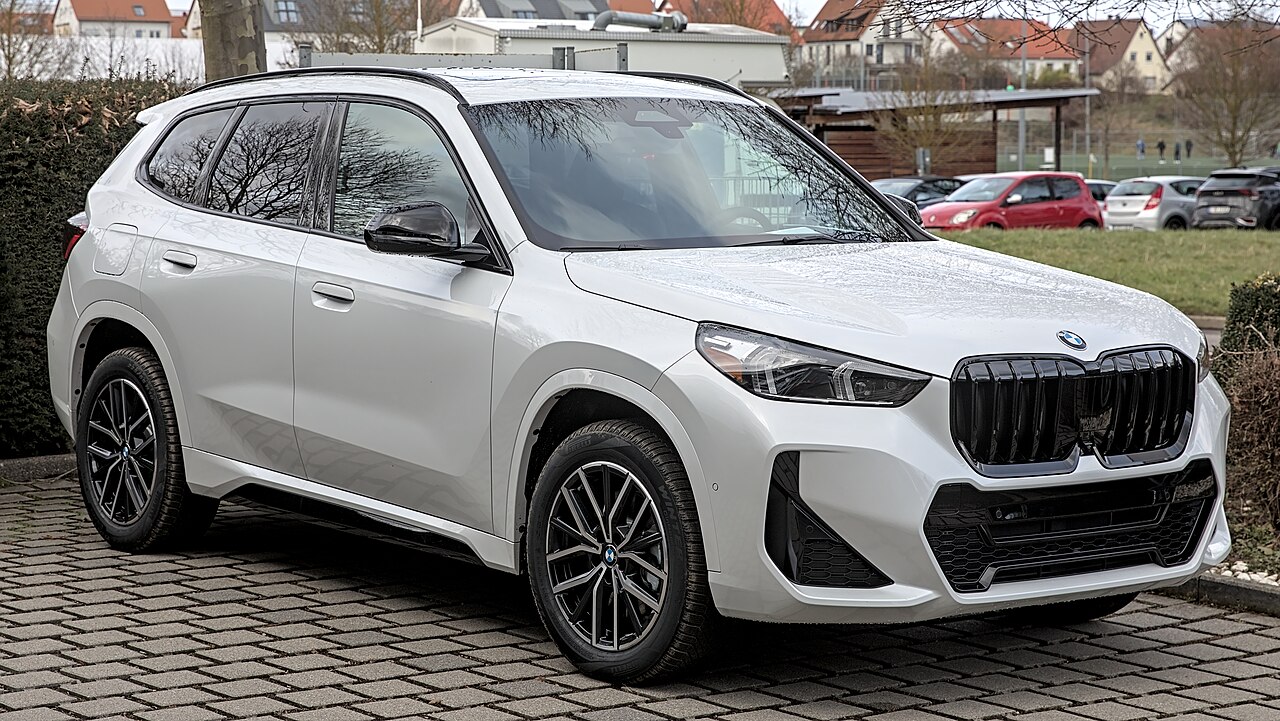 Licensed photo · Photo credit
Generations and technical specifications
BMW X1 (U11)2022–present
| Specification | Value |
|---|---|
| Model code | U11 / U12 (LWB) |
| Production | October 2022 – present |
| Model years | 2023–present (North America) |
| Body styles | 5-door SUV |
| Layout | Front-engine, front-wheel-drive Front-engine, all-wheel-drive (xDrive) Front-motor, front-wheel-drive (iX1 eDrive20) Dual-motor, four-wheel-drive (iX1 xDrive30) |
| Platform | BMW UKL2 platform |
| Engines | Petrol 1.5 L B38 turbo I3 Petrol hybrid 2.0 L B48 turbo I4 mild hybrid Petrol plug-in hybrid 1.5 L B38A15M0 turbo I3 Diesel hybrid 2.0 L B47 twin-scroll turbo I4 mild hybrid |
| Electric motor | 14 kW 48V power booster (MHEV) 81 kW permanent-magnet synchronous motor (X1 xDrive25e PHEV) 130 kW permanent-magnet synchronous motor (X1 xDrive30e PHEV) 2x BMW eDrive 5.0 M170SF/M170SR permanently excited synchronous motors (PSM) (iX1) |
| Transmissions | 7-speed DCT wet Getrag 7DCT300 Single-speed automatic (iX1) |
| Drivetrain | Mild Hybrid (MHEV) Plug-in Hybrid (PHEV) |
| Battery | 16.3 kWh lithium-ion (PHEV) 64.7 kWh lithium-ion (iX1) |
| Wheelbase | 2,692 mm 2,802 mm (LWB) |
| Length | 4,500 mm 4,505 mm (M35i) 4,616 mm (LWB) |
| Width | 1,845 mm |
| Height | 1,642 mm |
| Kerb weight | 1,500–1,690 kg |
| Class | Subcompact luxury crossover SUV |
| Assembly | Germany: Regensburg Thailand: Rayong (BMW Thailand) Indonesia: Jakarta (Gaya Motor) Malaysia: Kulim, Kedah (Inokom) India: Chennai (BMW India) China: Tiexi, Shenyang (BBA) |
| Designer | Jacek Pepłowski |
BMW X1 (F48)2015–2022
| Specification | Value |
|---|---|
| Model code | F48 / F49 (LWB) |
| Production | June 2015 – June 2022 |
| Model years | 2016–2022 |
| Body styles | 5-door SUV |
| Layout | Front-engine, front-wheel-drive Front-engine, all-wheel-drive (xDrive) |
| Platform | BMW UKL platform |
| Engines | Petrol 1.5 L B38 turbo I3 2.0 L B48 turbo I4 Petrol plug-in hybrid 1.5 L B38A15M0 turbo I3 Diesel 1.5 L B37 turbo I3 2.0 L B47 turbo/twin-turbo I4 |
| Transmissions | 6-speed manual 6-speed automatic (xDrive25e) 8-speed automatic Aisin AWF8F35 7-speed DCT Getrag 7DCT300 |
| Wheelbase | 2,670 mm 2,780 mm (LWB) |
| Length | 4,439 mm 4,565 mm (LWB) |
| Width | 1,821 mm |
| Height | 1,612 mm |
| Kerb weight | 1,425–1,660 kg |
| Class | Subcompact luxury crossover SUV |
| Assembly | Germany: Regensburg Netherlands: Born (VDL Nedcar) China: Tiexi, Shenyang (BBA) India: Chennai (BMW India) Brazil: Araquari Thailand: Rayong (BMW Thailand) Egypt: 6th of October City (BAG) Indonesia: Jakarta (Gaya Motor) Malaysia: Kulim, Kedah (Inokom) Russia: Kaliningrad (Avtotor) |
| Designer | Calvin Luk |
BMW X1 (E84)2009–2015
| Specification | Value |
|---|---|
| Model code | E84 |
| Production | October 2009 – June 2015 |
| Model years | 2010–2015 |
| Body styles | 5-door SUV |
| Layout | Front-engine, rear-wheel-drive Front-engine, all-wheel-drive (xDrive) |
| Platform | BMW L2 |
| Engines | Petrol 2.0 L N46 I4 2.0 L N20 I4 turbo 3.0 L N52 I6 3.0 L N55 I6 turbo Diesel 2.0 L N47 I4 turbo/twin-turbo |
| Transmissions | 6-speed manual 6-speed ZF 6HP automatic 8-speed ZF 8HP automatic |
| Wheelbase | 2,760 mm |
| Length | 4,454 mm |
| Width | 1,798 mm |
| Height | 1,545 mm |
| Kerb weight | 1,430–1,765 kg |
| Class | Subcompact crossover SUV/C-segment |
| Assembly | Germany: Leipzig China: Shenyang (BBA) India: Chennai (BMW India) Indonesia: Jakarta (Gaya Motor) Thailand: Rayong (BMW Thailand) Malaysia: Kulim, Kedah (Inokom) Russia: Kaliningrad (Avtotor) Brazil: Araquari (BMW Group Brasil) |
| Designer | Richard Kim |
Engines and transmissions
| Model years | Engine | Transmission | Drive | Fuel |
|---|---|---|---|---|
| 2023–2027 | 2.0 L, 4 cyl | 7-speed automated manual | All-wheel drive | Petrol (premium) |
| 2013–2022 | 2.0 L, 4 cyl | 8-speed automatic | All-wheel drive | Petrol (premium) |
| 2017–2022 | 2.0 L, 4 cyl | 8-speed automatic | Front-wheel drive | Petrol (premium) |
| 2013–2015 | 2.0 L, 4 cyl | 8-speed automatic | Rear-wheel drive | Petrol (premium) |
| 2013–2015 | 3.0 L, 6 cyl | 6-speed automatic | All-wheel drive | Petrol (premium) |
Fuel economy (EPA)
| Model years | Configuration | Combined | City | Highway |
|---|---|---|---|---|
| 2023–2027 | 2.0 L, 4 cyl · 7-speed automated manual · All-wheel drive | 8.4–9.0 L/100 km | 9.4–10.2 L/100 km | 6.9–7.6 L/100 km |
| 2013–2022 | 2.0 L, 4 cyl · 8-speed automatic · All-wheel drive | 9.0–9.4 L/100 km | 10.2–10.7 L/100 km | 7.4–7.6 L/100 km |
| 2017–2022 | 2.0 L, 4 cyl · 8-speed automatic · Front-wheel drive | 8.7–9.0 L/100 km | 9.8–10.2 L/100 km | 7.1–7.4 L/100 km |
| 2013–2015 | 2.0 L, 4 cyl · 8-speed automatic · Rear-wheel drive | 8.7–9.0 L/100 km | 9.8–10.2 L/100 km | 7.1 L/100 km |
| 2013–2015 | 3.0 L, 6 cyl · 6-speed automatic · All-wheel drive | 11.2 L/100 km | 13.1 L/100 km | 9.0 L/100 km |
Values are the official EPA label figures for each model year, shown as the lowest and highest value for the configuration. Electric models show energy use per 100 km. Real-world consumption depends on driving style, weather and load. Luggage and passenger volumes follow the EPA measuring method and can differ from the VDA figures used in Europe.
EU type-approval data
| Years | Powertrain | Engine | Power | Mass | CO₂ | Electric range |
|---|---|---|---|---|---|---|
| 2016–2025 | Petrol | 1499 cm³ | 100 kW (136 PS) | 1475–1575 kg | 143–152 g/km (WLTP) | – |
| 2023–2025 | Petrol hybrid | 1499 cm³ | 115 kW (156 PS) | 1625 kg | 129–138 g/km (WLTP) | – |
| 2022–2025 | Petrol hybrid | 1998 cm³ | 150 kW (204 PS) | 1730 kg | 145–155 g/km (WLTP) | – |
| 2023–2025 | Petrol plug-in hybrid | 1499 cm³ | 100 kW (136 PS) | 1930 kg | 16–19 g/km (WLTP) | 80–89 km · 150–176 Wh/km |
| 2022–2025 | Petrol plug-in hybrid | 1499 cm³ | 110 kW (150 PS) | 1935 kg | 17–20 g/km (WLTP) | 78–85 km · 152–179 Wh/km |
| 2015–2025 | Diesel | 1995 cm³ | 110 kW (150 PS) | 1545–1680 kg | 133–152 g/km (WLTP) | – |
| 2023–2025 | Diesel hybrid | 1995 cm³ | 110 kW (150 PS) | 1685–1765 kg | 120–131 g/km (WLTP) | – |
| 2022–2025 | Diesel hybrid | 1995 cm³ | 145 kW (197 PS) | 1765 kg | 127–133 g/km (WLTP) | – |
| 2011–2024 | Diesel | 1995 cm³ | 100 kW (136 PS) | 1505–1640 kg | 131–150 g/km (WLTP) | – |
| 2020–2022 | Petrol | 1998 cm³ | 131 kW (178 PS) | 1570–1655 kg | 150–163 g/km (WLTP) | – |
| 2020–2022 | Petrol plug-in hybrid | 1499 cm³ | 92 kW (125 PS) | 1820 kg | 40–43 g/km (WLTP) | 50–52 km · 138–153 Wh/km |
| 2016–2022 | Diesel | 1496 cm³ | 85 kW (116 PS) | 1500–1575 kg | 131–137 g/km (WLTP) | – |
| 2015–2022 | Diesel | 1995 cm³ | 140 kW (190 PS) | 1625–1695 kg | 145–159 g/km (WLTP) | – |
| 2015–2022 | Diesel | 1995 cm³ | 170 kW (231 PS) | 1650–1695 kg | 152–156 g/km (WLTP) | – |
| 2015–2021 | Petrol | 1998 cm³ | 170 kW (231 PS) | 1615–1660 kg | 168–187 g/km (WLTP) | – |
| 2017–2020 | Petrol | 1499 cm³ | 103 kW (140 PS) | 1475–1505 kg | 152–160 g/km (WLTP) | – |
| 2015–2020 | Petrol | 1998 cm³ | 141 kW (192 PS) | 1560–1645 kg | 158–173 g/km (WLTP) | – |
| 2011–2018 | Diesel | 1995 cm³ | 120 kW (163 PS) | 1565–1650 kg | 142–158 g/km (WLTP) | – |
| 2011–2015 | Petrol | 1995 cm³ | 110 kW (150 PS) | 1505–1530 kg | 180–191 g/km (NEDC) | – |
| 2012–2015 | Petrol | 1997 cm³ | 135 kW (184 PS) | 1560–1665 kg | 157–177 g/km (NEDC) | – |
| 2012–2015 | Diesel | 1995 cm³ | 85 kW (116 PS) | 1555–1570 kg | 128–132 g/km (NEDC) | – |
| 2011–2015 | Diesel | 1995 cm³ | 105 kW (143 PS) | 1555–1650 kg | 128–144 g/km (NEDC) | – |
| 2012–2015 | Diesel | 1995 cm³ | 135 kW (184 PS) | 1575–1660 kg | 132–145 g/km (NEDC) | – |
| 2012–2015 | Diesel | 1995 cm³ | 160 kW (218 PS) | 1670 kg | 145 g/km (NEDC) | – |
| 2011–2013 | Diesel | 1995 cm³ | 130 kW (177 PS) | 1565–1660 kg | 153–164 g/km (NEDC) | – |
Years are registration years. Each range runs from the 10th to the 90th percentile of the values reported for new registrations; it is not an average. Mass is the mass in running order. For electric cars the power is the type-approval net power, which can be lower than the peak power in brochures.
Key specifications
| Specification | Value |
|---|---|
| EPA size class | Small SUV, Large car |
| Model years in EPA data | 2013–2027 |
| Powertrains | Petrol |
| Engine displacement | 2.0–3.0 L |
| Cylinders | 4, 6 |
| Transmission types | Automated manual, Automatic |
| Drive | All-wheel drive, Front-wheel drive, Rear-wheel drive |
| Fuel | Petrol (premium) |
| Configurations listed | 31 |
| Forced induction | Turbocharged |
| Start-stop system | On some versions |
| Luggage volume (EPA) | 708–765 L |
| Passenger volume (EPA) | 2,775–2,860 L |
| Powertrains (EU) | Petrol, Petrol hybrid, Petrol plug-in hybrid, Diesel, Diesel hybrid |
| Engine displacement (EU) | 1,496–1,998 cm³ |
| Power (EU) | 85–141 kW (116–192 PS) |
| Mass in running order (EU) | 1,475–1,930 kg |
| Wheelbase (EU) | 2,670–2,760 mm |
Years and markets
| Specification | Value |
|---|---|
| Model years (US) | 2012–2027 |
| New registrations (EU) | 2001, 2009–2026 |
Owner complaints (NHTSA)
| Component | Complaints | Most reported model years |
|---|---|---|
| Brakes | 114 | 2017, 2023, 2024 |
| Transmission and drivetrain | 111 | 2016, 2017, 2023 |
| Electrical system | 70 | 2016, 2017, 2025 |
| Body and structure | 62 | 2016, 2017, 2018 |
| Engine and cooling | 43 | 2016, 2017, 2018 |
| Stability and traction control | 42 | 2018, 2023, 2024 |
| Driver assistance | 33 | 2017, 2023, 2024 |
| Visibility and wipers | 26 | 2016, 2017, 2018 |
| Airbags | 23 | 2016, 2018, 2021 |
| Steering | 12 | 2016, 2018, 2024 |
Source: complaints filed by owners with the U.S. National Highway Traffic Safety Administration (NHTSA) for model years 2016–2025: 527 complaints, 24 with a crash and 5 with a fire. Complaints are owner reports that NHTSA has not verified, and one complaint can name more than one component. More complaints can also mean more cars sold.