911
Porsche 911: official NHTSA recalls, fault code help and maintenance guides.
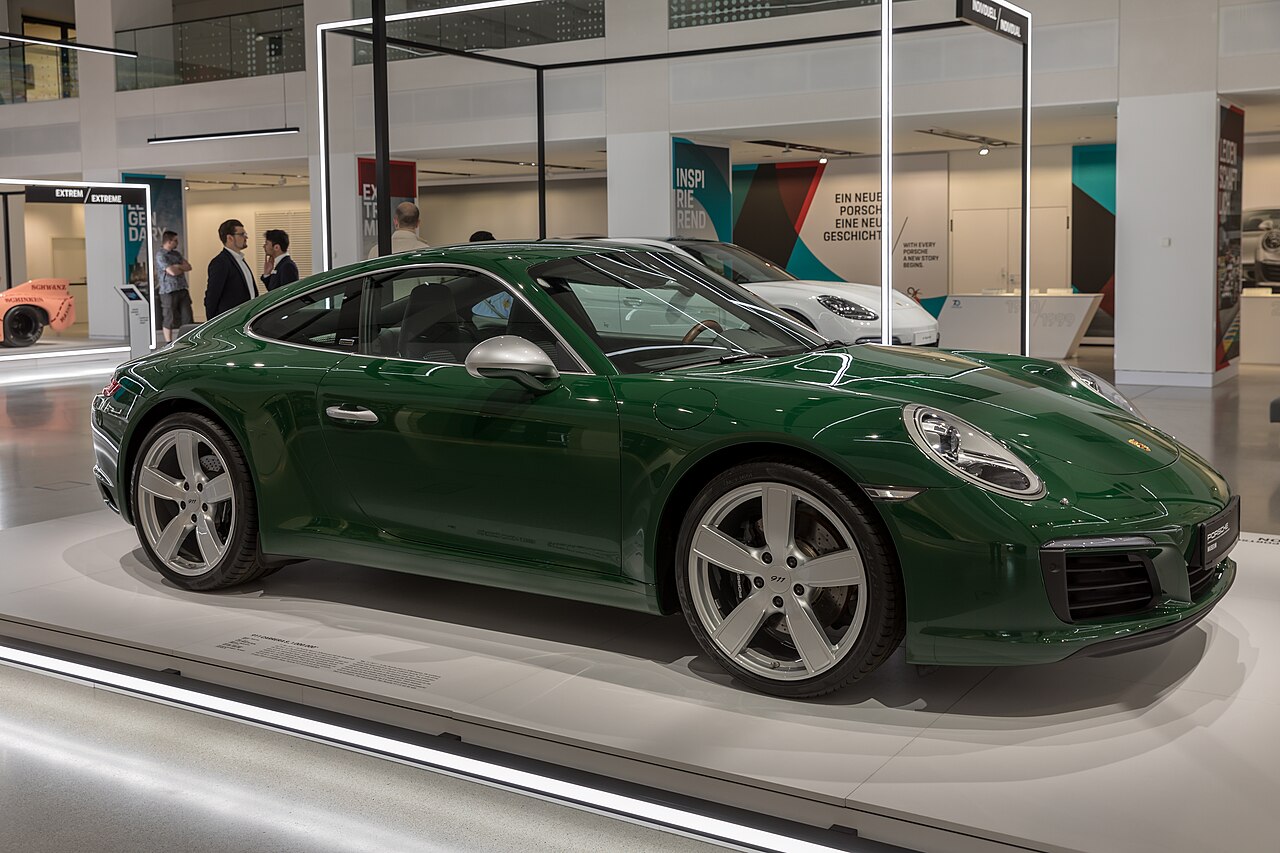 Licensed photo · Photo credit
Generations and technical specifications
Porsche 911 (992)2019–present
| Specification | Value |
|---|---|
| Production | 2019–present |
| Body styles | 2-door coupé 2-door targa top 2-door convertible |
| Layout | Rear-engine, rear-wheel drive Rear-engine, all-wheel drive |
| Platform | MMB (Modular mid-engine platform) |
| Engines | Petrol Porsche MDC.K 3.0 L twin-turbocharged flat-6 Porsche MDB.CB 3.7 L twin-turbocharged flat-6 Porsche MA2.75 4.0 L naturally aspirated flat-6 Mild-hybrid 3.6 L turbocharged flat-6 3.6 L twin-turbocharged flat-6 |
| Electric motor | Permanent magnet synchronous electric motor |
| Transmissions | 6-speed manual 7-speed manual 7-speed PDK 8-speed PDK |
| Drivetrain | Parallel Full Hybrid (911 T-Hybrid) |
| Battery | 1.9 kWh compact liquid-cooled Li-ion (T-Hybrid) |
| Wheelbase | 2,450 mm |
| Class | Sports car (S) |
| Assembly | Germany: Stuttgart, Zuffenhausen |
| Designer | Ben Baum under Michael Mauer |
Porsche 911 (997)2004–2013
| Specification | Value |
|---|---|
| Production | July 2004–2013 |
| Body styles | 2-door coupé 2-door convertible 2-door targa top 2-door speedster |
| Layout | Rear engine, rear wheel drive / all wheel drive |
| Engines | 3.6 L naturally aspirated/twin-turbocharged Flat-6 3.8 L naturally aspirated/twin-turbocharged Flat-6 4.0 L naturally aspirated Flat-6 |
| Transmissions | 5-speed Mercedes-Benz 5G-Tronic (722.6) automatic 6-speed Aisin manual 7-speed ZF 7DT-series PDK |
| Wheelbase | 2,350–2,360 mm |
| Class | Sports car (S) |
| Assembly | Germany: Baden-Württemberg, Stuttgart |
| Designer | Grant Larson (2001) |
Porsche 911 (996)1997–2006
| Specification | Value |
|---|---|
| Production | July 17, 1997–2004 (2005 and 2006 for 911 Turbo S, GT2 and GT3 models only) |
| Body styles | 2-door coupé 2-door convertible 2-door Targa top |
| Layout | Rear-engine, rear-wheel drive/Rear-engine, all-wheel drive |
| Engines | 3.4 L–3.6 L M96 naturally aspirated/twin-turbocharged flat-6 |
| Transmissions | 6-speed Getrag G96/00 manual 5-speed ZF 5HP19 automatic 5-speed Mercedes-Benz 5G-Tronic automatic |
| Wheelbase | 2,352 mm |
| Length | 4,432 mm Carrera 4S and Turbo: 4,435 mm |
| Width | 1999–2001: 1,765 mm 2002–2004: 1,770 mm Carrera 4S and Turbo: 1,829 mm |
| Height | 1,306 mm Carrera 4S and Turbo: 1,295 mm 40th Anniversary coupé: 1,275 mm GT2: 1,275 mm |
| Kerb weight | 1,317 kg |
| Class | Sports car (S) |
| Assembly | Germany: Stuttgart |
| Designer | Pinky Lai (1993–2006) Harm Lagaay |
Engines and transmissions
| Model years | Engine | Transmission | Drive | Fuel |
|---|---|---|---|---|
| 2025–2026 | 3.0 L, 6 cyl | 6-speed manual | Rear-wheel drive | Petrol (premium) |
| 2020–2024, 2026 | 3.0 L, 6 cyl | 8-speed automated manual | All-wheel drive | Petrol (premium) |
| 2020–2026 | 3.0 L, 6 cyl | 8-speed automated manual | Rear-wheel drive | Petrol (premium) |
| 2025–2026 | 3.6 L, 6 cyl | 8-speed automated manual | All-wheel drive | Petrol (premium) |
| 2025–2026 | 3.6 L, 6 cyl | 8-speed automated manual | Rear-wheel drive | Petrol (premium) |
| 2011, 2016, 2018–2019, 2022–2024, 2026 | 4.0 L, 6 cyl | 6-speed manual | Rear-wheel drive | Petrol (premium) |
| 2016, 2018–2019, 2022–2024, 2026 | 4.0 L, 6 cyl | 7-speed automated manual | Rear-wheel drive | Petrol (premium) |
| 2021–2025 | 3.7 L, 6 cyl | 8-speed automated manual | All-wheel drive | Petrol (premium) |
| 2020–2024 | 3.0 L, 6 cyl | 7-speed manual | All-wheel drive | Petrol (premium) |
| 2017–2024 | 3.0 L, 6 cyl | 7-speed manual | Rear-wheel drive | Petrol (premium) |
| 2023 | 3.7 L, 6 cyl | 7-speed manual | Rear-wheel drive | Petrol (premium) |
| 2017–2019 | 3.0 L, 6 cyl | 7-speed automated manual | Four-wheel drive | Petrol (premium) |
| +30 more configurations |
Fuel economy (EPA)
| Model years | Configuration | Combined | City | Highway |
|---|---|---|---|---|
| 2025–2026 | 3.0 L, 6 cyl · 6-speed manual · Rear-wheel drive | 11.8–12.4 L/100 km | 13.8 L/100 km | 9.4 L/100 km |
| 2020–2024, 2026 | 3.0 L, 6 cyl · 8-speed automated manual · All-wheel drive | 11.8–12.4 L/100 km | 13.1–14.7 L/100 km | 9.8–10.7 L/100 km |
| 2020–2026 | 3.0 L, 6 cyl · 8-speed automated manual · Rear-wheel drive | 11.2–12.4 L/100 km | 13.1–13.8 L/100 km | 9.4–10.2 L/100 km |
| 2025–2026 | 3.6 L, 6 cyl · 8-speed automated manual · All-wheel drive | 12.4–13.1 L/100 km | 13.8–15.7 L/100 km | 10.2–10.7 L/100 km |
| 2025–2026 | 3.6 L, 6 cyl · 8-speed automated manual · Rear-wheel drive | 11.8–12.4 L/100 km | 13.8 L/100 km | 9.8–10.2 L/100 km |
| 2011, 2016, 2018–2019, 2022–2024, 2026 | 4.0 L, 6 cyl · 6-speed manual · Rear-wheel drive | 13.8–15.7 L/100 km | 16.8–18.1 L/100 km | 11.2–13.1 L/100 km |
| 2016, 2018–2019, 2022–2024, 2026 | 4.0 L, 6 cyl · 7-speed automated manual · Rear-wheel drive | 13.8–15.7 L/100 km | 15.7–16.8 L/100 km | 11.8–13.8 L/100 km |
| 2021–2025 | 3.7 L, 6 cyl · 8-speed automated manual · All-wheel drive | 13.8–14.7 L/100 km | 15.7–16.8 L/100 km | 11.2–11.8 L/100 km |
| 2020–2024 | 3.0 L, 6 cyl · 7-speed manual · All-wheel drive | 11.8–12.4 L/100 km | 13.8–14.7 L/100 km | 9.4–10.2 L/100 km |
| 2017–2024 | 3.0 L, 6 cyl · 7-speed manual · Rear-wheel drive | 10.2–12.4 L/100 km | 11.8–14.7 L/100 km | 8.1–9.8 L/100 km |
| 2023 | 3.7 L, 6 cyl · 7-speed manual · Rear-wheel drive | 13.8 L/100 km | 15.7 L/100 km | 11.2 L/100 km |
| 2017–2019 | 3.0 L, 6 cyl · 7-speed automated manual · Four-wheel drive | 9.8–10.7 L/100 km | 10.7–11.8 L/100 km | 8.4–9.4 L/100 km |
| +30 more configurations |
Values are the official EPA label figures for each model year, shown as the lowest and highest value for the configuration. Electric models show energy use per 100 km. Real-world consumption depends on driving style, weather and load. Luggage and passenger volumes follow the EPA measuring method and can differ from the VDA figures used in Europe.
EU type-approval data
| Years | Powertrain | Engine | Power | Mass | CO₂ |
|---|---|---|---|---|---|
| 2024–2025 | Petrol | 2981 cm³ | 290 kW (394 PS) | 1595–1675 kg | 231–237 g/km (WLTP) |
| 2021–2025 | Petrol | 2981 cm³ | 353 kW (480 PS) | 1620–1760 kg | 245–252 g/km (WLTP) |
| 2020–2025 | Petrol | 3745 cm³ | 478 kW (650 PS) | 1715–1785 kg | 272–276 g/km (WLTP) |
| 2019–2025 | Petrol | 3996 cm³ | 375 kW (510 PS) | 1493–1552 kg | 293–312 g/km (WLTP) |
| 2023–2025 | Petrol | 3996 cm³ | 386 kW (525 PS) | 1525 kg | 299–305 g/km (WLTP) |
| 2025 | Petrol hybrid | 3591 cm³ | 357 kW (485 PS) | 1670–1820 kg | 237–243 g/km (WLTP) |
| 2019–2024 | Petrol | 2981 cm³ | 283 kW (385 PS) | 1580–1740 kg | 230–239 g/km (WLTP) |
| 2017–2024 | Petrol | 2981 cm³ | 331 kW (450 PS) | 1590–1710 kg | 229–246 g/km (WLTP) |
| 2020–2024 | Petrol | 3745 cm³ | 427 kW (581 PS) | 1715–1785 kg | 272–276 g/km (WLTP) |
| 2018–2020 | Petrol | 3996 cm³ | 383 kW (521 PS) | 1500–1505 kg | 308 g/km (WLTP) |
| 2016–2019 | Petrol | 2981 cm³ | 272 kW (370 PS) | 1520–1665 kg | 244–258 g/km (WLTP) |
| 2015–2019 | Petrol | 3800 cm³ | 397 kW (540 PS) | 1670–1740 kg | 212–216 g/km (NEDC) |
| 2015–2018 | Petrol | 2981 cm³ | 309 kW (420 PS) | 1535–1675 kg | 174–280 g/km (WLTP) |
| 2016–2018 | Petrol | 3800 cm³ | 427 kW (581 PS) | 1675–1745 kg | 253–260 g/km (WLTP) |
| 2011, 2015–2018 | Petrol | 3996 cm³ | 368 kW (500 PS) | 1488–1505 kg | 288–299 g/km (WLTP) |
| 2012–2016 | Petrol | 3436 cm³ | 257 kW (349 PS) | 1475–1615 kg | 191–205 g/km (NEDC) |
| 2013–2016 | Petrol | 3800 cm³ | 316 kW (430 PS) | 1520–1655 kg | 202–215 g/km (NEDC) |
| 2013–2016 | Petrol | 3800 cm³ | 350 kW (476 PS) | 1505 kg | 289 g/km (NEDC) |
| 2013–2016 | Petrol | 3800 cm³ | 383 kW (521 PS) | 1670–1740 kg | 227–231 g/km (NEDC) |
| 2013–2016 | Petrol | 3800 cm³ | 412 kW (560 PS) | 1680–1750 kg | 260 g/km (WLTP) |
| 2011–2015 | Petrol | 3800 cm³ | 294 kW (400 PS) | 1490–1630 kg | 205–217 g/km (NEDC) |
| 2011–2013 | Petrol | 3800 cm³ | 300 kW (408 PS) | 1495–1640 kg | 240–251 g/km (NEDC) |
| 2011–2012 | Petrol | 3614 cm³ | 254 kW (345 PS) | 1490–1630 kg | 230–245 g/km (NEDC) |
| 2011–2012 | Petrol | 3800 cm³ | 283 kW (385 PS) | 1530–1670 kg | 242–254 g/km (NEDC) |
| 2010–2011 | Petrol | 3797 cm³ | – | 1370–1470 kg | 298–309 g/km (NEDC) |
Years are registration years. Each range runs from the 10th to the 90th percentile of the values reported for new registrations; it is not an average. Mass is the mass in running order. For electric cars the power is the type-approval net power, which can be lower than the peak power in brochures.
Key specifications
| Specification | Value |
|---|---|
| EPA size class | Minicompact car, Two-seater |
| Model years in EPA data | 2000–2002, 2007–2026 |
| Powertrains | Petrol |
| Engine displacement | 3.0–4.0 L |
| Cylinders | 6 |
| Transmission types | Automated manual, Manual, Automatic |
| Drive | Rear-wheel drive, All-wheel drive, Four-wheel drive, Four-wheel or all-wheel drive |
| Fuel | Petrol (premium) |
| Configurations listed | 543 |
| Forced induction | Turbocharged (on some versions) |
| Start-stop system | On some versions |
| Luggage volume (EPA) | 113–142 L |
| Passenger volume (EPA) | 1,926–1,982 L |
| Powertrains (EU) | Petrol, Petrol hybrid |
| Engine displacement (EU) | 2,981–3,996 cm³ |
| Power (EU) | 257–478 kW (349–650 PS) |
| Mass in running order (EU) | 1,475–1,820 kg |
| Wheelbase (EU) | 2,450–2,457 mm |
Years and markets
| Specification | Value |
|---|---|
| Model years (US) | 2000–2027 |
| New registrations (EU) | 2000–2026 |
Owner complaints (NHTSA)
| Component | Complaints | Most reported model years |
|---|---|---|
| Engine and cooling | 54 | 2000, 2001, 2007 |
| Transmission and drivetrain | 3 | 2007, 2026 |
| Lights | 2 | 2001, 2007 |
| Airbags | 2 | 2001 |
| Wheels | 2 | 2007 |
| Body and structure | 2 | 2007, 2014 |
| Tyres | 1 | 2000 |
| Electrical system | 1 | 2000 |
| Brakes | 1 | 2007 |
| Steering | 1 | 2007 |
Source: complaints filed by owners with the U.S. National Highway Traffic Safety Administration (NHTSA) for model years 2000–2001, 2007, 2014, 2026: 66 complaints, 3 with a crash and 0 with a fire. Complaints are owner reports that NHTSA has not verified, and one complaint can name more than one component. More complaints can also mean more cars sold.