Panamera
Porsche Panamera: official NHTSA recalls, fault code help and maintenance guides.
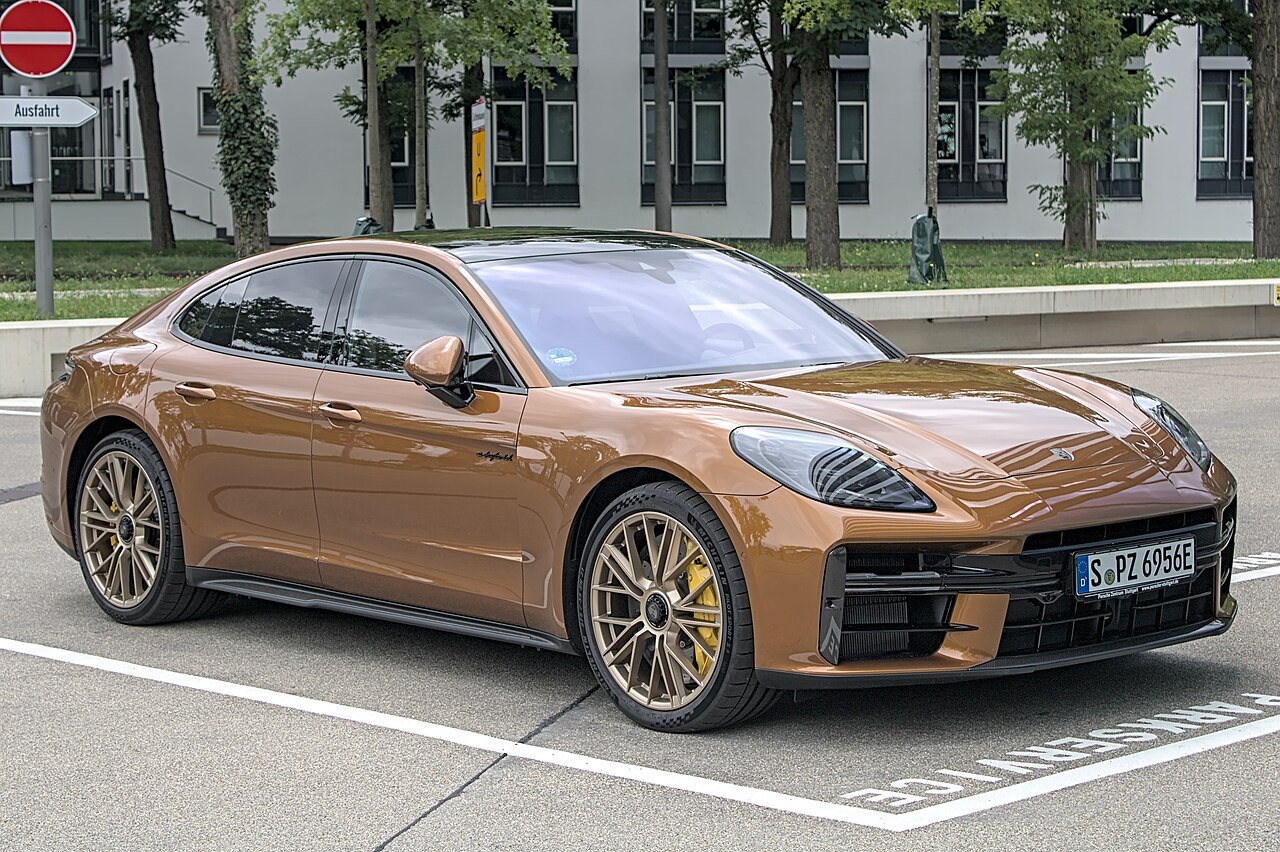 Licensed photo · Photo credit
Generations and technical specifications
Porsche Panamera – Third generation (976) Chassis G32024–present
| Specification | Value |
|---|---|
| Production | 2024–present |
| Platform | Volkswagen Group MSB platform |
| Engines | Petrol 3.0 L Volkswagen-Audi EA839T turbocharged V6 4.0 L Volkswagen-Porsche EA825TT twin-turbocharged V8 Petrol plug-in hybrid 2.9 L Volkswagen-Audi EA839TT twin-turbocharged V6 + Electric motor 4.0 L Volkswagen-Porsche EA825TT twin-turbocharged V8 + Electric motor |
| Electric motor | 140 kW integrated electric motor (E-Hybrid only) |
| Battery | 21.8 kWh (PHEV) |
| Wheelbase | 2,950 mm 3,100 mm (LWB) |
| Length | 5,052 mm 5,202 mm (LWB) |
| Width | 1,937 mm |
| Height | 1,423 mm 1,425 mm (LWB) |
| Kerb weight | 1,885–2,360 kg (DIN) 2,400 kg (LWB) |
| Designer | James Burgess |
Porsche Panamera – Second generation (971) Chassis G22016–2024
| Specification | Value |
|---|---|
| Production | 2016–2024 |
| Body styles | 5-door fastback/liftback sedan 5-door shooting brake |
| Platform | Volkswagen Group MSB platform |
| Engines | Petrol 3.0 L Volkswagen-Audi EA839T turbo V6 2.9 L Volkswagen-Audi EA839TT twin-turbo V6 4.0 L Volkswagen-Porsche EA825TT twin-turbo V8 Diesel 4.0 L Volkswagen-Audi EA898TTD twin-turbo V8 Plug-in Hybrid 2.9 L Volkswagen-Audi EA839TT twin-turbo V6 + Electric motor 4.0 L Volkswagen-Porsche EA825TT twin-turbo V8 + Electric motor |
| Electric motor | 100 kW integrated Electric motor (e-Hybrid Only) |
| Transmissions | 8-speed PDK dual clutch |
| Drivetrain | PHEV (Panamera e-Hybrid) |
| Battery | Audi e-tron 14.1 kWh Lithium ion (PHEV) |
| Wheelbase | 2,950 mm 3,100 mm (LWB) |
| Length | 5,049 mm 5,199 mm (LWB) |
| Width | 1,937 mm |
| Height | 1,423 mm 1,432 mm (LWB) |
| Kerb weight | 1,815–2,310 kg |
| Designer | Peter Varga |
Engines and transmissions
| Model years | Engine | Transmission | Drive | Fuel |
|---|---|---|---|---|
| 2021–2026 | 2.9 L, 6 cyl | 8-speed automated manual | All-wheel drive | Petrol (premium) |
| 2021–2026 | 2.9 L, 6 cyl | 8-speed automated manual | Rear-wheel drive | Petrol (premium) |
| 2025 | 2.9 L, 8 cyl plug-in hybrid | 8-speed automated manual | All-wheel drive | Petrol (premium) and electricity |
| 2017–2023, 2025 | 4.0 L, 8 cyl | 8-speed automated manual | All-wheel drive | Petrol (premium) |
| 2021–2023 | 2.9 L, 6 cyl plug-in hybrid | 8-speed automated manual | All-wheel drive | Petrol (premium) and electricity |
| 2021–2023 | 4.0 L, 8 cyl plug-in hybrid | 8-speed automated manual | All-wheel drive | Petrol (premium) and electricity |
| 2017–2020 | 2.9 L, 6 cyl | 8-speed automated manual | Four-wheel drive | Petrol (premium) |
| 2018–2020 | 2.9 L, 6 cyl plug-in hybrid | 8-speed automated manual | All-wheel drive | Petrol (premium) or electricity |
| 2017–2020 | 3.0 L, 6 cyl | 8-speed automated manual | Four-wheel drive | Petrol (premium) |
| 2017–2020 | 3.0 L, 6 cyl | 8-speed automated manual | Rear-wheel drive | Petrol (premium) |
| 2018–2020 | 4.0 L, 8 cyl plug-in hybrid | 8-speed automated manual | All-wheel drive | Petrol (premium) or electricity |
| 2014–2016 | 3.0 L, 6 cyl | 7-speed automated manual | All-wheel drive | Petrol (premium) |
| +10 more configurations |
Fuel economy (EPA)
| Model years | Configuration | Combined | City | Highway | Electric range |
|---|---|---|---|---|---|
| 2021–2026 | 2.9 L, 6 cyl · 8-speed automated manual · All-wheel drive | 11.2–12.4 L/100 km | 13.1–13.8 L/100 km | 9.4–10.2 L/100 km | – |
| 2021–2026 | 2.9 L, 6 cyl · 8-speed automated manual · Rear-wheel drive | 11.2–11.8 L/100 km | 13.1 L/100 km | 9.4–9.8 L/100 km | – |
| 2025 | 2.9 L, 8 cyl plug-in hybrid · 8-speed automated manual · All-wheel drive | 11.2 L/100 km | 11.2–11.8 L/100 km | 9.8–10.2 L/100 km | 45 km |
| 2017–2023, 2025 | 4.0 L, 8 cyl · 8-speed automated manual · All-wheel drive | 11.2–13.8 L/100 km | 13.1–15.7 L/100 km | 9.4–11.8 L/100 km | – |
| 2018–2023 | 2.9 L, 6 cyl plug-in hybrid · 8-speed automated manual · All-wheel drive | 10.2–10.7 L/100 km | 11.2–11.8 L/100 km | 9.4–10.2 L/100 km | 23–31 km |
| 2018–2023 | 4.0 L, 8 cyl plug-in hybrid · 8-speed automated manual · All-wheel drive | 11.2–12.4 L/100 km | 12.4–13.1 L/100 km | 10.2–10.7 L/100 km | 23–27 km |
| 2017–2020 | 2.9 L, 6 cyl · 8-speed automated manual · Four-wheel drive | 10.2–11.8 L/100 km | 11.2–13.1 L/100 km | 8.4–9.8 L/100 km | – |
| 2017–2020 | 3.0 L, 6 cyl · 8-speed automated manual · Four-wheel drive | 10.2–10.7 L/100 km | 11.2–12.4 L/100 km | 8.7–9.0 L/100 km | – |
| 2017–2020 | 3.0 L, 6 cyl · 8-speed automated manual · Rear-wheel drive | 9.8–10.7 L/100 km | 11.2–12.4 L/100 km | 8.4–8.7 L/100 km | – |
| 2014–2016 | 3.0 L, 6 cyl · 7-speed automated manual · All-wheel drive | 11.2–11.8 L/100 km | 13.1–13.8 L/100 km | 9.0 L/100 km | – |
| 2014–2016 | 3.0 L, 6 cyl · 7-speed automated manual · Rear-wheel drive | 11.2 L/100 km | 13.1 L/100 km | 9.0 L/100 km | – |
| 2014–2016 | 3.0 L, 6 cyl plug-in hybrid · 8-speed automated manual · Rear-wheel drive | 9.4 L/100 km | 10.2 L/100 km | 8.1 L/100 km | 26 km |
| +8 more configurations |
Values are the official EPA label figures for each model year, shown as the lowest and highest value for the configuration. Electric models show energy use per 100 km. Real-world consumption depends on driving style, weather and load. Luggage and passenger volumes follow the EPA measuring method and can differ from the VDA figures used in Europe.
EU type-approval data
| Years | Powertrain | Engine | Power | Mass | CO₂ | Electric range |
|---|---|---|---|---|---|---|
| 2022–2025 | Petrol | 2894 cm³ | 260 kW (354 PS) | 1960–1995 kg | 220–244 g/km (WLTP) | – |
| 2022–2025 | Petrol | 3996 cm³ | 368 kW (500 PS) | 2140 kg | 270–278 g/km (WLTP) | – |
| 2023–2025 | Petrol plug-in hybrid | 2894 cm³ | 224 kW (305 PS) | 2305 kg | 24–82 g/km (WLTP) | 79–92 km · 183–267 Wh/km |
| 2022–2025 | Petrol plug-in hybrid | 2894 cm³ | 260 kW (354 PS) | 2330 kg | 26–87 g/km (WLTP) | 78–87 km · 182–274 Wh/km |
| 2021–2022, 2024–2025 | Petrol plug-in hybrid | 3996 cm³ | 382 kW (519 PS) | 2435–2550 kg | 27–88 g/km (WLTP) | 79–90 km · 280–285 Wh/km |
| 2016, 2019–2024 | Petrol | 2894 cm³ | 243 kW (330 PS) | 1940–2295 kg | 192–254 g/km (WLTP) | – |
| 2020–2024 | Petrol | 3996 cm³ | 353 kW (480 PS) | 2095–2115 kg | 282–291 g/km (WLTP) | – |
| 2019–2024 | Petrol | 3996 cm³ | 463 kW (630 PS) | 2155–2253 kg | 290–296 g/km (WLTP) | – |
| 2019–2024 | Petrol plug-in hybrid | 2894 cm³ | 243 kW (330 PS) | 2245–2300 kg | 48–81 g/km (WLTP) | 41–62 km · 176–241 Wh/km |
| 2020–2024 | Petrol plug-in hybrid | 2894 cm³ | 324 kW (441 PS) | 2300–2315 kg | 56–62 g/km (WLTP) | 46–61 km · 182–241 Wh/km |
| 2020–2024 | Petrol plug-in hybrid | 3996 cm³ | 420 kW (571 PS) | 2425–2440 kg | 62–66 g/km (WLTP) | 47–59 km · 228–244 Wh/km |
| 2016–2022 | Petrol | 2894 cm³ | 324 kW (441 PS) | 1945–2010 kg | 59–262 g/km (WLTP) | – |
| 2018–2020 | Petrol | 3996 cm³ | 338 kW (460 PS) | 2070–2100 kg | 275–283 g/km (WLTP) | – |
| 2016–2020 | Petrol | 3996 cm³ | 404 kW (549 PS) | 2070–2145 kg | 280–285 g/km (WLTP) | – |
| 2019–2020 | Petrol plug-in hybrid | 3996 cm³ | 404 kW (549 PS) | 2385–2400 kg | 81–85 g/km (WLTP) | 38–45 km · 176–219 Wh/km |
| 2016–2019 | Petrol | 2995 cm³ | 243 kW (330 PS) | 1890–1970 kg | 173–180 g/km (NEDC) | – |
| 2016–2019 | Diesel | 3956 cm³ | 310 kW (421 PS) | 2125 kg | 176–178 g/km (NEDC) | – |
| 2017–2018 | Petrol-electric | 2894 cm³ | 243 kW (330 PS) | 2245–2265 kg | 46–77 g/km (WLTP) | 54–55 km · 159 Wh/km |
| 2017–2018 | Petrol-electric | 3996 cm³ | 404 kW (549 PS) | 2385–2400 kg | 66–69 g/km (NEDC) | 162–176 Wh/km |
| 2013–2017 | Petrol | 2997 cm³ | 309 kW (420 PS) | 1945 kg | 208–210 g/km (NEDC) | – |
| 2013–2016 | Petrol | 3605 cm³ | 228 kW (310 PS) | 1845–1895 kg | 196–206 g/km (NEDC) | – |
| 2013–2016 | Petrol | 4806 cm³ | 324 kW (441 PS) | 2000 kg | 239–249 g/km (NEDC) | – |
| 2013–2016 | Petrol | 4806 cm³ | 382 kW (519 PS) | 2045–2145 kg | 239–242 g/km (NEDC) | – |
| 2012–2016 | Petrol-electric | 2995 cm³ | 245 kW (333 PS) | 2170 kg | 71 g/km (NEDC) | 162 Wh/km |
| 2014–2016 | Diesel | 2967 cm³ | 221 kW (300 PS) | 1975 kg | 169 g/km (NEDC) | – |
| + 6 more configurations |
Years are registration years. Each range runs from the 10th to the 90th percentile of the values reported for new registrations; it is not an average. Mass is the mass in running order. For electric cars the power is the type-approval net power, which can be lower than the peak power in brochures.
Key specifications
| Specification | Value |
|---|---|
| EPA size class | Large car |
| Model years in EPA data | 2010–2026 |
| Powertrains | Petrol, Plug-in hybrid, Hybrid |
| Engine displacement | 2.9–4.8 L |
| Cylinders | 6, 8 |
| Transmission types | Automated manual, Automatic |
| Drive | Rear-wheel drive, All-wheel drive, Four-wheel drive |
| Fuel | Petrol (premium), Petrol (premium) and electricity, Petrol (premium) or electricity |
| Configurations listed | 173 |
| Forced induction | Turbo- and supercharged (on some versions) |
| Start-stop system | On some versions |
| Electric motor (EPA) | 140 kW DC Brushless; 70 kW DC Brushless; 100 kW DC Brushless; 70 kW |
| Luggage volume (EPA) | 453–765 L |
| Passenger volume (EPA) | 2,775–3,058 L |
| Powertrains (EU) | Petrol, Petrol plug-in hybrid, Petrol-electric, Diesel |
| Engine displacement (EU) | 2,894–4,806 cm³ |
| Power (EU) | 184–404 kW (250–549 PS) |
| Mass in running order (EU) | 1,835–2,400 kg |
| Wheelbase (EU) | 2,920–2,950 mm |
Years and markets
| Specification | Value |
|---|---|
| Model years (US) | 2010–2027 |
| New registrations (EU) | 2009–2026 |
Owner complaints (NHTSA)
| Component | Complaints | Most reported model years |
|---|---|---|
| Engine and cooling | 42 | 2011, 2012, 2018 |
| Electrical system | 26 | 2011, 2013, 2018 |
| Transmission and drivetrain | 19 | 2011, 2014, 2018 |
| Fuel and propulsion | 8 | 2010, 2011, 2012 |
| Airbags | 7 | 2011, 2013, 2014 |
| Brakes | 7 | 2011, 2013, 2014 |
| Lights | 5 | 2012, 2014, 2016 |
| Body and structure | 4 | 2011, 2012, 2013 |
| Speed control and cruise | 4 | 2012, 2013, 2014 |
| Suspension | 3 | 2011, 2013, 2018 |
Source: complaints filed by owners with the U.S. National Highway Traffic Safety Administration (NHTSA) for model years 2010–2018, 2020–2024, 2026: 111 complaints, 6 with a crash and 3 with a fire. Complaints are owner reports that NHTSA has not verified, and one complaint can name more than one component. More complaints can also mean more cars sold.