V60
Volvo V60: official NHTSA recalls, fault code help and maintenance guides.
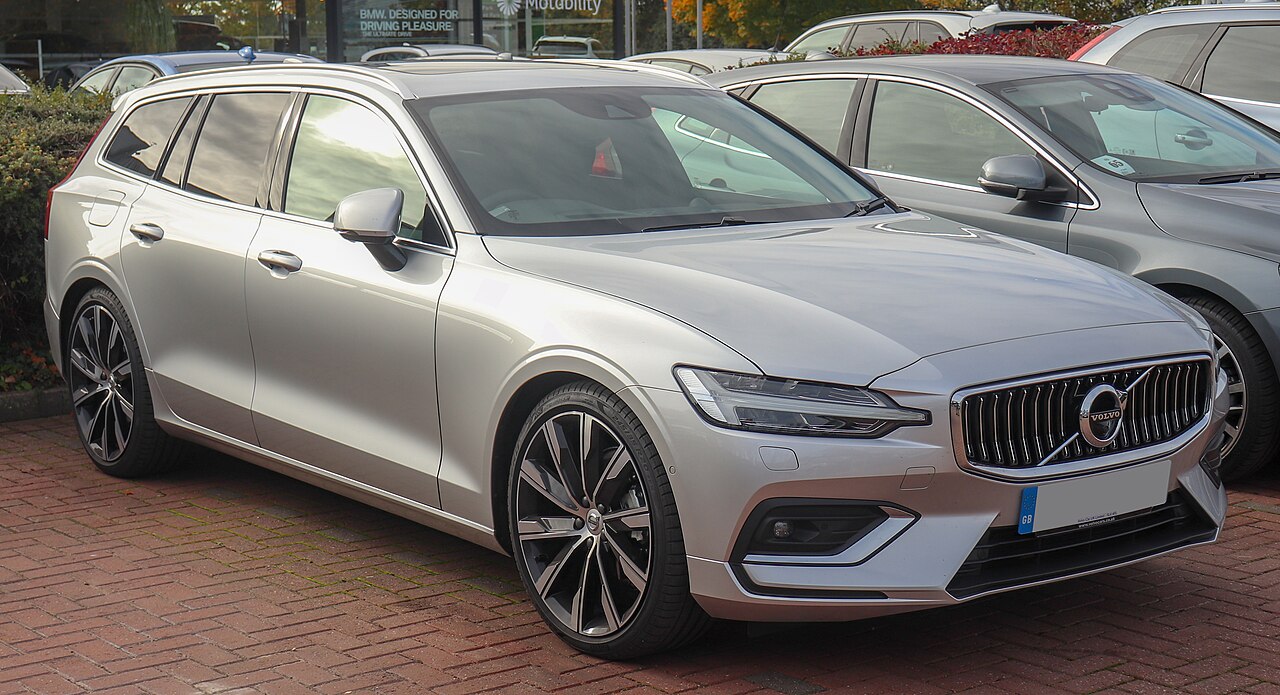 Licensed photo · Photo credit
Generations and technical specifications
Volvo V60 – Second generation2018–present
| Specification | Value |
|---|---|
| Production | February 2018–present |
| Model years | 2019–present |
| Layout | Front engine front-wheel drive or four-wheel drive |
| Platform | Volvo SPA Platform |
| Engines | Petrol 2.0 L B4204T26/T29/T44 I4 Diesel 2.0 L D4204T14/T16 I4 Hybrid 2.0 L B4204T34/T35/T46 I4 |
| Electric motor | Permanent Magnet Synchronous Motors (T6/T8 Twin Engine) |
| Transmissions | 6-speed Volvo M76 R7.0 manual 6-speed Volvo M66F automatic 8-speed Aisin TG-81SC automatic 8-speed Aisin TG-81SD automatic |
| Drivetrain | PHEV (T6/T8 Twin Engine & T6/T8 Recharge) MHEV |
| Battery | 11.2 kWh Lithium-ion (T6 /T8 Twin Engine) MY2019-2021 19 kWh Lithium-ion (T6 /T8 Twin Engine) since MY2022 |
| Wheelbase | 2,872 mm |
| Length | 4,761 mm |
| Width | 1,850 mm 2,040 mm with mirrors |
| Height | 1,427 mm |
| Kerb weight | 1,690–2,090 kg |
| Assembly | Sweden: Torslanda (Torslandaverken) Belgium: Ghent (Volvo Car Gent) Malaysia: Shah Alam (VCMM) |
| Designer | T. Jon Mayer, Maxime Prevoteaux |
Volvo V60 – First generation2010–2018
| Specification | Value |
|---|---|
| Production | 2010–2018 |
| Model years | 2011–2018 |
| Layout | Front engine front-wheel drive or four-wheel drive |
| Platform | Volvo P3 platform |
| Engines | petrol 1.5–2.0 L I4 2.0–2.5 L I5 3.0 L I6 diesel 1.6–2.0 L I4 2.0–2.4 L I5 Diesel-Hybrid 2.4 L I5 |
| Electric motor | 70 PS Permanent Magnet Synchronous Motors (D5/D6 Twin Engine) |
| Transmissions | 6-speed Volvo M66 manual 6-speed Ford MMT6 manual 6-speed Aisin TF-80SC automatic 8-speed Aisin TG-81SC automatic |
| Drivetrain | PHEV (D5/D6 Twin Engine) |
| Battery | 11.2 kWh Lithium-ion (D5/D6 Twin Engine) |
| Wheelbase | 2,776 mm |
| Length | 4,635 mm |
| Width | 1,865 mm 2,097 mm with mirrors |
| Height | 1,484 mm CC: 1,545 mm |
| Kerb weight | 1,623–1,834 kg Plug-in Hybrid 2,043–2,058 kg |
| Assembly | Sweden: Torslanda (Torslandaverken) Belgium: Ghent (Volvo Car Gent) Malaysia: Shah Alam (SMA) |
| Designer | Örjan Sterner |
Engines and transmissions
| Model years | Engine | Transmission | Drive | Fuel |
|---|---|---|---|---|
| 2020–2023, 2025 | 2.0 L, 4 cyl plug-in hybrid | 8-speed automatic | All-wheel drive | Petrol (premium) and electricity |
| 2016–2021 | 2.0 L, 4 cyl | 8-speed automatic | All-wheel drive | Petrol (premium) |
| 2019–2021 | 2.0 L, 4 cyl | 8-speed automatic | Front-wheel drive | Petrol (premium) |
| 2017–2018 | 2.0 L, 4 cyl | 8-speed automatic | All-wheel drive | Petrol (regular) |
| 2015–2018 | 2.0 L, 4 cyl | 8-speed automatic | Front-wheel drive | Petrol (regular) |
| 2015–2016 | 2.5 L, 5 cyl | 6-speed automatic | All-wheel drive | Petrol (regular) |
| 2015–2016 | 3.0 L, 6 cyl | 6-speed automatic | All-wheel drive | Petrol (regular) |
Fuel economy (EPA)
| Model years | Configuration | Combined | City | Highway | Electric range |
|---|---|---|---|---|---|
| 2020–2023, 2025 | 2.0 L, 4 cyl plug-in hybrid · 8-speed automatic · All-wheel drive | 7.6–7.8 L/100 km | 7.8–8.4 L/100 km | 7.1 L/100 km | 35–64 km |
| 2016–2021 | 2.0 L, 4 cyl · 8-speed automatic · All-wheel drive | 9.0–10.7 L/100 km | 10.2–11.8 L/100 km | 7.1–8.7 L/100 km | – |
| 2015–2021 | 2.0 L, 4 cyl · 8-speed automatic · Front-wheel drive | 8.1–8.7 L/100 km | 9.4–10.2 L/100 km | 6.4–7.6 L/100 km | – |
| 2015–2016 | 2.5 L, 5 cyl · 6-speed automatic · All-wheel drive | 10.2 L/100 km | 11.8 L/100 km | 8.4 L/100 km | – |
| 2015–2016 | 3.0 L, 6 cyl · 6-speed automatic · All-wheel drive | 10.7–11.2 L/100 km | 12.4–13.1 L/100 km | 8.4–8.7 L/100 km | – |
Values are the official EPA label figures for each model year, shown as the lowest and highest value for the configuration. Electric models show energy use per 100 km. Real-world consumption depends on driving style, weather and load. Luggage and passenger volumes follow the EPA measuring method and can differ from the VDA figures used in Europe.
EU type-approval data
| Years | Powertrain | Engine | Power | Mass | CO₂ | Electric range |
|---|---|---|---|---|---|---|
| 2020–2025 | Petrol hybrid | 1969 cm³ | 145 kW (197 PS) | 1734–1777 kg | 141–155 g/km (WLTP) | – |
| 2020–2025 | Petrol plug-in hybrid | 1969 cm³ | 186 kW (253 PS) | 2064–2075 kg | 17–43 g/km (WLTP) | 53–91 km · 159–176 Wh/km |
| 2021–2025 | Petrol plug-in hybrid | 1969 cm³ | 228 kW (310 PS) | 2064 kg | 17–20 g/km (WLTP) | 85–91 km · 165–180 Wh/km |
| 2020–2024 | Petrol hybrid | 1969 cm³ | 120 kW (163 PS) | 1734–1761 kg | 140–157 g/km (WLTP) | – |
| 2020–2024 | Diesel hybrid | 1969 cm³ | 145 kW (197 PS) | 1803 kg | 145–148 g/km (WLTP) | – |
| 2019–2021 | Petrol plug-in hybrid | 1969 cm³ | 223 kW (303 PS) | 2075 kg | 42–43 g/km (WLTP) | 52–55 km · 159–168 Wh/km |
| 2015–2021 | Diesel | 1969 cm³ | 110 kW (150 PS) | 1557–1738 kg | 137–151 g/km (WLTP) | – |
| 2015–2021 | Diesel | 1969 cm³ | 140 kW (190 PS) | 1603–1823 kg | 145–154 g/km (WLTP) | – |
| 2015–2020 | Petrol | 1969 cm³ | 140 kW (190 PS) | 1589–1703 kg | 170–175 g/km (WLTP) | – |
| 2018–2020 | Petrol | 1969 cm³ | 184 kW (250 PS) | 1708–1715 kg | 173–181 g/km (WLTP) | – |
| 2015–2018 | Petrol | 1498 cm³ | 112 kW (152 PS) | 1572–1666 kg | 138 g/km (NEDC) | – |
| 2015–2018 | Petrol | 1969 cm³ | 112 kW (152 PS) | 1579–1674 kg | 135 g/km (NEDC) | – |
| 2015–2018 | Diesel | 1969 cm³ | 88 kW (120 PS) | 1557–1594 kg | 101–114 g/km (NEDC) | – |
| 2015–2018 | Diesel | 2400 cm³ | 140 kW (190 PS) | 1709–1790 kg | 146 g/km (NEDC) | – |
| 2015–2018 | Diesel-electric | 2400 cm³ | 120 kW (163 PS) | 1980 kg | 48 g/km (NEDC) | 151 Wh/km |
| 2015–2018 | Diesel-electric | 2400 cm³ | 162 kW (220 PS) | 1980–2048 kg | 48 g/km (NEDC) | 151 Wh/km |
| 2011–2015 | Petrol | 1596 cm³ | 110 kW (150 PS) | 1531–1662 kg | 134–167 g/km (NEDC) | – |
| 2011–2015 | Petrol | 1596 cm³ | 132 kW (179 PS) | 1532–1664 kg | 153–176 g/km (NEDC) | – |
| 2011–2015 | Diesel | 1560 cm³ | 84 kW (114 PS) | 1535–1680 kg | 108–119 g/km (NEDC) | – |
| 2013–2015 | Diesel | 1969 cm³ | 133 kW (181 PS) | 1571–1744 kg | 99–112 g/km (NEDC) | – |
| 2012–2015 | Diesel | 1984 cm³ | 100 kW (136 PS) | 1590–1729 kg | 119–129 g/km (NEDC) | – |
| 2011–2015 | Diesel | 1984 cm³ | 120 kW (163 PS) | 1602–1731 kg | 119–159 g/km (NEDC) | – |
| 2013–2015 | Diesel | 2400 cm³ | 133 kW (181 PS) | 1685–1766 kg | 158 g/km (NEDC) | – |
| 2011–2015 | Diesel | 2400 cm³ | 158 kW (215 PS) | 1701–1821 kg | 120–169 g/km (NEDC) | – |
| 2013–2015 | Diesel-electric | 2400 cm³ | 158 kW (215 PS) | 1949–2058 kg | 48 g/km (NEDC) | 133 Wh/km |
| + 2 more configurations |
Years are registration years. Each range runs from the 10th to the 90th percentile of the values reported for new registrations; it is not an average. Mass is the mass in running order. For electric cars the power is the type-approval net power, which can be lower than the peak power in brochures.
Key specifications
| Specification | Value |
|---|---|
| EPA size class | Small estate, Small SUV |
| Model years in EPA data | 2015–2023, 2025 |
| Powertrains | Plug-in hybrid, Petrol |
| Engine displacement | 2.0–3.0 L |
| Cylinders | 4, 5, 6 |
| Transmission types | Automatic |
| Drive | All-wheel drive, Front-wheel drive |
| Fuel | Petrol (premium) and electricity, Petrol (premium), Petrol (regular) |
| Configurations listed | 35 |
| Forced induction | Turbo- and supercharged |
| Start-stop system | On some versions |
| Electric motor (EPA) | 34 and 107 kW 3-phase Sync.; 34 and 65 kW 3-phase Sync. |
| Luggage volume (EPA) | 793–821 L |
| Passenger volume (EPA) | 2,605–2,662 L |
| Powertrains (EU) | Petrol, Petrol hybrid, Petrol plug-in hybrid, Diesel, Diesel hybrid |
| Engine displacement (EU) | 1,560–1,984 cm³ |
| Power (EU) | 84–186 kW (114–253 PS) |
| Mass in running order (EU) | 1,531–2,075 kg |
| Wheelbase (EU) | 2,776–2,872 mm |
Years and markets
| Specification | Value |
|---|---|
| Model years (US) | 2015–2026 |
| New registrations (EU) | 2001, 2010–2026 |
Owner complaints (NHTSA)
| Component | Complaints | Most reported model years |
|---|---|---|
| Engine and cooling | 16 | 2015, 2016 |
| Transmission and drivetrain | 5 | 2015, 2016, 2017 |
| Visibility and wipers | 4 | 2015, 2016, 2018 |
| Electrical system | 4 | 2016 |
| Body and structure | 3 | 2015, 2016 |
| Brakes | 3 | 2015, 2016 |
| Seat belts | 2 | 2015, 2016 |
| Stability and traction control | 2 | 2015 |
| Driver assistance | 2 | 2016, 2017 |
| Fuel and propulsion | 2 | 2017 |
Source: complaints filed by owners with the U.S. National Highway Traffic Safety Administration (NHTSA) for model years 2015–2018: 42 complaints, 2 with a crash and 0 with a fire. Complaints are owner reports that NHTSA has not verified, and one complaint can name more than one component. More complaints can also mean more cars sold.