Transit
Ford Transit: official NHTSA recalls, fault code help and maintenance guides.
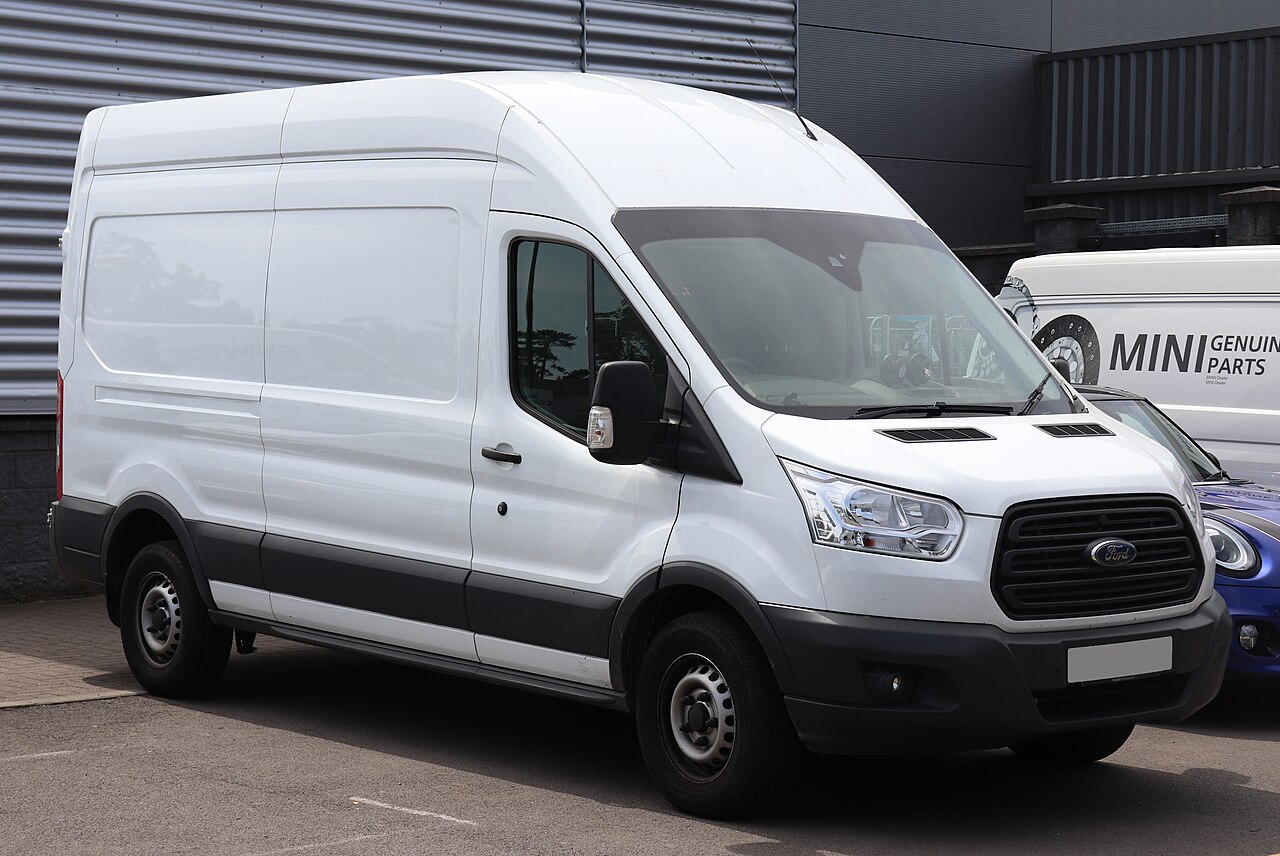 Licensed photo · Photo credit
Generations and technical specifications
Ford Transit – Fourth generation2014–present
| Specification | Value |
|---|---|
| Production | 2014–present |
| Model years | 2015–present |
| Body styles | Cargo van Passenger van Chassis cab Cutaway van |
| Layout | Front engine, rear wheel drive Front engine, all wheel drive (Europe and North America only) Front engine, front wheel drive (Excludes North America) Rear motor, rear wheel drive (E-TRANSIT) |
| Engines | Diesel engines 2.0 L EcoBlue TDCi I4 2.0 L Duratorq TDCi I4 (China only) 2.2 L Duratorq TDCi I4 (Europe and Australia only) 2.4 L Duratorq TDCi I4 (Europe only) 3.2 L Duratorq TDCi/Power Stroke I5 (All markets except for South America) Diesel Mild Hybrid engines 2.0 L EcoBlue Hybrid mHEV TDCi I4 Petrol engines 2.0 L EcoBoost I4 (China only) 2.3 L Duratec I4 (Europe only) 3.5 L Ti-VCT V6 (North America only) 3.7 L Ti-VCT V6 (North America only) 3.5 L EcoBoost V6 (North America and South America only include Transit Prisoner Transport Vehicle) |
| Electric motor | 11.5 kW belt-driven integrated starter/generator (BISG) (Transit EcoBlue Hybrid) 198 kW DC permanent-magnet electric motor (E-TRANSIT) |
| Transmissions | 6-speed 6R80 automatic 6-speed Getrag MT82-D4 manual (Outside North America) 5-speed manual (China only) single-speed automatic (Electric) 10-speed 10R80 automatic (2020–present) 8 speed automatic (China; 2023–present) |
| Drivetrain | EcoBlue Mild Hybrid mHEV (Transit EcoBlue Hybrid) |
| Battery | 48-volt battery pack (MHEV) 68kWh Li-ion High-Voltage Battery (EV) |
| Charging | V2L: 2.4 kW (EV) |
| Wheelbase | Cargo & passenger van 3,300 mm (regular) 3,750 mm (long) Cab chassis & cutaway 3,505 mm (short) 3,955 mm (regular) 4,520 mm (long) |
| Length | 5,532–6,759 mm |
| Width | 2,052–2,126 mm |
| Height | 2,088–3,051 mm |
| Class | Full-size van |
| Assembly | Turkey: Gölcük, Kocaeli (Ford Otosan) United States: Claycomo, Missouri (Kansas City Assembly) Russia: Yelabuga (Ford Sollers: 2014–2022) Uruguay: Montevideo (Nordex S.A.) China: Nanchang (Jiangling: 2023–present) |
| Designer | Paul Campbell |
Ford Transit – Third generation MK6 & MK72000–present
| Specification | Value |
|---|---|
| Production | 2000–2014 2008–present (China) 2014–2016 (Malaysia) |
| Model years | 2009–present (China) |
| Body styles | 3/4-door van 2-door pickup 4-door minibus 4-door crew cab 2-door chassis cab |
| Layout | Front-engine, front-wheel drive / rear-wheel drive or four-wheel drive |
| Engines | 2.3 L I4 2.0 L I4 2.2 L Duratorq TDCi I4 2.4 L Duratorq TDCi I4 3.2 L Duratorq TDCi I5 2.3 L Duratec I4 |
| Transmissions | 5-speed Ford MT75 manual 6-speed manual (from 2004) 5-speed Durashift-EST automated manual |
| Assembly | United Kingdom: Southampton (Ford Southampton plant: 2000–2013) Turkey: Gölcük, Kocaeli (Ford Otosan) Belarus: Apchak (Ford Union: 2000) Malaysia: Kulim, Kedah (Inokom: 2014–2016) Vietnam: Hai Duong (Ford Vietnam) Russia: Tatarstan (Ford Sollers) China: Nanchang (Jiangling: 2008–present) |
Engines and transmissions
| Model years | Engine | Transmission | Drive | Fuel |
|---|---|---|---|---|
| 2020–2022 | 3.5 L, 6 cyl | 10-speed automatic | All-wheel drive | Petrol or E85 (flex-fuel) |
| 2020–2022 | 3.5 L, 6 cyl | 10-speed automatic | Rear-wheel drive | Petrol or E85 (flex-fuel) |
| 2015–2019 | 3.5 L, 6 cyl | 6-speed automatic | Rear-wheel drive | Petrol (regular) |
| 2018–2019 | 3.7 L, 6 cyl | 6-speed automatic | Rear-wheel drive | Petrol (regular) |
| 2015–2019 | 3.7 L, 6 cyl | 6-speed automatic | Rear-wheel drive | Petrol or E85 (flex-fuel) |
Fuel economy (EPA)
| Model years | Configuration | Combined | City | Highway |
|---|---|---|---|---|
| 2020–2022 | 3.5 L, 6 cyl · 10-speed automatic · All-wheel drive | 14.7 L/100 km | 16.8 L/100 km | 12.4–13.1 L/100 km |
| 2020–2022 | 3.5 L, 6 cyl · 10-speed automatic · Rear-wheel drive | 13.8–14.7 L/100 km | 15.7 L/100 km | 12.4 L/100 km |
| 2015–2019 | 3.5 L, 6 cyl · 6-speed automatic · Rear-wheel drive | 14.7 L/100 km | 15.7–16.8 L/100 km | 12.4–13.1 L/100 km |
| 2015–2019 | 3.7 L, 6 cyl · 6-speed automatic · Rear-wheel drive | 14.7–15.7 L/100 km | 16.8 L/100 km | 12.4–13.1 L/100 km |
Values are the official EPA label figures for each model year, shown as the lowest and highest value for the configuration. Electric models show energy use per 100 km. Real-world consumption depends on driving style, weather and load. Luggage and passenger volumes follow the EPA measuring method and can differ from the VDA figures used in Europe.
EU type-approval data
| Years | Powertrain | Engine | Power | Mass | CO₂ |
|---|---|---|---|---|---|
| 2021–2025 | Diesel | 1995 cm³ | 110 kW (150 PS) | 2257–2404 kg | 223–246 g/km (WLTP) |
| 2025 | Diesel | 1996 cm³ | 96 kW (131 PS) | 2276–2448 kg | 233–245 g/km (WLTP) |
| 2016–2024 | Diesel | 1995 cm³ | 77 kW (105 PS) | 2170–2313 kg | 194–243 g/km (WLTP) |
| 2019–2024 | Diesel | 1995 cm³ | 95 kW (129 PS) | 2087–2440 kg | 190–226 g/km (WLTP) |
| 2016–2024 | Diesel | 1995 cm³ | 96 kW (131 PS) | 2187–2331 kg | 216–254 g/km (WLTP) |
| 2019–2024 | Diesel hybrid | 1995 cm³ | 95 kW (129 PS) | 2066–2389 kg | 188–215 g/km (WLTP) |
| 2020–2024 | Diesel hybrid | 1995 cm³ | 96 kW (131 PS) | 2241–2343 kg | 203–222 g/km (WLTP) |
| 2019–2021 | Diesel | 1499 cm³ | 73 kW (99 PS) | 1347–1760 kg | 138–154 g/km (WLTP) |
| 2016, 2018–2021 | Diesel | 1499 cm³ | 88 kW (120 PS) | 1609–1814 kg | 146–154 g/km (WLTP) |
| 2019–2021 | Diesel | 1995 cm³ | 79 kW (107 PS) | 2185–2257 kg | 217–233 g/km (WLTP) |
| 2016–2021 | Diesel | 1995 cm³ | 125 kW (170 PS) | 2203–2337 kg | 214–266 g/km (WLTP) |
| 2020–2021 | Diesel | 1995 cm³ | 136 kW (185 PS) | 2135–2282 kg | 192–213 g/km (WLTP) |
| 2011–2017 | Diesel | 2198 cm³ | 92 kW (125 PS) | 2057–2282 kg | 168–197 g/km (NEDC) |
| 2014–2017 | Diesel | 2198 cm³ | 114 kW (155 PS) | 2057–2185 kg | 168–197 g/km (NEDC) |
| 2011–2016 | Diesel | 2198 cm³ | 74 kW (101 PS) | 2057–2183 kg | 178–194 g/km (NEDC) |
| 2014–2015 | Diesel | 1560 cm³ | – | 1510–1568 kg | 120–130 g/km (NEDC) |
| 2011–2014 | Diesel | 2198 cm³ | 103 kW (140 PS) | 2026–2268 kg | 189–208 g/km (NEDC) |
| 2011–2012 | Diesel | 2198 cm³ | 63 kW (86 PS) | 2036–2217 kg | 208–231 g/km (NEDC) |
| 2011–2012 | Diesel | 2198 cm³ | 85 kW (116 PS) | 2022–2226 kg | 208–211 g/km (NEDC) |
Years are registration years. Each range runs from the 10th to the 90th percentile of the values reported for new registrations; it is not an average. Mass is the mass in running order. For electric cars the power is the type-approval net power, which can be lower than the peak power in brochures.
Key specifications
| Specification | Value |
|---|---|
| EPA size class | Passenger van |
| Model years in EPA data | 2015–2022 |
| Powertrains | Flex-fuel, Petrol |
| Engine displacement | 3.5–3.7 L |
| Cylinders | 6 |
| Transmission types | Automatic |
| Drive | All-wheel drive, Rear-wheel drive |
| Fuel | Petrol or E85 (flex-fuel), Petrol (regular) |
| Configurations listed | 18 |
| Forced induction | Turbocharged (on some versions) |
| Powertrains (EU) | Diesel, Diesel hybrid |
| Engine displacement (EU) | 1,995–2,198 cm³ |
| Power (EU) | 74–125 kW (101–170 PS) |
| Mass in running order (EU) | 2,022–2,440 kg |
| Wheelbase (EU) | 2,933–3,750 mm |
Years and markets
| Specification | Value |
|---|---|
| Model years (US) | 2015–2027 |
| New registrations (EU) | 2000–2026 |
Owner complaints (NHTSA)
| Component | Complaints | Most reported model years |
|---|---|---|
| Transmission and drivetrain | 208 | 2015, 2016, 2017 |
| Engine and cooling | 105 | 2015, 2016, 2017 |
| Electrical system | 66 | 2015, 2016, 2020 |
| Fuel and propulsion | 54 | 2015, 2016, 2017 |
| Brakes | 42 | 2015, 2016, 2017 |
| Body and structure | 37 | 2015, 2016, 2018 |
| Seats | 32 | 2015, 2017, 2020 |
| Steering | 27 | 2015, 2016, 2020 |
| Driver assistance | 23 | 2015, 2016, 2020 |
| Wheels | 21 | 2015, 2016, 2020 |
Source: complaints filed by owners with the U.S. National Highway Traffic Safety Administration (NHTSA) for model years 2015–2018, 2020: 589 complaints, 17 with a crash and 11 with a fire. Complaints are owner reports that NHTSA has not verified, and one complaint can name more than one component. More complaints can also mean more cars sold.