GLC-Class
Mercedes-Benz GLC-Class: official NHTSA recalls, fault code help and maintenance guides.
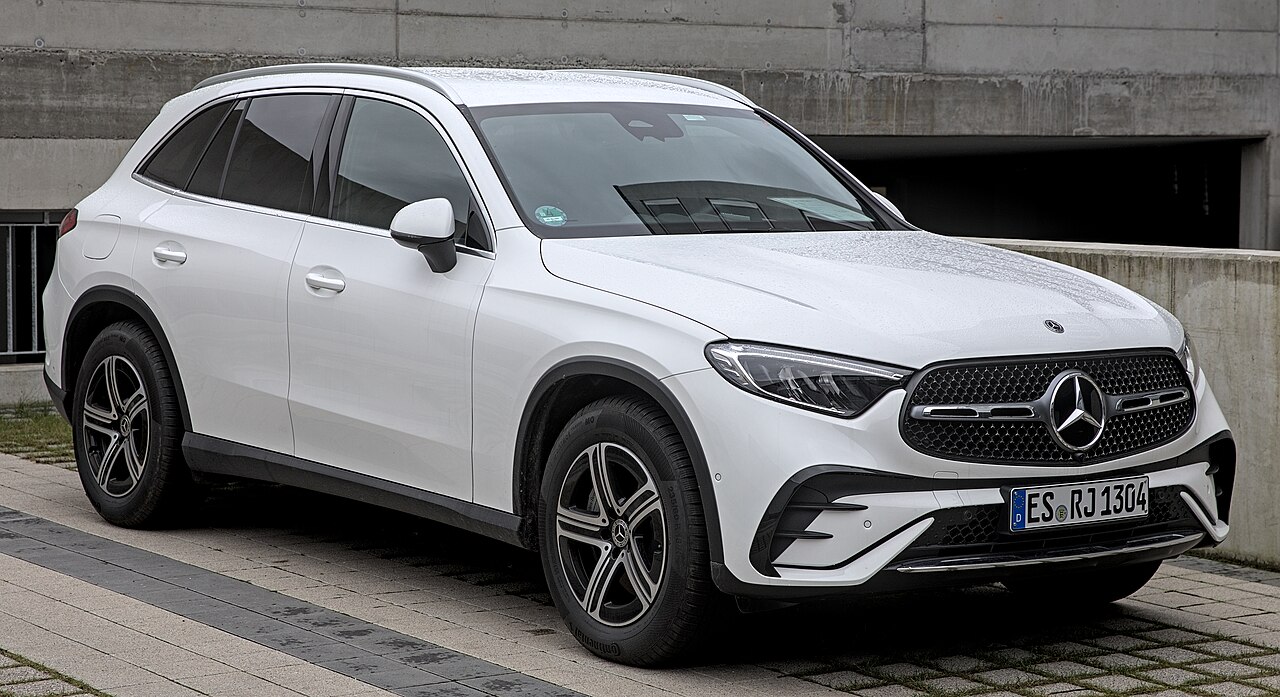 Licensed photo · Photo credit
Generations and technical specifications
Mercedes-Benz GLC – Second generation2022–present
| Specification | Value |
|---|---|
| Model code | X254 / C254 (Coupé) / V254 (long-wheelbase) |
| Production | 2022–present |
| Body styles | 5-door SUV 5-door coupe SUV |
| Platform | MRA2 |
| Engines | Petrol 2.0 L M254 E20 mild hybrid turbo (EQ Boost) I4 2.0 L M139 mild hybrid E-Turbo I4 (EQ Boost; GLC43) Petrol plug-in hybrid 2.0 L M254 E20 PHEV turbo (EQ Power+) I4 2.0 L M139 turbo I4 e-Performance PHEV (GLC63 S E Performance) Diesel 2.0 L OM654 mild hybrid turbo (EQ Boost) I4 3.0 L OM656 mild hybrid turbo (EQ Boost) I6 Diesel plug-in hybrid 2.0 L OM654 turbo I4 PHEV |
| Electric motor | 5 kW Borg Warner electric compressor + 17.1 kW Mitsubishi Crankshaft ISG system belt-driven starter-generator (RSG) 48V (EQ Boost) 100 kW Schaeffler PSM P2 Hybrid Module High Voltage gearbox-mounted electric motor (PHEV) |
| Transmissions | 9-speed 9G-Tronic automatic |
| Drivetrain | Mild hybrid (EQ Boost) Plug-in hybrid |
| Battery | 31.2 kWh lithium-ion |
| Wheelbase | 2,888 mm 2,977 mm (GLC L, China) |
| Length | 4,716 mm 4,769 mm (GLC Coupé) 4,826 mm (GLC L, China) |
| Width | 1,890 mm 1,920 mm (GLC Coupé) |
| Height | 1,640 mm 1,606 mm (GLC Coupé) 1,716 mm (GLC L, China) |
| Assembly | Germany: Bremen; Sindelfingen China: Beijing (Beijing Benz for L models) Thailand: Samut Prakan (Thonburi Automotive Assembly Plant Co., Ltd.) Indonesia: Bogor (MBI) Malaysia: Pekan (HICOM) United States: Tuscaloosa, Alabama (MBUSI, commencing 2027) |
| Designer | Bastian Baudy |
Engines and transmissions
| Model years | Engine | Transmission | Drive | Fuel |
|---|---|---|---|---|
| 2023–2027 | 2.0 L, 4 cyl mild hybrid | 9-speed automatic | All-wheel drive | Petrol (premium) |
| 2023–2027 | 2.0 L, 4 cyl mild hybrid | 9-speed automatic | Rear-wheel drive | Petrol (premium) |
| 2027 | 3.0 L, 6 cyl mild hybrid | 9-speed automatic | All-wheel drive | Petrol (premium) |
| 2027 | Electric motor | Single-speed | All-wheel drive | Electricity |
| 2025 | 2.0 L, 4 cyl plug-in hybrid | 9-speed automatic | All-wheel drive | Petrol (premium) and electricity |
| 2022–2023 | 2.0 L, 4 cyl | 9-speed automatic | All-wheel drive | Petrol (premium) |
| 2022–2023 | 3.0 L, 6 cyl | 9-speed automatic | All-wheel drive | Petrol (premium) |
| 2017–2022 | 2.0 L, 4 cyl | 9-speed automatic | Rear-wheel drive | Petrol (premium) |
| 2016–2021 | 2.0 L, 4 cyl | 9-speed automatic | Four-wheel drive | Petrol (premium) |
| 2017–2021 | 3.0 L, 6 cyl | 9-speed automatic | Four-wheel drive | Petrol (premium) |
| 2018–2021 | 4.0 L, 8 cyl | 9-speed automatic | Four-wheel drive | Petrol (premium) |
| 2020 | 2.0 L, 4 cyl plug-in hybrid | 9-speed automatic | Four-wheel drive | Petrol (premium) and electricity |
| +2 more configurations |
Fuel economy (EPA)
| Model years | Configuration | Combined | City | Highway | Electric range |
|---|---|---|---|---|---|
| 2023–2027 | 2.0 L, 4 cyl mild hybrid · 9-speed automatic · All-wheel drive | 8.7–11.2 L/100 km | 9.8–13.1 L/100 km | 7.4–9.8 L/100 km | – |
| 2023–2027 | 2.0 L, 4 cyl mild hybrid · 9-speed automatic · Rear-wheel drive | 8.1–8.7 L/100 km | 9.0–9.8 L/100 km | 7.1–7.4 L/100 km | – |
| 2027 | 3.0 L, 6 cyl mild hybrid · 9-speed automatic · All-wheel drive | 10.7 L/100 km | 11.8 L/100 km | 9.0 L/100 km | – |
| 2027 | Electric motor · Single-speed · All-wheel drive | 17.5–20.5 kWh/100 km | 17.0–19.8 kWh/100 km | 18.2–21.3 kWh/100 km | 533–563 km |
| 2025 | 2.0 L, 4 cyl plug-in hybrid · 9-speed automatic · All-wheel drive | 9.4–11.8 L/100 km | 10.2–12.4 L/100 km | 8.4–11.2 L/100 km | 2–87 km |
| 2022–2023 | 2.0 L, 4 cyl · 9-speed automatic · All-wheel drive | 9.8–10.7 L/100 km | 11.2–11.8 L/100 km | 8.4–9.0 L/100 km | – |
| 2022–2023 | 3.0 L, 6 cyl · 9-speed automatic · All-wheel drive | 11.2–12.4 L/100 km | 13.1–14.7 L/100 km | 9.4–9.8 L/100 km | – |
| 2017–2022 | 2.0 L, 4 cyl · 9-speed automatic · Rear-wheel drive | 9.4–9.8 L/100 km | 10.7 L/100 km | 8.1–8.7 L/100 km | – |
| 2016–2021 | 2.0 L, 4 cyl · 9-speed automatic · Four-wheel drive | 9.8–10.2 L/100 km | 10.7–11.2 L/100 km | 8.4–8.7 L/100 km | – |
| 2017–2021 | 3.0 L, 6 cyl · 9-speed automatic · Four-wheel drive | 11.2–11.8 L/100 km | 12.4–13.8 L/100 km | 9.4–9.8 L/100 km | – |
| 2018–2021 | 4.0 L, 8 cyl · 9-speed automatic · Four-wheel drive | 13.1–13.8 L/100 km | 14.7–15.7 L/100 km | 10.7 L/100 km | – |
| 2020 | 2.0 L, 4 cyl plug-in hybrid · 9-speed automatic · Four-wheel drive | 9.4 L/100 km | 10.2 L/100 km | 8.4 L/100 km | 35 km |
| +2 more configurations |
Values are the official EPA label figures for each model year, shown as the lowest and highest value for the configuration. Electric models show energy use per 100 km. Real-world consumption depends on driving style, weather and load. Luggage and passenger volumes follow the EPA measuring method and can differ from the VDA figures used in Europe.
EU type-approval data
| Years | Powertrain | Engine | Power | Mass | CO₂ | Electric range |
|---|---|---|---|---|---|---|
| 2022–2025 | Petrol hybrid | 1999 cm³ | 150 kW (204 PS) | 1910–1945 kg | 164–171 g/km (WLTP) | – |
| 2022–2025 | Petrol hybrid | 1999 cm³ | 190 kW (258 PS) | 1910–1945 kg | 168–176 g/km (WLTP) | – |
| 2022–2025 | Petrol plug-in hybrid | 1999 cm³ | 150 kW (204 PS) | 2320–2355 kg | 12–13 g/km (WLTP) | 121–129 km · 207–234 Wh/km |
| 2022–2025 | Petrol plug-in hybrid | 1999 cm³ | 185 kW (252 PS) | 2320–2360 kg | 12–14 g/km (WLTP) | 121–128 km · 208–235 Wh/km |
| 2022–2025 | Diesel hybrid | 1993 cm³ | 145 kW (197 PS) | 1985–2005 kg | 136–143 g/km (WLTP) | – |
| 2023–2025 | Diesel hybrid | 1993 cm³ | 198 kW (269 PS) | 2000–2045 kg | 149–154 g/km (WLTP) | – |
| 2023–2025 | Diesel plug-in hybrid | 1993 cm³ | 145 kW (197 PS) | 2385–2420 kg | 11–42 g/km (WLTP) | 116–125 km · 206–236 Wh/km |
| 2019–2023 | Petrol | 2996 cm³ | 287 kW (390 PS) | 1875–1880 kg | 234–253 g/km (WLTP) | – |
| 2018–2023 | Petrol | 3982 cm³ | 375 kW (510 PS) | 2010–2030 kg | 282–299 g/km (WLTP) | – |
| 2019–2023 | Petrol hybrid | 1991 cm³ | 145 kW (197 PS) | 1800–1820 kg | 186–199 g/km (WLTP) | – |
| 2019–2023 | Petrol hybrid | 1991 cm³ | 190 kW (258 PS) | 1805–1825 kg | 188–202 g/km (WLTP) | – |
| 2020–2023 | Petrol plug-in hybrid | 1991 cm³ | 155 kW (211 PS) | 2030–2040 kg | 48–60 g/km (WLTP) | 42–50 km · 238–299 Wh/km |
| 2019–2023 | Diesel | 1950 cm³ | 120 kW (163 PS) | 1790–1845 kg | 155–172 g/km (WLTP) | – |
| 2019–2023 | Diesel | 1950 cm³ | 143 kW (194 PS) | 1835–1845 kg | 157–174 g/km (WLTP) | – |
| 2019–2023 | Diesel | 1950 cm³ | 180 kW (245 PS) | 1845–1875 kg | 173–184 g/km (WLTP) | – |
| 2019–2023 | Diesel | 2925 cm³ | 243 kW (330 PS) | 1910–1935 kg | 189–199 g/km (WLTP) | – |
| 2020–2023 | Diesel plug-in hybrid | 1950 cm³ | 143 kW (194 PS) | 2115–2135 kg | 47–55 g/km (WLTP) | 42–50 km · 244–282 Wh/km |
| 2019–2022 | Petrol | 1991 cm³ | 145 kW (197 PS) | 1800–1870 kg | 183–200 g/km (WLTP) | – |
| 2015–2019 | Petrol | 1991 cm³ | 155 kW (211 PS) | 1735–1785 kg | 206–216 g/km (WLTP) | – |
| 2016–2019 | Petrol | 1991 cm³ | 180 kW (245 PS) | 1735–1785 kg | 216–225 g/km (WLTP) | – |
| 2016–2019 | Petrol | 2996 cm³ | 270 kW (367 PS) | 1845–1875 kg | 242–255 g/km (WLTP) | – |
| 2015–2019 | Diesel | 2143 cm³ | 120 kW (163 PS) | 1845 kg | 183–194 g/km (WLTP) | – |
| 2015–2019 | Diesel | 2143 cm³ | 125 kW (170 PS) | 1845 kg | 183–193 g/km (WLTP) | – |
| 2015–2019 | Diesel | 2143 cm³ | 150 kW (204 PS) | 1845–1875 kg | 183–193 g/km (WLTP) | – |
| 2017–2019 | Diesel | 2987 cm³ | 190 kW (258 PS) | 1890–1915 kg | 201–217 g/km (WLTP) | – |
| + 1 more configurations |
Years are registration years. Each range runs from the 10th to the 90th percentile of the values reported for new registrations; it is not an average. Mass is the mass in running order. For electric cars the power is the type-approval net power, which can be lower than the peak power in brochures.
Key specifications
| Specification | Value |
|---|---|
| EPA size class | Small SUV, Small estate, Midsize estate |
| Model years in EPA data | 2016–2027 |
| Powertrains | Mild hybrid, Electric, Plug-in hybrid, Petrol |
| Engine displacement | 2.0–4.0 L |
| Cylinders | 4, 6, 8 |
| Transmission types | Automatic, Single-speed |
| Drive | Rear-wheel drive, All-wheel drive, Four-wheel drive, Front-wheel drive |
| Fuel | Petrol (premium), Electricity, Petrol (premium) and electricity |
| Configurations listed | 76 |
| Forced induction | Turbo- and supercharged |
| Start-stop system | Yes |
| Electric motor (EPA) | 163 and 300 kW ACPM 3-Phase; 100 kW PMSM; 150 kW AC PMSM; 150 kW PMSM |
| Luggage volume (EPA) | 623–736 L |
| Passenger volume (EPA) | 2,690–3,002 L |
| Electric range (EPA) | 533–563 km |
| Powertrains (EU) | Petrol, Petrol hybrid, Petrol plug-in hybrid, Petrol-electric, Diesel, Diesel hybrid, Diesel plug-in hybrid |
| Engine displacement (EU) | 1,950–2,143 cm³ |
| Power (EU) | 120–180 kW (163–245 PS) |
| Mass in running order (EU) | 1,735–2,420 kg |
| Wheelbase (EU) | 2,873–2,888 mm |
Years and markets
| Specification | Value |
|---|---|
| Model years (US) | 2016–2027 |
| New registrations (EU) | 2015–2026 |
Owner complaints (NHTSA)
| Component | Complaints | Most reported model years |
|---|---|---|
| Engine and cooling | 186 | 2016, 2017, 2018 |
| Electrical system | 115 | 2017, 2019, 2023 |
| Fuel and propulsion | 80 | 2016, 2017, 2022 |
| Brakes | 60 | 2016, 2017, 2023 |
| Transmission and drivetrain | 46 | 2016, 2017, 2018 |
| Driver assistance | 43 | 2017, 2020, 2023 |
| Steering | 41 | 2016, 2017, 2022 |
| Airbags | 39 | 2016, 2017, 2018 |
| Body and structure | 36 | 2018, 2019, 2023 |
| Visibility and wipers | 29 | 2016, 2017, 2019 |
Source: complaints filed by owners with the U.S. National Highway Traffic Safety Administration (NHTSA) for model years 2016–2020, 2022–2023: 632 complaints, 36 with a crash and 14 with a fire. Complaints are owner reports that NHTSA has not verified, and one complaint can name more than one component. More complaints can also mean more cars sold.