Renault
Talisman
Renault Talisman: anni di prima immatricolazione in Europa, aiuto sui codici di errore, spie e guide alla manutenzione.
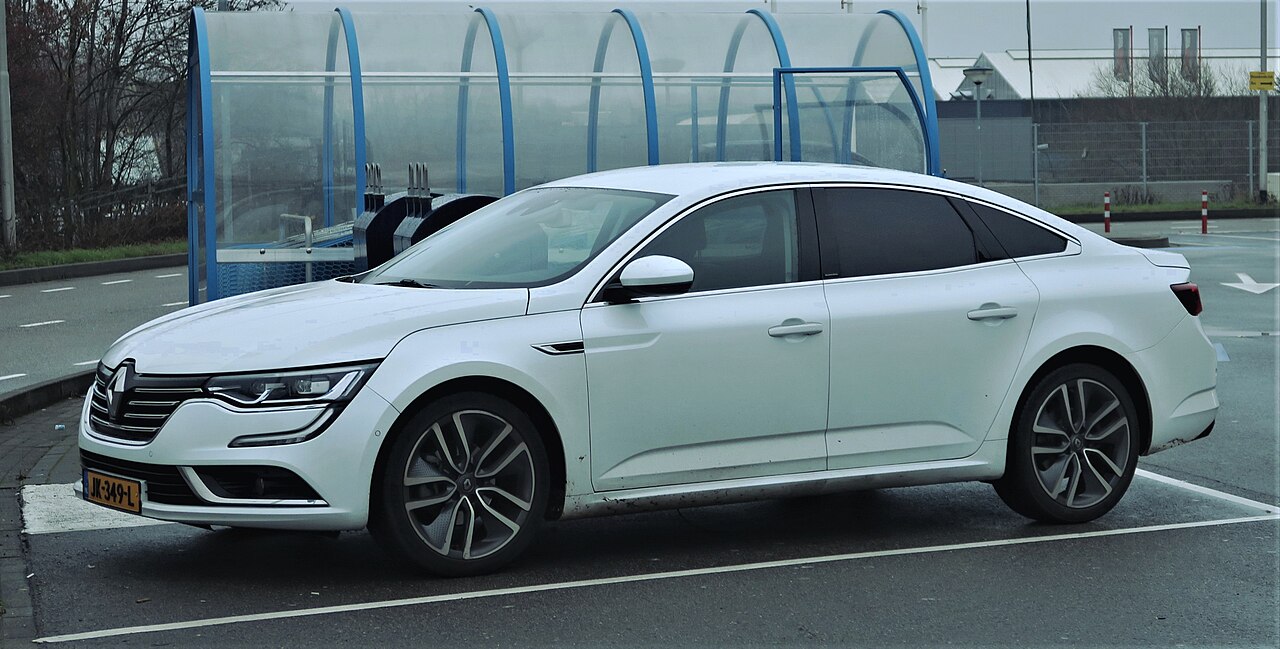 Foto con licenza · Crediti
MarcaRenault
Nuove immatricolazioni (UE)2015–2024
Generazioni e specifiche tecniche
Renault Talisman2015–2025
| Caratteristica | Valore |
|---|---|
| Codice modello | LFD / KFD (Grandtour) |
| Produzione | 2015–2022 (Francia) 2016–2025 (Corea del Sud) |
| Carrozzerie | 4 porte berlina 5 porte station wagon |
| Schema | Motore anteriore, trazione anteriore |
| Piattaforma | Renault–Nissan CMF-CD platform |
| Motori | Benzina 1,3 L H5Ht 16v turbo I4 1,6 L M5Mt 16v turbo I4 1,8 L M5Pt 16v turbo I4 2,0 L M5R 16v I4 LPG 2,0 L LPe I4 Diesel 1,5 L K9K 8v I4 1,6 L R9M 16v I4 1,7 L R9N 8v I4 2,0 L M9R 16v I4 |
| Cambi | 6 marce manuale 6 marce 6DCT450/451 automatico Getrag 7 marce 7DCT300 automatico Getrag XTronic CVT |
| Passo | 2.810 mm |
| Lunghezza | 4.850 mm |
| Larghezza | 1.870 mm |
| Altezza | 1.460 mm |
| Peso a vuoto | 1.413–1.595 kg |
| Categoria | Media / large family car (D-segment) |
| Assemblaggio | Francia: Douai (Douai Renault Factory) Corea del Sud: Busan (Renault Korea Motors) |
| Designer | Alexis Martot Under the lead of Laurens van den Acker |
Dati di omologazione UE
| Anni | Alimentazione | Motore | Potenza | Massa | CO₂ |
|---|---|---|---|---|---|
| 2020–2022 | Benzina | 1332 cm³ | 116 kW (158 CV) | 1497–1514 kg | 136–150 g/km (WLTP) |
| 2019–2022 | Diesel | 1997 cm³ | 118 kW (160 CV) | 1670–1733 kg | 149–157 g/km (WLTP) |
| 2021–2022 | Diesel | 1997 cm³ | 139 kW (189 CV) | 1694–1733 kg | 152–160 g/km (WLTP) |
| 2019–2021 | Benzina | 1332 cm³ | 117 kW (159 CV) | 1476–1511 kg | 146–159 g/km (WLTP) |
| 2018–2021 | Benzina | 1798 cm³ | 165 kW (224 CV) | 1562–1642 kg | 175–184 g/km (WLTP) |
| 2019–2021 | Diesel | 1749 cm³ | 88 kW (120 CV) | 1608–1648 kg | 134–144 g/km (WLTP) |
| 2018–2021 | Diesel | 1749 cm³ | 110 kW (150 CV) | 1608–1648 kg | 135–147 g/km (WLTP) |
| 2019–2021 | Diesel | 1997 cm³ | 147 kW (200 CV) | 1670–1718 kg | 151–161 g/km (WLTP) |
| 2016–2019 | Benzina | 1618 cm³ | 110 kW (150 CV) | 1505–1569 kg | 127–135 g/km (NEDC) |
| 2015–2019 | Benzina | 1618 cm³ | 147 kW (200 CV) | 1505–1569 kg | 130–135 g/km (NEDC) |
| 2015–2019 | Diesel | 1461 cm³ | 81 kW (110 CV) | 1462–1527 kg | 95–99 g/km (NEDC) |
| 2015–2019 | Diesel | 1598 cm³ | 96 kW (131 CV) | 1505–1615 kg | 102–117 g/km (NEDC) |
| 2015–2019 | Diesel | 1598 cm³ | 118 kW (160 CV) | 1597–1615 kg | 118–120 g/km (NEDC) |
Gli anni sono anni di immatricolazione. Ogni intervallo va dal 10° al 90° percentile dei valori dichiarati per le nuove immatricolazioni; non è una media. La massa è la massa in ordine di marcia. Per le auto elettriche la potenza è la potenza netta di omologazione, che può essere inferiore alla potenza massima dichiarata.
Caratteristiche principali
| Caratteristica | Valore |
|---|---|
| Motorizzazioni (UE) | Benzina, Diesel |
| Cilindrata (UE) | 1.332–1.997 cm³ |
| Potenza (UE) | 81–165 kW (110–224 CV) |
| Massa in ordine di marcia (UE) | 1.462–1.733 kg |
| Passo (UE) | 2.809–2.810 mm |
Anni e mercati
| Caratteristica | Valore |
|---|---|
| Nuove immatricolazioni (UE) | 2015–2024 |