Ford
Transit Custom
Ford Transit Custom: anni di prima immatricolazione in Europa, aiuto sui codici di errore, spie e guide alla manutenzione.
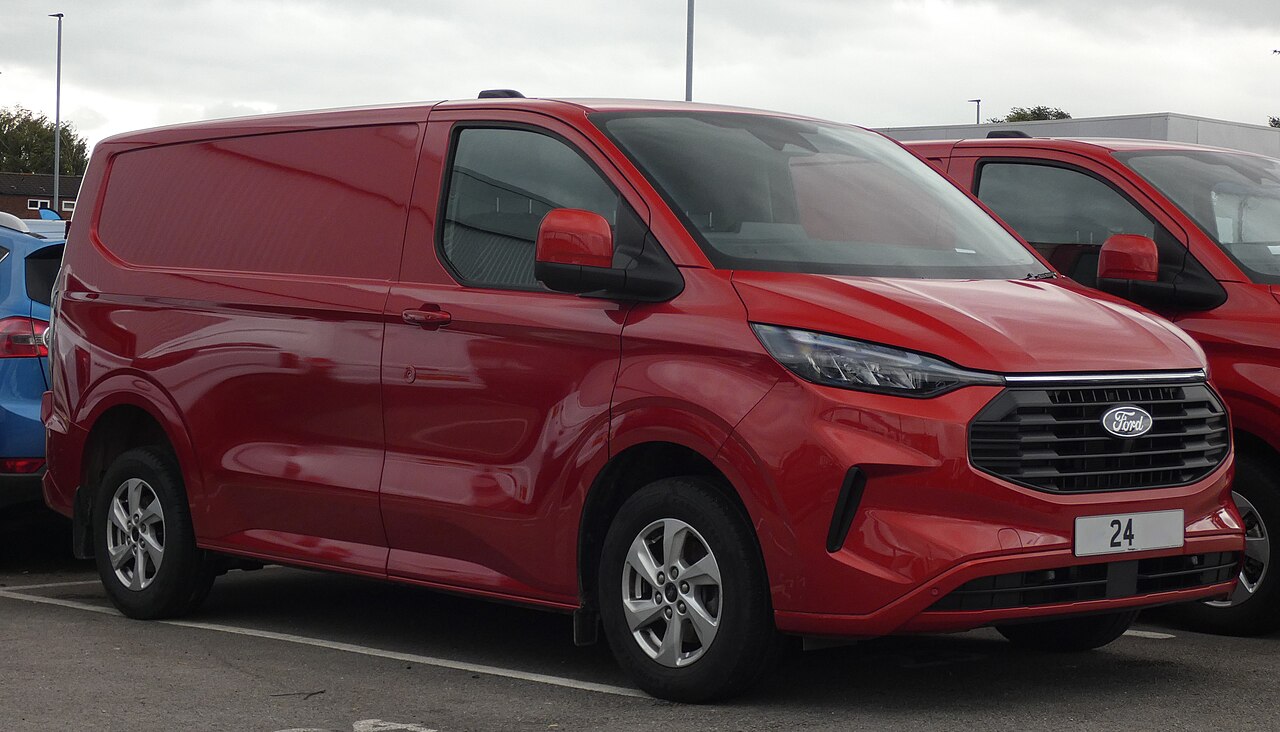 Foto con licenza · Crediti
MarcaFord
Nuove immatricolazioni (UE)2000–2003, 2007–2008, 2012–2026
Generazioni e specifiche tecniche
Ford Transit Custom – 2ª generazione2023–oggi
| Caratteristica | Valore |
|---|---|
| Produzione | 2023–oggi |
| Carrozzerie | 5 porte MPV |
| Schema | Motore anteriore, trazione anteriore Motore posteriore, trazione posteriore (EV) Motore anteriore, trazione integrale Doppio motore, trazione integrale (EV) |
| Piattaforma | Ford Pro Platform |
| Motori | Diesel 2,0 L EcoBlue I4 Benzina ibrido 2,5 L Duratec PHEV I4 |
| Motore elettrico | EKRA Permanent magnet motor(s) |
| Cambi | 6 marce manuale 8 marce automatico |
| Batteria | 82,5 kWh (64 kWh usable) NMC (EV) |
| Assemblaggio | Turchia: Gölcük, Kocaeli (Ford Otosan) |
Dati di omologazione UE
| Anni | Alimentazione | Motore | Potenza | Massa | CO₂ | Autonomia elettrica |
|---|---|---|---|---|---|---|
| 2024–2025 | Ibrida plug-in benzina | 2488 cm³ | 87 kW (118 CV) | 2293–2385 kg | 38–96 g/km (WLTP) | 47–53 km · 127–220 Wh/km |
| 2022–2025 | Diesel | 1995 cm³ | 110 kW (150 CV) | 2167–2406 kg | 197–226 g/km (WLTP) | – |
| 2024–2025 | Diesel | 1996 cm³ | 81 kW (110 CV) | 2146–2212 kg | 193–198 g/km (WLTP) | – |
| 2024–2025 | Diesel | 1996 cm³ | 100 kW (136 CV) | 2146–2247 kg | 193–213 g/km (WLTP) | – |
| 2024–2025 | Diesel | 1996 cm³ | 110 kW (150 CV) | 2146–2212 kg | 193–199 g/km (WLTP) | – |
| 2024–2025 | Diesel | 1996 cm³ | 125 kW (170 CV) | 2184–2337 kg | 212–229 g/km (WLTP) | – |
| 2019–2024 | Diesel | 1995 cm³ | 95 kW (129 CV) | 2065–2358 kg | 196–218 g/km (WLTP) | – |
| 2016–2023 | Diesel | 1995 cm³ | 77 kW (105 CV) | 2022–2169 kg | 197–213 g/km (WLTP) | – |
| 2016–2023 | Diesel | 1995 cm³ | 96 kW (131 CV) | 2022–2226 kg | 197–225 g/km (WLTP) | – |
| 2016–2023 | Diesel | 1995 cm³ | 125 kW (170 CV) | 2034–2372 kg | 198–228 g/km (WLTP) | – |
| 2019–2023 | Ibrida diesel | 1995 cm³ | 95 kW (129 CV) | 2066–2359 kg | 188–199 g/km (WLTP) | – |
| 2019–2023 | Ibrida diesel | 1995 cm³ | 96 kW (131 CV) | 2066–2194 kg | 189–200 g/km (WLTP) | – |
| 2019–2022 | Diesel | 1995 cm³ | 136 kW (185 CV) | 2039–2165 kg | 194–273 g/km (WLTP) | – |
| 2019–2021 | Diesel | 1995 cm³ | 79 kW (107 CV) | 2039–2103 kg | 199–210 g/km (WLTP) | – |
| 2017 | Diesel | 1995 cm³ | 144 kW (196 CV) | 2117–3138 kg | 159 g/km (NEDC) | – |
| 2013–2017 | Diesel | 2198 cm³ | 114 kW (155 CV) | 1975–2109 kg | 168–181 g/km (NEDC) | – |
| 2013–2016 | Diesel | 2198 cm³ | 74 kW (101 CV) | 1975–2109 kg | 168 g/km (NEDC) | – |
| 2013–2016 | Diesel | 2198 cm³ | 92 kW (125 CV) | 1975–2113 kg | 168–172 g/km (NEDC) | – |
Gli anni sono anni di immatricolazione. Ogni intervallo va dal 10° al 90° percentile dei valori dichiarati per le nuove immatricolazioni; non è una media. La massa è la massa in ordine di marcia. Per le auto elettriche la potenza è la potenza netta di omologazione, che può essere inferiore alla potenza massima dichiarata.
Caratteristiche principali
| Caratteristica | Valore |
|---|---|
| Motorizzazioni (UE) | Diesel, Ibrida diesel |
| Cilindrata (UE) | 1.995–2.198 cm³ |
| Potenza (UE) | 74–125 kW (101–170 CV) |
| Massa in ordine di marcia (UE) | 1.975–2.372 kg |
| Passo (UE) | 2.933–3.300 mm |
Anni e mercati
| Caratteristica | Valore |
|---|---|
| Nuove immatricolazioni (UE) | 2000–2003, 2007–2008, 2012–2026 |