Range Rover Sport
Land Rover Range Rover Sport: richiami ufficiali NHTSA, aiuto sui codici errore e guide di manutenzione.
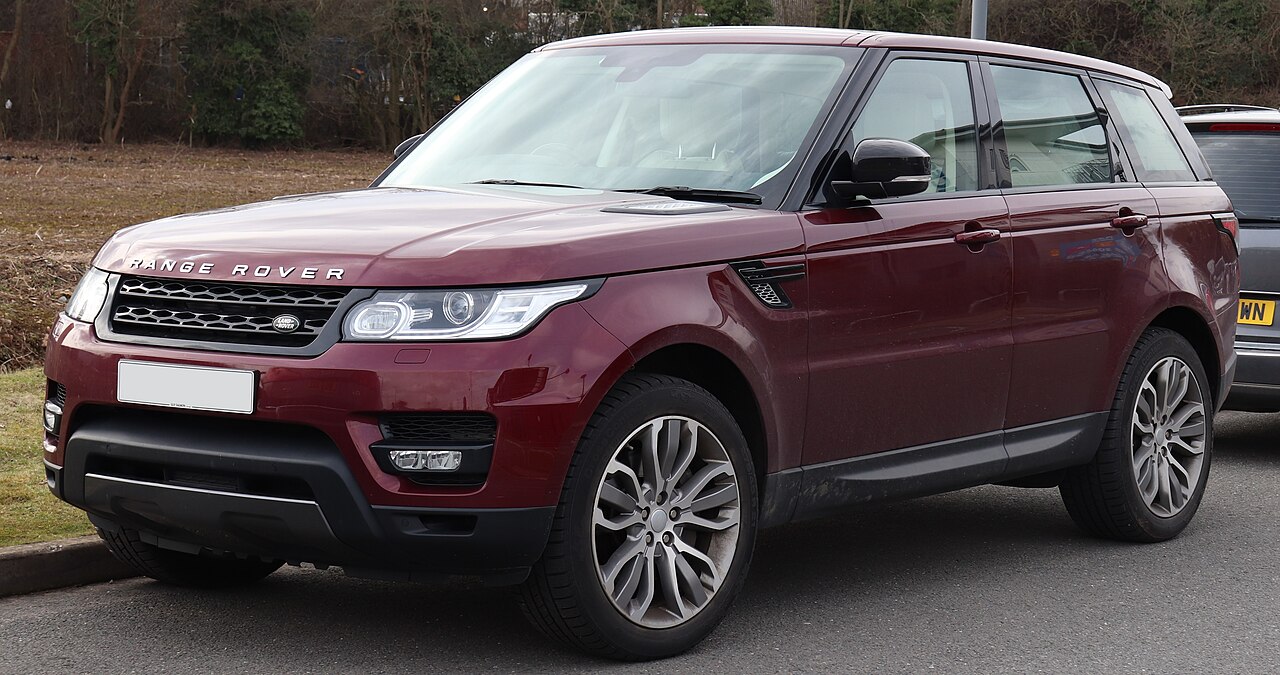 Foto con licenza · Crediti
Generazioni e specifiche tecniche
Range Rover Sport – 3ª generazione2022–oggi
| Caratteristica | Valore |
|---|---|
| Codice modello | L461 |
| Produzione | 2022–oggi |
| Piattaforma | MLA-Flex |
| Motori | Benzina 3,0 L AJ300 turbo I6 MHEV 4,4 L BMW N63 twin-turbo V8 4,4 L S63 twin-turbo V8 (SV) Benzina ibrido plug-in 3,0 L turbo I6 PHEV Diesel 3,0 L AJ300D twin-turbo I6 MHEV |
| Motore elettrico | 105 kW Permanent Magnet Synchronous Motor (PHEV) |
| Cambi | 8 marce ZF 8HP automatico |
| Trasmissione | Mild hybrid Ibrido plug-in |
| Batteria | 38.2 (31.8 usable) kWh Lithium ion (P440e/510e PHEV) |
| Passo | 2.997 mm |
| Lunghezza | 4.946 mm |
| Larghezza | 2.047 mm |
| Altezza | 1.820 mm |
| Peso a vuoto | 2.322 kg |
| Assemblaggio | Regno Unito: Solihull (Solihull plant) India: Pune (JLR India) |
Range Rover Sport – 2ª generazione2013–2022
| Caratteristica | Valore |
|---|---|
| Codice modello | L494 |
| Produzione | 2013–2022 |
| Piattaforma | JLR D7u |
| Motori | Benzina 2,0 L Ingenium I4 Plug-In Ibrido 404ps (398 hp) 3,0 L Jaguar AJ-V6 V6 Supercharged 340ps (335 hp) 3,0 L Ingenium AJ300 I6 MHEV 360ps (355 hp) & 400ps (394 hp) 5,0 L AJ-V8 SC V8 with either 510ps (503 hp), 525ps (518 hp), 550ps (542 hp) or 575ps (567 hp) Diesel 2,0 L Ingenium twin-turbo I4, 237 hp (LR-SD4) 3,0 L AJD turbo V6, 258 hp (LR-TDV6), 306 hp (LR-SDV6), and 340 hp (LR-SDV6 ibrido) 4,4 L Ford 4.4 TD turbo V8 (LR-SDV8) |
| Motore elettrico | 48V mild-hybrid (Synchronous Reluctance Motor) 105 kW Permanent Magnet Synchronous Motor (PHEV) |
| Cambi | 8 marce automatico (ZF 8HP) |
| Batteria | 13,1 kWh Lithium ion (PHEV) |
| Passo | 2.924 mm |
| Lunghezza | 4.851 mm |
| Larghezza | 2.073 mm (mirrors folded) |
| Altezza | 1.811 mm |
| Peso a vuoto | 2.144 kg |
| Assemblaggio | Regno Unito: Solihull (Solihull plant) |
| Designer | Gerry McGovern |
Range Rover Sport – 1ª generazione2005–2013
| Caratteristica | Valore |
|---|---|
| Codice modello | L320 |
| Produzione | 2005–2013 (413,841 produced) |
| Anni modello | 2006–2013 |
| Motori | Benzina 4,2 L AJ Supercharged V8 4,4 L AJ V8 5,0 L AJ V8 5,0 L AJ Supercharged V8 Diesel 2,7 L Lion turbo V6 3,0 L Lion turbo V6 3,6 L Lion twin-turbo V8 |
| Cambi | 8 marce automatico 6 marce ZF automatico 6 marce ZF HP28 automatico |
| Passo | 2.745 mm |
| Lunghezza | 2005–2009: 4.737 mm 2009–2013: 4.783 mm |
| Larghezza | 2005–2009: 1.928 mm 2009–2019: 1.933 mm |
| Altezza | 1.816 mm |
| Assemblaggio | Regno Unito: Solihull (Solihull plant) |
Motori e cambi
| Anni modello | Motore | Cambio | Trazione | Alimentazione |
|---|---|---|---|---|
| 2019–2022, 2024–2027 | 3,0 l, 6 cil. mild hybrid | Automatico a 8 marce | Trazione 4x4 | Benzina (premium) |
| 2024–2027 | 4,4 l, 8 cil. mild hybrid | Automatico a 8 marce | Trazione 4x4 | Benzina (premium) |
| 2025 | 3,0 l, 6 cil. ibrido plug-in | Automatico a 8 marce | Trazione 4x4 | Benzina (premium) ed elettricità |
| 2019–2022 | 2,0 l, 4 cil. ibrido plug-in | Automatico a 8 marce | Trazione 4x4 | Benzina (premium) ed elettricità |
| 2014–2022 | 5,0 l, 8 cil. | Automatico a 8 marce | Trazione 4x4 | Benzina (premium) |
| 2016–2021 | 3,0 l, 6 cil. | Automatico a 8 marce | Trazione 4x4 | Diesel |
| 2014–2019 | 3,0 l, 6 cil. | Automatico a 8 marce | Trazione 4x4 | Benzina (premium) |
| 2014–2015 | 5,0 l, 8 cil. | Automatico a 8 marce | Trazione 4x4 | Benzina (premium) o E85 |
| 2014 | 3,0 l, 6 cil. | Automatico a 8 marce | Trazione posteriore | Benzina (premium) o E85 |
| 2010–2013 | 5,0 l, 8 cil. | Automatico a 6 marce | Trazione 4x4 | Benzina (premium) |
| 2009 | 4,2 l, 8 cil. | Automatico a 6 marce | Trazione 4x4 o integrale | Benzina (premium) |
| 2009 | 4,4 l, 8 cil. | Automatico a 6 marce | Trazione 4x4 o integrale | Benzina (premium) |
| +2 altre configurazioni |
Consumi (EPA)
| Anni modello | Configurazione | Combinato | Città | Autostrada | Autonomia elettrica |
|---|---|---|---|---|---|
| 2019–2022, 2024–2027 | 3,0 l, 6 cil. mild hybrid · Automatico a 8 marce · Trazione 4x4 | 10,7–11,2 L/100 km | 11,8–13,1 L/100 km | 9,4–9,8 L/100 km | – |
| 2024–2027 | 4,4 l, 8 cil. mild hybrid · Automatico a 8 marce · Trazione 4x4 | 12,4–13,1 L/100 km | 14,7 L/100 km | 10,2–11,2 L/100 km | – |
| 2025 | 3,0 l, 6 cil. ibrido plug-in · Automatico a 8 marce · Trazione 4x4 | 11,2 L/100 km | 11,2 L/100 km | 10,7 L/100 km | 34 km |
| 2019–2022 | 2,0 l, 4 cil. ibrido plug-in · Automatico a 8 marce · Trazione 4x4 | 12,4 L/100 km | 13,1 L/100 km | 11,2 L/100 km | 31 km |
| 2014–2022 | 5,0 l, 8 cil. · Automatico a 8 marce · Trazione 4x4 | 12,4–14,7 L/100 km | 13,8–16,8 L/100 km | 10,7–12,4 L/100 km | – |
| 2014–2021 | 3,0 l, 6 cil. · Automatico a 8 marce · Trazione 4x4 | 9,8–12,4 L/100 km | 10,7–13,8 L/100 km | 8,4–10,7 L/100 km | – |
| 2014 | 3,0 l, 6 cil. · Automatico a 8 marce · Trazione posteriore | 12,4 L/100 km | 13,8 L/100 km | 10,2 L/100 km | – |
| 2010–2013 | 5,0 l, 8 cil. · Automatico a 6 marce · Trazione 4x4 | 15,7–16,8 L/100 km | 18,1–19,6 L/100 km | 13,1–13,8 L/100 km | – |
| 2006–2009 | 4,2 l, 8 cil. · Automatico a 6 marce · Trazione 4x4 o integrale | 16,8 L/100 km | 19,6 L/100 km | 13,1–13,8 L/100 km | – |
| 2006–2009 | 4,4 l, 8 cil. · Automatico a 6 marce · Trazione 4x4 o integrale | 15,7–16,8 L/100 km | 19,6 L/100 km | 13,1 L/100 km | – |
I valori sono quelli ufficiali dell’etichetta EPA per ogni anno modello; sono indicati il valore più basso e quello più alto della configurazione. I modelli elettrici mostrano il consumo di energia per 100 km. Il consumo reale dipende da stile di guida, clima e carico. I volumi di bagagliaio e abitacolo seguono il metodo di misura EPA e possono differire dai valori VDA usati in Europa.
Dati di omologazione UE
| Anni | Alimentazione | Motore | Potenza | Massa | CO₂ | Autonomia elettrica |
|---|---|---|---|---|---|---|
| 2023–2025 | Ibrida plug-in benzina | 2996 cm³ | 294 kW (400 CV) | 2735–2810 kg | 16–19 g/km (WLTP) | 112–119 km · 276–296 Wh/km |
| 2021, 2025 | Diesel | 2997 cm³ | 183 kW (249 CV) | 2436 kg | 221–233 g/km (WLTP) | – |
| 2020–2022, 2024–2025 | Ibrida diesel | 2997 cm³ | 183 kW (249 CV) | 2390–2436 kg | 192–230 g/km (WLTP) | – |
| 2020–2025 | Ibrida diesel | 2997 cm³ | 221 kW (300 CV) | 2390–2436 kg | 193–223 g/km (WLTP) | – |
| 2021, 2023–2025 | Ibrida diesel | 2997 cm³ | 258 kW (351 CV) | 2435 kg | 196–205 g/km (WLTP) | – |
| 2018–2022 | Benzina | 4999 cm³ | 423 kW (575 CV) | 2377–2448 kg | 331–339 g/km (WLTP) | – |
| 2019–2022 | Ibrida plug-in benzina | 1997 cm³ | 221 kW (300 CV) | 2615 kg | 75–253 g/km (WLTP) | 39–208 km · 208–218 Wh/km |
| 2019–2020 | Ibrida plug-in benzina | 1997 cm³ | 48 kW (65 CV) | 2615 kg | 77–83 g/km (WLTP) | 39–41 km · 208–212 Wh/km |
| 2012–2020 | Diesel | 2993 cm³ | 183 kW (249 CV) | 2183–2299 kg | 236–245 g/km (WLTP) | – |
| 2015–2020 | Diesel | 2993 cm³ | 225 kW (306 CV) | 2183–2376 kg | 238–247 g/km (WLTP) | – |
| 2014–2020 | Diesel | 4367 cm³ | 250 kW (340 CV) | 2464–2530 kg | 277–287 g/km (WLTP) | – |
| 2017–2019 | Diesel | 1999 cm³ | 177 kW (241 CV) | 2160–2179 kg | 164–172 g/km (NEDC) | – |
| 2011–2018 | Diesel | 2993 cm³ | 155 kW (211 CV) | 2183–2660 kg | 182–243 g/km (NEDC) | – |
| 2013–2018 | Diesel | 2993 cm³ | 190 kW (258 CV) | 2183–2249 kg | 182–194 g/km (NEDC) | – |
| 2011–2017 | Benzina | 4999 cm³ | 375 kW (510 CV) | 2376–2747 kg | 298–348 g/km (NEDC) | – |
| 2013–2015 | Diesel | 2993 cm³ | 215 kW (292 CV) | 2183–2249 kg | 199 g/km (NEDC) | – |
| 2011–2013 | Diesel | 2993 cm³ | 188 kW (256 CV) | 2610–2738 kg | 230 g/km (NEDC) | – |
| 2011–2012 | Diesel | 2993 cm³ | 180 kW (245 CV) | 2610–2738 kg | 243 g/km (NEDC) | – |
| 2010 | Diesel | 3628 cm³ | – | 2724–2824 kg | 294 g/km (NEDC) | – |
Gli anni sono anni di immatricolazione. Ogni intervallo va dal 10° al 90° percentile dei valori dichiarati per le nuove immatricolazioni; non è una media. La massa è la massa in ordine di marcia. Per le auto elettriche la potenza è la potenza netta di omologazione, che può essere inferiore alla potenza massima dichiarata.
Caratteristiche principali
| Caratteristica | Valore |
|---|---|
| Classe di dimensione EPA | SUV standard, SUV |
| Anni modello nei dati EPA | 2006–2022, 2024–2027 |
| Tipi di motorizzazione | Mild hybrid, Ibrido plug-in, Benzina, Diesel, Flex-fuel |
| Cilindrata | 2,0–5,0 l |
| Cilindri | 4, 6, 8 |
| Tipi di cambio | Automatico |
| Trazione | Trazione 4x4, Trazione posteriore, Trazione 4x4 o integrale |
| Alimentazione | Benzina (premium), Benzina (premium) ed elettricità, Diesel, Benzina (premium) o E85, Benzina (normale) |
| Configurazioni elencate | 70 |
| Sovralimentazione | Turbo e compressore (su alcune versioni) |
| Sistema start-stop | Sì |
| Motore elettrico (EPA) | 105 kW DCPM; 105 kW PMSM |
| Motorizzazioni (UE) | Ibrida plug-in benzina, Diesel, Ibrida diesel |
| Cilindrata (UE) | 1.997–2.997 cm³ |
| Potenza (UE) | 155–294 kW (211–400 CV) |
| Massa in ordine di marcia (UE) | 2.183–2.810 kg |
| Passo (UE) | 2.745–2.997 mm |
Anni e mercati
| Caratteristica | Valore |
|---|---|
| Anni modello (USA) | 2006–2027 |
| Nuove immatricolazioni (UE) | 2002–2026 |
Segnalazioni dei proprietari (NHTSA)
| Componente | Segnalazioni | Anni modello più segnalati |
|---|---|---|
| Motore e raffreddamento | 98 | 2011, 2012, 2020 |
| Impianto elettrico | 85 | 2013, 2020, 2023 |
| Carburante e propulsione | 83 | 2010, 2011, 2012 |
| Airbag | 61 | 2007, 2008, 2011 |
| Carrozzeria e struttura | 57 | 2010, 2011, 2013 |
| Trasmissione | 47 | 2006, 2008, 2012 |
| Freni | 45 | 2008, 2011, 2013 |
| Sospensioni | 36 | 2006, 2008, 2013 |
| Sterzo | 26 | 2006, 2013, 2023 |
| Controllo della velocità | 15 | 2008, 2012, 2013 |
Fonte: segnalazioni dei proprietari all'agenzia statunitense per la sicurezza stradale (NHTSA) per gli anni modello 2006–2013, 2020–2024: 471 segnalazioni, 25 con incidente e 8 con incendio. Le segnalazioni sono resoconti dei proprietari non verificati dalla NHTSA e una segnalazione può indicare più componenti. Più segnalazioni possono anche significare più auto vendute.