S-Class
Mercedes-Benz S-Class: richiami ufficiali NHTSA, aiuto sui codici errore e guide di manutenzione.
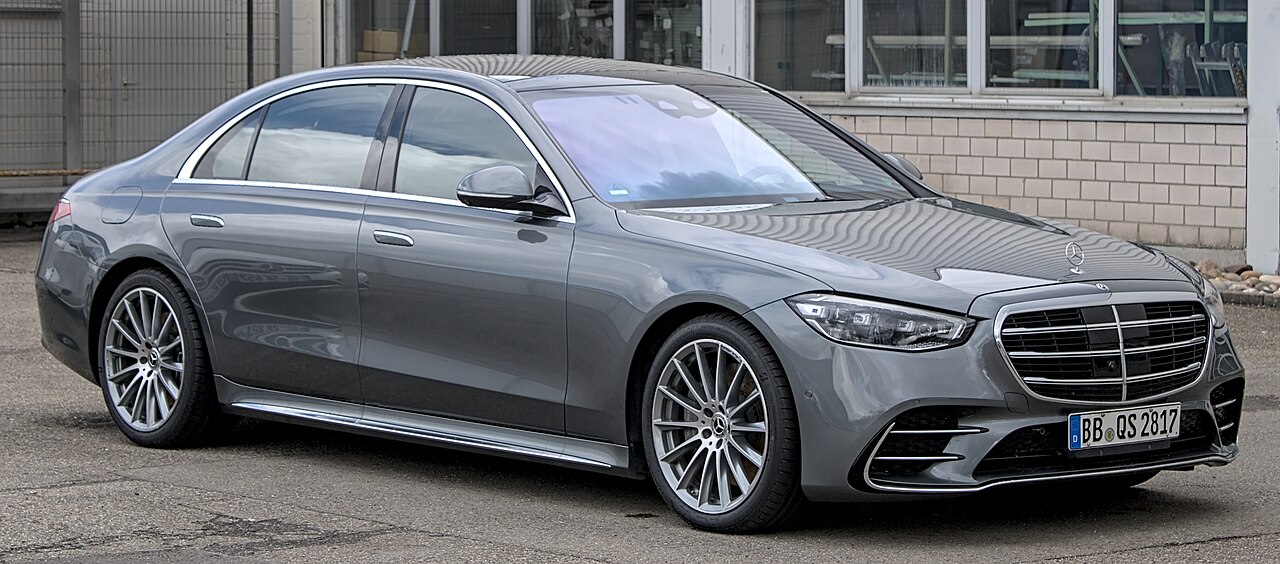 Foto con licenza · Crediti
Generazioni e specifiche tecniche
Mercedes-Benz S-Class (W223)2020–oggi
| Caratteristica | Valore |
|---|---|
| Produzione | settembre 2020–oggi |
| Anni modello | 2021–oggi |
| Carrozzerie | 4 porte berlina |
| Schema | Motore anteriore, trazione posteriore or trazione integrale (4MATIC) |
| Piattaforma | Mercedes-Benz MRA Large |
| Motori | Benzina 2,5 L M256 turbo I6 (Cina) 3,0 L M256 turbo I6 4,0 L M176 twin-turbo V8 6,0 L M279 twin-turbo V12 Benzina ibrido plug-in 3,0 L M256 turbo I6 4,0 L M176 twin-turbo V8 4,0 L M177 twin-turbo V8 Diesel 2,9 L OM656 turbo I6 |
| Motore elettrico | 48 V electrical system (EQ Boost) Schaeffler PSM P2 Hybrid Module High Voltage gearbox-mounted electric motor (PHEV) 140 kW synchronous electric motor (63 S E Performance) |
| Cambi | 9 marce 9G-Tronic/9G-Tronic plug-in-hybrid automatico |
| Trasmissione | Mild hybrid (EQ Boost) Ibrido plug-in |
| Batteria | Up to 29 kWh high-voltage lithium ion |
| Autonomia elettrica | 100 km |
| Passo | 3.106 mm (W223) 3.216 mm (V223) 3.396 mm (Z223) |
| Lunghezza | 5.179 mm (W223) 5.289 mm (V223) 5.460 mm (Z223) |
| Larghezza | 1.954 mm |
| Altezza | 1.503 mm |
| Categoria | Full-size luxury car (F) |
| Assemblaggio | Germania: Sindelfingen India: Pune (MBI) Indonesia: Bogor (MBI) Malesia: Pekan (HICOM) Thailandia: Samut Prakan (Thonburi Automotive Assembly Plant Co., Ltd.) |
| Designer | Balázs Filczer |
Mercedes-Benz S-Class – 7ª generazione2020–oggi
| Caratteristica | Valore |
|---|---|
| Codice modello | W223 |
| Produzione | 2020–oggi |
| Schema | Anteriore engine, rear-wheel drive or four-wheel drive |
| Cambi | 9 marce 9G-Tronic automatico |
| Passo | SWB: 3.106 mm LWB: 3.216 mm |
| Lunghezza | SWB: 5.179 mm LWB: 5.289 mm |
| Larghezza | 1.954 mm |
| Altezza | 1.503 mm |
Mercedes-Benz S-Class (C217)2014–2021
| Caratteristica | Valore |
|---|---|
| Produzione | novembre 2014 – agosto 2020 |
| Anni modello | 2015–2021 |
| Carrozzerie | 2 porte coupé (C217) 2 porte cabriolet (A217) |
| Schema | Motore anteriore, trazione posteriore or trazione integrale (4Matic) |
| Motori | 3,0 L M276 twin-turbo V6 4,0 L M177 twin-turbo V8 4,7 L M278 twin-turbo V8 5,5 L M157 twin-turbo V8 6,0 L M279 twin-turbo V12 |
| Cambi | 7 marce 7G-Tronic automatico 9 marce 9G-Tronic automatico |
| Passo | 2.945 mm |
| Lunghezza | 5.027 mm |
| Larghezza | 1.899 mm |
| Altezza | 1.411 mm |
| Categoria | Grand tourer (S) |
| Assemblaggio | Germania: Sindelfingen |
| Designer | Robert Lešnik |
Mercedes-Benz S-Class (W222)2013–2020
| Caratteristica | Valore |
|---|---|
| Produzione | 12 giugno 2013– settembre 2020 |
| Anni modello | 2014–2020 |
| Carrozzerie | 4 porte berlina |
| Schema | Motore anteriore, trazione posteriore Motore anteriore, trazione integrale (4MATIC) |
| Piattaforma | W221/W222 |
| Motori | Benzina engines 2,0 L M264 turbo I4 (Cina) 3,0 L M256 turbo I6 3,0 L M276 twin-turbo V6 3,5 L M276 V6 + electric motor 4,7 L M278 twin-turbo V8 3,0 L M276 twin-turbo V6 Plug-in Ibrido + electric motor 4,0 L M176/M177 twin-turbo V8 5,5 L M157 twin-turbo V8 6,0 L M277/279 twin-turbo V12 Diesel engines 2,2 L OM651 twin turbo I4 Bluetec Ibrido 2,9 L OM656 twin-turbo I6 3,0 L OM642 turbo V6 |
| Cambi | 7 marce 7G-Tronic automatico 9 marce 9G-Tronic automatico |
| Trasmissione | FHEV (Parallel Ibrido) (S400 Ibrido, S300 Bluetec Ibrido) Mild Ibrido (EQ Boost) Ibrido plug-in (S 500 e / S 560 e) |
| Passo | SWB: 3.035 mm LWB: 3.165 mm Maybach: 3.365 mm Pullman: 4.418 mm |
| Lunghezza | SWB: 5.146 mm LWB: 5.296 mm Maybach: 5.453 mm Pullman: 6.499 mm |
| Larghezza | 1.899 mm |
| Altezza | 1.496 mm 1.598 mm (Pullman) |
| Peso a vuoto | 1.910–2.275 kg 2.295–2.360 kg (Mercedes-Maybach) |
| Categoria | Full-size luxury car (F) |
| Assemblaggio | Germania: Sindelfingen India: Pune (Mercedes Benz India) Malesia: Pekan (HICOM) Indonesia: Bogor (MBI) Thailandia: Samut Prakan (Thonburi Automotive Assembly Plant Co., Ltd.) Vietnam: Ho Chi Minh City (MBV) |
| Designer | Il-hun Yoon Robert Lešnik (2009) |
Mercedes-Benz S-Class – 6ª generazione2013–2021
| Caratteristica | Valore |
|---|---|
| Codice modello | W222 (Berlina) / C217 (Coupé) / A217 (Cabriolet) |
| Produzione | giugno 2013–settembre 2020 (W222) novembre 2014–agosto 2020 (C217/A217) |
| Anni modello | 2014–2020 (W222) 2015–2021 (C217/A217) |
| Schema | Anteriore engine, rear-wheel drive or four-wheel drive |
| Cambi | 7 marce 7G-Tronic / 9 marce 9G-Tronic automatico |
| Passo | SWB: 3.035 mm LWB: 3.165 mm |
| Lunghezza | SWB: 5.116 mm LWB: 5.248 mm |
| Larghezza | 1.899 mm |
| Altezza | 1.496 mm |
Mercedes-Benz S-Class (W221)2005–2013
| Caratteristica | Valore |
|---|---|
| Produzione | agosto 2005 – giugno 2013 |
| Anni modello | 2005–2013 (Worldwide) 2007–2013 (Canada & US) |
| Carrozzerie | 4 porte berlina |
| Schema | Anteriore engine, rear-wheel drive / four-wheel drive |
| Motori | Benzina 3.0–3,5 L M272 V6 3,5 L M272 V6 ibrido 4.7–5,5 L M273 V8 4,7 L M278 twin-turbo V8 5,5 L M157 twin-turbo V8 6,2 L M156 V8 5.5–6,0 L M275 twin-turbo V12 Diesel 2,1 L OM651 turbo I4 3,0 L OM642 turbo V6 3,0 L OM642 turbo V6 ibrido 4,0 L OM629 twin-turbo V8 |
| Motore elettrico | 20 hp Additional AC permanent-magnet synchronous electric motor |
| Cambi | 5 marce 5G-Tronic automatico 7 marce 7G-Tronic automatico |
| Trasmissione | FHEV (Parallel Ibrido) (S400 Ibrido) |
| Passo | 3.035 mm 3.165 mm (LWB) 4.315 mm (Pullman) |
| Lunghezza | 2006–08 SWB: 5.076 mm 2009–13 SWB: 5.079 mm 2006–08 LWB: 5.208 mm 2009–13 LWB: 5.218 mm |
| Larghezza | 2006–08: 1.871 mm 2009–13 1.872 mm BlueHybrid: 2.116 mm |
| Altezza | 1.473 mm |
| Peso a vuoto | from 1.955 kg [S 320 CDI] to 2.270 kg [S 65 AMG] |
| Categoria | Full-size luxury car (F) |
| Assemblaggio | Germania: Sindelfingen Messico: Toluca Egitto: 6th of October City (EGA) Malesia: Pekan (HICOM) Indonesia: Bogor (MBI) |
| Designer | Gorden Wagener (2001) |
Mercedes-Benz S-Class – 5ª generazione2005–2013
| Caratteristica | Valore |
|---|---|
| Codice modello | W221 (Berlina) / C216 (Coupé) |
| Produzione | luglio 2005 – giugno 2013 |
| Anni modello | 2006–2013 (Worldwide) 2007–2013 (Nord America) |
| Schema | Anteriore engine, rear-wheel drive or four-wheel drive |
| Motori | 2,1 L diesel 201 hp I4 3,0 L diesel 255 hp V6 3,5 L 302 hp V6 3,5 L ibrido 295 hp V6 4,0 L diesel 316 hp V8 4,7 L 335 hp V8 4,7 L 429 hp V8 5,5 L 382 hp V8 5,5 L 509 hp V12 5,5 L AMG 536 hp V8 6,0 L AMG 621 hp V12 6,2 L AMG 518 hp V8 |
| Cambi | 7 marce (5 marce on S65 & S600) automatico |
| Passo | SWB: 3.035 mm LWB: 3.165 mm |
| Designer | Gorden Wagener (2001) |
Mercedes-Benz S-Class (W220)1998–2006
| Caratteristica | Valore |
|---|---|
| Produzione | settembre 1998 – luglio 20, 2005 |
| Anni modello | 1999–2005 2000–2006 (Nord America) |
| Carrozzerie | 4 porte berlina |
| Schema | Anteriore engine, rear-wheel drive / four-wheel drive |
| Motori | Benzina 2.8–3,7 L M112 V6 4.3–5,4 L M113 V8 5,4 L M113 supercharged V8 5.5–6,0 L M275 twin-turbo V12 5.8–6,3 L M137 V12 Diesel 3,2 L OM613 I6 3,2 L OM648 I6 4,0 L OM628 V8 |
| Cambi | 5 marce 5G-Tronic automatico 7 marce 7G-Tronic automatico |
| Passo | 2.960 mm (SWB) 3.085 mm (LWB) |
| Lunghezza | 5.038 mm (SWB) 5.043 mm (SWB, 2002–05) 5.158 mm (LWB) 5.163 mm (LWB, 2002–05) |
| Larghezza | 1.855 mm |
| Altezza | 1.444 mm |
| Peso a vuoto | 1.770–3.385 kg |
| Categoria | Full-size luxury car (F) |
| Assemblaggio | Germania: Sindelfingen Messico: Toluca Indonesia: Bogor (DaimlerChrysler Indonesia) |
| Designer | Steve Mattin, Bruno Sacco (1995) |
Motori e cambi
| Anni modello | Motore | Cambio | Trazione | Alimentazione |
|---|---|---|---|---|
| 2022–2027 | 3,0 l, 6 cil. mild hybrid | Automatico a 9 marce | Trazione integrale | Benzina (premium) |
| 2022–2027 | 4,0 l, 8 cil. mild hybrid | Automatico a 9 marce | Trazione integrale | Benzina (premium) |
| 2022–2027 | 6,0 l, 12 cil. | Automatico a 9 marce | Trazione integrale | Benzina (premium) |
| 2023, 2025 | 3,0 l, 6 cil. ibrido plug-in | Automatico a 9 marce | Trazione integrale | Benzina (premium) ed elettricità |
| 2025 | 4,0 l, 8 cil. ibrido plug-in | Automatico a 9 marce | Trazione integrale | Benzina (premium) ed elettricità |
| 2021 | 3,0 l, 6 cil. mild hybrid | Automatico a 9 marce | Trazione 4x4 | Benzina (premium) |
| 2018–2021 | 4,0 l, 8 cil. | Automatico a 9 marce | Trazione 4x4 | Benzina (premium) |
| 2020–2021 | 4,0 l, 8 cil. | Automatico a 9 marce | Trazione posteriore | Benzina (premium) |
| 2021 | 4,0 l, 8 cil. mild hybrid | Automatico a 9 marce | Trazione 4x4 | Benzina (premium) |
| 2018–2020 | 3,0 l, 6 cil. | Automatico a 9 marce | Trazione 4x4 | Benzina (premium) |
| 2018–2020 | 3,0 l, 6 cil. | Automatico a 9 marce | Trazione posteriore | Benzina (premium) |
| 2020 | 3,0 l, 6 cil. ibrido plug-in | Automatico a 9 marce | Trazione posteriore | Benzina (premium) ed elettricità |
| +26 altre configurazioni |
Consumi (EPA)
| Anni modello | Configurazione | Combinato | Città | Autostrada | Autonomia elettrica |
|---|---|---|---|---|---|
| 2022–2027 | 3,0 l, 6 cil. mild hybrid · Automatico a 9 marce · Trazione integrale | 9,8–10,2 L/100 km | 11,2–11,8 L/100 km | 7,6–8,4 L/100 km | – |
| 2022–2027 | 4,0 l, 8 cil. mild hybrid · Automatico a 9 marce · Trazione integrale | 11,2–13,1 L/100 km | 13,1–15,7 L/100 km | 8,7–9,8 L/100 km | – |
| 2022–2027 | 6,0 l, 12 cil. · Automatico a 9 marce · Trazione integrale | 15,7–16,8 L/100 km | 19,6 L/100 km | 11,2–11,8 L/100 km | – |
| 2023, 2025 | 3,0 l, 6 cil. ibrido plug-in · Automatico a 9 marce · Trazione integrale | 10,2 L/100 km | 11,8 L/100 km | 8,1 L/100 km | 77–90 km |
| 2025 | 4,0 l, 8 cil. ibrido plug-in · Automatico a 9 marce · Trazione integrale | 13,1 L/100 km | 15,7 L/100 km | 10,2 L/100 km | 26 km |
| 2021 | 3,0 l, 6 cil. mild hybrid · Automatico a 9 marce · Trazione 4x4 | 9,8 L/100 km | 11,8 L/100 km | 8,1 L/100 km | – |
| 2018–2021 | 4,0 l, 8 cil. · Automatico a 9 marce · Trazione 4x4 | 11,2–13,8 L/100 km | 13,8–16,8 L/100 km | 8,7–9,8 L/100 km | – |
| 2020–2021 | 4,0 l, 8 cil. · Automatico a 9 marce · Trazione posteriore | 11,2–11,8 L/100 km | 13,8–14,7 L/100 km | 8,7–9,0 L/100 km | – |
| 2021 | 4,0 l, 8 cil. mild hybrid · Automatico a 9 marce · Trazione 4x4 | 11,8–12,4 L/100 km | 13,8–14,7 L/100 km | 9,4–9,8 L/100 km | – |
| 2018–2020 | 3,0 l, 6 cil. · Automatico a 9 marce · Trazione 4x4 | 10,7 L/100 km | 13,1 L/100 km | 8,4 L/100 km | – |
| 2018–2020 | 3,0 l, 6 cil. · Automatico a 9 marce · Trazione posteriore | 10,7 L/100 km | 12,4 L/100 km | 8,4 L/100 km | – |
| 2020 | 3,0 l, 6 cil. ibrido plug-in · Automatico a 9 marce · Trazione posteriore | 10,2 L/100 km | 11,2 L/100 km | 9,0 L/100 km | 31 km |
| +25 altre configurazioni |
I valori sono quelli ufficiali dell’etichetta EPA per ogni anno modello; sono indicati il valore più basso e quello più alto della configurazione. I modelli elettrici mostrano il consumo di energia per 100 km. Il consumo reale dipende da stile di guida, clima e carico. I volumi di bagagliaio e abitacolo seguono il metodo di misura EPA e possono differire dai valori VDA usati in Europa.
Dati di omologazione UE
| Anni | Alimentazione | Motore | Potenza | Massa | CO₂ | Autonomia elettrica |
|---|---|---|---|---|---|---|
| 2021–2025 | Ibrida benzina | 3982 cm³ | 370 kW (503 CV) | 2115–2290 kg | 234–256 g/km (WLTP) | – |
| 2019–2025 | Ibrida plug-in benzina | 2999 cm³ | 270 kW (367 CV) | 2380–2470 kg | 15–206 g/km (WLTP) | 100–112 km · 220–257 Wh/km |
| 2021–2025 | Ibrida plug-in benzina | 3982 cm³ | 450 kW (612 CV) | 2595–2645 kg | 100–104 g/km (WLTP) | 31–33 km · 222–336 Wh/km |
| 2023–2025 | Ibrida diesel | 2989 cm³ | 230 kW (313 CV) | 2090–2145 kg | 161–177 g/km (WLTP) | – |
| 2023–2025 | Ibrida diesel | 2989 cm³ | 270 kW (367 CV) | 2125–2145 kg | 169–180 g/km (WLTP) | – |
| 2011–2012, 2014–2020, 2024 | Benzina | 5980 cm³ | 463 kW (630 CV) | 2185–2360 kg | 328–345 g/km (WLTP) | – |
| 2019–2023 | Ibrida benzina | 2999 cm³ | 270 kW (367 CV) | 1995–2075 kg | 185–206 g/km (WLTP) | – |
| 2020–2023 | Ibrida benzina | 2999 cm³ | 320 kW (435 CV) | 2045–2065 kg | 190–207 g/km (WLTP) | – |
| 2017–2023 | Diesel | 2925 cm³ | 210 kW (286 CV) | 2000–2080 kg | 174–197 g/km (WLTP) | – |
| 2020–2023 | Diesel | 2925 cm³ | 243 kW (330 CV) | 2070–2090 kg | 181–197 g/km (WLTP) | – |
| 2016–2019, 2021–2022 | Benzina | 2999 cm³ | 270 kW (367 CV) | 1995–2075 kg | 181–204 g/km (WLTP) | – |
| 2016–2019, 2021–2022 | Benzina | 2999 cm³ | 320 kW (435 CV) | 2010–2085 kg | 185–204 g/km (WLTP) | – |
| 2016–2021 | Benzina | 2996 cm³ | 270 kW (367 CV) | 2035–2055 kg | 226–236 g/km (WLTP) | – |
| 2016–2021 | Benzina | 3982 cm³ | 345 kW (469 CV) | 2100–2295 kg | 236–246 g/km (WLTP) | – |
| 2017–2021 | Benzina | 3982 cm³ | 450 kW (612 CV) | 2070–2205 kg | 265–277 g/km (WLTP) | – |
| 2019–2021 | Ibrida plug-in benzina | 2996 cm³ | 270 kW (367 CV) | 2215–2225 kg | 54–187 g/km (WLTP) | 42–50 km · 200–268 Wh/km |
| 2017–2021 | Diesel | 2925 cm³ | 250 kW (340 CV) | 2060–2105 kg | 180–199 g/km (WLTP) | – |
| 2013–2018 | Benzina | 4663 cm³ | 335 kW (455 CV) | 2015–2115 kg | 204–228 g/km (NEDC) | – |
| 2013–2018 | Benzina | 5461 cm³ | 430 kW (585 CV) | 2070–2185 kg | 242–244 g/km (NEDC) | – |
| 2014–2017 | Benzina-elettrica | 2996 cm³ | 245 kW (333 CV) | 2215 kg | 65 g/km (NEDC) | 135–155 Wh/km |
| 2011–2017 | Diesel | 2143 cm³ | 150 kW (204 CV) | 1970–2045 kg | 110–151 g/km (NEDC) | – |
| 2011–2017 | Diesel | 2987 cm³ | 190 kW (258 CV) | 1955–2065 kg | 146–177 g/km (NEDC) | – |
| 2011–2016 | Benzina | 3498 cm³ | 225 kW (306 CV) | 1910–1975 kg | 147–184 g/km (NEDC) | – |
| 2011–2014 | Benzina | 4663 cm³ | 320 kW (435 CV) | 2010–2140 kg | 219–231 g/km (NEDC) | – |
Gli anni sono anni di immatricolazione. Ogni intervallo va dal 10° al 90° percentile dei valori dichiarati per le nuove immatricolazioni; non è una media. La massa è la massa in ordine di marcia. Per le auto elettriche la potenza è la potenza netta di omologazione, che può essere inferiore alla potenza massima dichiarata.
Caratteristiche principali
| Caratteristica | Valore |
|---|---|
| Classe di dimensione EPA | Grande, Media, Utilitaria, Compatta |
| Anni modello nei dati EPA | 2000–2027 |
| Tipi di motorizzazione | Benzina, Mild hybrid, Ibrido plug-in, Ibrido, Diesel |
| Cilindrata | 3,0–6,3 l |
| Cilindri | 4, 6, 8, 12 |
| Tipi di cambio | Automatico |
| Trazione | Trazione integrale, Trazione posteriore, Trazione 4x4, Trazione anteriore, Trazione 4x4 o integrale |
| Alimentazione | Benzina (premium), Benzina (premium) ed elettricità, Diesel |
| Configurazioni elencate | 189 |
| Sovralimentazione | Turbo e compressore (su alcune versioni) |
| Sistema start-stop | Su alcune versioni |
| Motore elettrico (EPA) | 140 and 150 kW AC PMSM; 110 kW AC PMSM; 110 kW PMSM; 90 kW DCPM |
| Volume del bagagliaio (EPA) | 198–453 L |
| Volume dell’abitacolo (EPA) | 2.492–3.398 L |
| Motorizzazioni (UE) | Benzina, Ibrida benzina, Ibrida plug-in benzina, Diesel |
| Cilindrata (UE) | 2.925–5.461 cm³ |
| Potenza (UE) | 190–450 kW (258–612 CV) |
| Massa in ordine di marcia (UE) | 1.910–2.470 kg |
| Passo (UE) | 2.945–3.396 mm |
Anni e mercati
| Caratteristica | Valore |
|---|---|
| Anni modello (USA) | 2000–2027 |
| Nuove immatricolazioni (UE) | 2000–2026 |
Segnalazioni dei proprietari (NHTSA)
| Componente | Segnalazioni | Anni modello più segnalati |
|---|---|---|
| Impianto elettrico | 196 | 2002, 2003, 2004 |
| Sospensioni | 110 | 2002, 2003, 2007 |
| Motore e raffreddamento | 110 | 2002, 2006, 2007 |
| Trasmissione | 75 | 2003, 2004, 2007 |
| Carburante e propulsione | 59 | 2007, 2010, 2011 |
| Freni | 52 | 2004, 2018, 2022 |
| Luci | 50 | 2002, 2003, 2005 |
| Controllo della velocità | 43 | 2006, 2007, 2016 |
| Sterzo | 43 | 2004, 2010, 2018 |
| Carrozzeria e struttura | 38 | 2002, 2003, 2015 |
Fonte: segnalazioni dei proprietari all'agenzia statunitense per la sicurezza stradale (NHTSA) per gli anni modello 2002–2024: 779 segnalazioni, 32 con incidente e 26 con incendio. Le segnalazioni sono resoconti dei proprietari non verificati dalla NHTSA e una segnalazione può indicare più componenti. Più segnalazioni possono anche significare più auto vendute.