E-Class
Mercedes-Benz E-Class: richiami ufficiali NHTSA, aiuto sui codici errore e guide di manutenzione.
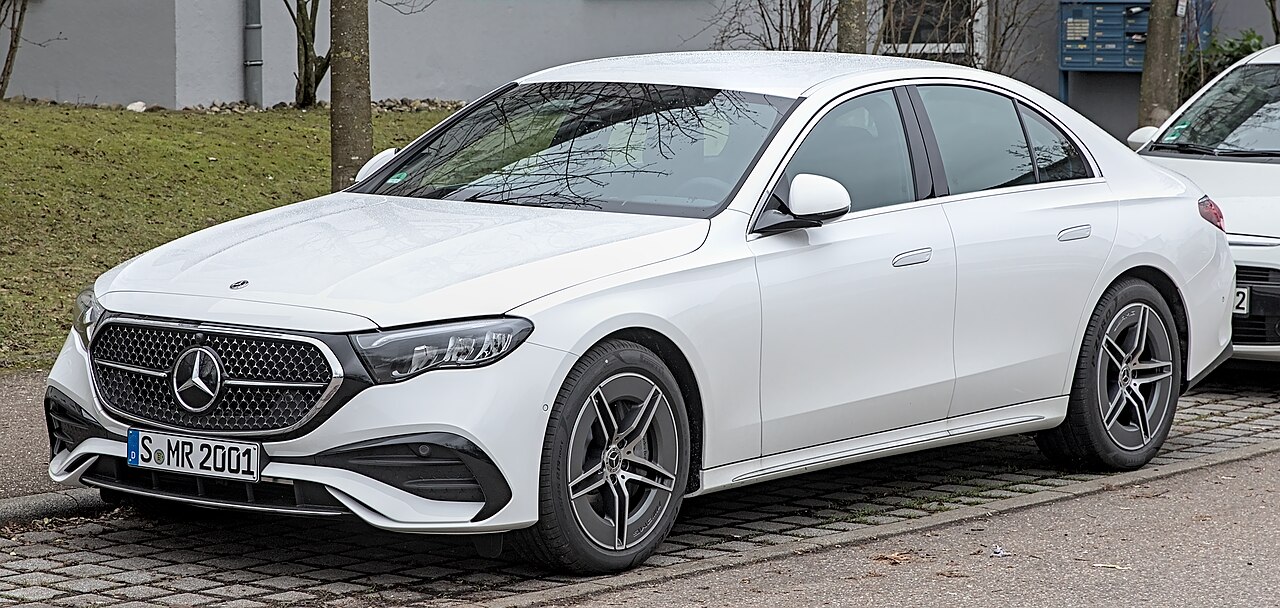 Foto con licenza · Crediti
Generazioni e specifiche tecniche
Mercedes-Benz E-Class (W214)2023–oggi
| Caratteristica | Valore |
|---|---|
| Codice modello | W214 (Berlina) / V214 (LWB) / S214 (Wagon) / X214 (All Terrain) |
| Produzione | maggio 2023 – oggi |
| Anni modello | 2024–oggi |
| Carrozzerie | 4 porte berlina 5 porte station wagon |
| Piattaforma | MRA2 |
| Motori | Benzina mild hybrid 2,0 L M 254 turbo I4 3,0 L M 256 turbo I6 Benzina ibrido plug-in 2,0 L M 254 turbo I4 3,0 L M 256 turbo I6 Diesel mild hybrid 2,0 L OM 654 turbo I4 3,0 L OM 656 turbo I6 Diesel ibrido plug-in 2,0 L OM 654 turbo I4 |
| Motore elettrico | 48 V integrated starter-generator (mild hybrid) Permanent-magnet synchronous (ibrido plug-in) |
| Cambi | 9 marce automatico (9G-Tronic) |
| Trasmissione | Mild hybrid Ibrido plug-in (E 300e, E 300de, E 400e, E 53 Ibrido+) |
| Batteria | 48 V lithium-ion (MHEV) 25,4 kWh lithium-ion (PHEV) |
| Passo | 2.961 mm |
| Lunghezza | 4.949 mm |
| Larghezza | 1.880 mm |
| Altezza | 1.480 mm |
| Peso a vuoto | 1.825–2.265 kg |
| Categoria | Berlina premium (E) |
| Assemblaggio | Germania: Sindelfingen Cina: Beijing (Beijing Benz, for V214 models) India: Chakan, Pune (Mercedes-Benz India) Indonesia: Bogor (Inchcape Indomobil) Malesia: Pekan (HICOM) Thailandia: Samut Prakan (Thonburi Automotive Assembly Plant Co., Ltd.) Vietnam: Ho Chi Minh City (MBV) |
| Designer | Gorden Wagener (design director) Michael Frei Robert Lešnik Bastian Baudy (sketch) Torben Ewe (light design) Andreas Franke (interior design) |
Mercedes-Benz E-Class (W213)2016–2023
| Caratteristica | Valore |
|---|---|
| Produzione | febbraio 2016 – 2023 |
| Anni modello | 2017–2023 |
| Carrozzerie | 4 porte berlina 5 porte station wagon 2 porte coupé (C238) 2 porte cabriolet (A238) |
| Schema | Motore anteriore, trazione posteriore or trazione integrale (4Matic) |
| Piattaforma | MRA |
| Motori | Benzina 1,5 L M264 turbo I4 1,6 L M274 turbo I4 2,0 L M264 turbo I4 2,0 L M274 turbo I4 3,0 L M256 turbo I6 3,0 L M276 twin-turbo V6 4,0 L M177 AMG twin-turbo V8 Benzina ibrido plug-in 2,0 L M139 mild hybrid turbo I4 2,0 L M270 ibrido plug-in turbo I4 3,0 L M256 mild hybrid turbo I6 Diesel 1.6–2,0 L OM654 turbo I4 2,0 L OM654 ibrido plug-in turbo I4 2,9 L OM656 turbo I6 3,0 L OM642 turbo V6 |
| Motore elettrico | 27 hp 120-volt compact electric motor (BlueTEC HYBRID) 16 kW BorgWarner 48V eBooster Electric Starter-Generator Motor (EQ Boost) 65 kW Schaeffler PSM P2 Hybrid Module High Voltage (E350 e) 122 PS Schaeffler PSM P2 Hybrid Module High Voltage (E300 e/E300 de) |
| Cambi | 6 marce manuale (E200 only until aprile 2018) 9 marce 9G-Tronic automatico |
| Trasmissione | Parallel ibrido (E300 Bluetec Ibrido) Mild-Hybrid (EQ Boost) Ibrido plug-in (E350 e/E300 e/E300 de) |
| Batteria | 0,8 kWh Lithium-ion (Bluetec Ibrido) 6,2 kWh lithium-ion (E350e) 13,5 kWh lithium-ion (E300e/E300de) |
| Passo | 2.939 mm (2017: Berlina SWB) 3.079 mm (2017: Berlina LWB) 2.873 mm (coupé (C238) / cabriolet (A238) 2.939 mm (2017: Wagon) |
| Lunghezza | 4.923 mm (2017: Berlina SWB) 5.065 mm (2017: Berlina LWB) 4.844 mm (coupé (C238) / cabriolet (A238) 4.932 mm - 5.005 mm (2017: Wagon) |
| Larghezza | 1.852 mm (2017: Berlina SWB) 1.860 mm (2017: Berlina LWB) 1.860 mm (coupé (C238) / cabriolet (A238) |
| Altezza | 1.468 mm (2017: Berlina SWB) 1.467 mm (2017: Berlina LWB) 1.430 mm (coupé (C238) / cabriolet (A238) |
| Peso a vuoto | 1.605–2.048 kg (2017: Berlina SWB) 1.770–1.800 kg (2017: Berlina LWB) |
| Categoria | Berlina premium (E) Grand tourer (S) (C238)/(A238) |
| Assemblaggio | Germania: Sindelfingen (berlina, station wagon) Germania: Bremen (coupé, cabriolet) Cina: Beijing (Beijing Benz) India: Chakan, Pune (Mercedes-Benz India) Indonesia: Bogor Regency (Mercedes-Benz Indonesia) Malesia: Pekan (DRB-HICOM) Thailandia: Samut Prakan (Thonburi Automotive Assembly Plant Co., Ltd.) Vietnam: Ho Chi Minh City (MBV) Russia: Solnechnogorsk (Mercedes-Benz Manufacturing Rus) |
| Designer | Drummond Jacoy Robert Lešnik |
Mercedes-Benz E-Class (C207)2009–2017
| Caratteristica | Valore |
|---|---|
| Produzione | giugno 2009 – 2017 (coupé) marzo 2009 – 2017 (cabriolet) |
| Carrozzerie | 2 porte coupé 2 porte cabriolet |
| Schema | Front-engine, rear-wheel drive Front-engine, trazione integrale (4matic) |
| Motori | Benzina 1,8 L M271 turbo I4 2,0 L M274 turbo I4 3,0 L M276 twin-turbo V6 3,5 L M276 V6 3,5 L M272 V6 4,7 L M278 twin-turbo V8 5,5 L M273 V8 Diesel 2,1 L OM651 twin-turbo I4 3,0 L OM642 turbo V6 |
| Cambi | 6 marce manuale 5 marce 5G-Tronic automatico 7 marce 7G-Tronic automatico 9 marce 9G-Tronic automatico |
| Passo | 2.760 mm |
| Lunghezza | 4.698–4.717 mm |
| Larghezza | 1.786 mm |
| Altezza | 1.390–1.413 mm |
| Peso a vuoto | 1.560–1.990 kg |
| Categoria | Grand tourer (S) |
| Assemblaggio | Germania: Bremen |
Mercedes-Benz E-Class (W212)2008–2016
| Caratteristica | Valore |
|---|---|
| Codice modello | W212 (Berlina) / S212 (Wagon) |
| Produzione | marzo 2008 – gennaio 2016 (berlina) dicembre 2008 – maggio 2016 (station wagon) |
| Anni modello | 2009–2016 |
| Carrozzerie | 4 porte berlina 5 porte station wagon |
| Schema | Anteriore engine, rear-wheel drive / four-wheel drive (4Matic) |
| Motori | Benzina 1,6 L M274 BlueEFFICIENCY turbo I4 1,8 L M271 CGI BlueEFFICIENCY turbo I4 2,0 L M274 CGI BlueEFFICIENCY turbo I4 3,0 L M272 V6 3,0 L M276 CGI BlueEFFICIENCY V6 3,5 L M272 V6 3,5 L M276 CGI BlueEFFICIENCY V6 3,5 L M276 CGI BlueEFFICIENCY ibrido V6 4,7 L M278 twin-turbo V8 5,5 L M273 V8 5,5 L M157 AMG twin-turbo V8 6,2 L M156 AMG V8 Diesel 2,1 L OM651 CDI/BlueTEC turbo I4 2,1 L OM651 BlueTEC turbo ibrido I4 +1 altre |
| Cambi | 6 marce manuale 5 marce 5G-Tronic automatico 7 marce 7G-Tronic automatico 9 marce 9G-Tronic automatico (BlueTEC, Restyling) |
| Passo | 2.874 mm (Berlina/Station wagon) 3.014 mm (V 212 LWB) |
| Lunghezza | 4.868 mm (Berlina) 5.019 mm (LWB) 4.895 mm (Station wagon) |
| Larghezza | 1.854 mm (Berlina/Station wagon) |
| Altezza | 1.470 mm (Berlina) 1.474 mm (Station wagon) |
| Peso a vuoto | 1.540–2.000 kg |
| Categoria | Berlina premium (E) |
| Assemblaggio | Germania: Sindelfingen Messico: Toluca Egitto: 6th of October City (EGA) Malesia: Pekan (DRB-HICOM) India: Pune (Mercedes-Benz India) Cina: Beijing (Beijing Benz) Thailandia: Bangkok (Thonburi Automotive Assembly Plant Co., Ltd.) Indonesia: Bogor, West Java (MBDI) Vietnam: Ho Chi Minh City (MBV) |
| Designer | Thomas Stopka (Original: 2005) Michael Frei (Restyling: 2011) |
Mercedes-Benz E-Class (W211)2002–2009
| Caratteristica | Valore |
|---|---|
| Codice modello | W211 (Berlina) / S211 (Wagon) |
| Produzione | gennaio 2002 – aprile 2009 (berlina) febbraio 2002 – giugno 2009 (station wagon) 1.5 million built |
| Anni modello | 2003–2009 |
| Carrozzerie | 4 porte berlina 5 porte station wagon |
| Schema | Motore anteriore, trazione posteriore / four-wheel drive (4Matic) |
| Motori | Benzina 1,8 L M271 supercharged I4 2.6–3,2 L M112 V6 2.5–3,5 L M272 V6 5,0 L M113 V8 5,4 L M113k supercharged V8 5,5 L M273 V8 6,2 L M156 V8 Benzina / CNG 1,8 L M271 supercharged I4 Diesel 2,1 L OM646 turbo I4 2,7 L OM647 turbo I5 3,0 L OM642 turbo V6 3,2 L OM648 turbo I6 +1 altre |
| Cambi | 6 marce manuale 6 marce Sequentronic automated manuale 5 marce 5G-Tronic automatico 7 marce 7G-Tronic automatico |
| Passo | 2.854 mm |
| Lunghezza | 2003–06 Berlina: 4.834 mm 2007–09 Berlina: 4.851 mm 2004–06 Wagon: 4.869 mm 2007–09 Wagon: 4.884 mm |
| Larghezza | 2003–04: 1.811 mm 2005–09: 1.821 mm |
| Altezza | 2003–06 Berlina: 1.448 mm 2007–09 Berlina: 1.483 mm 2007–09 Wagon: 1.506 mm 2004–09 Wagon: 1.496 mm AMG: 1.453 mm |
| Categoria | Berlina premium (E) |
| Assemblaggio | Germania: Sindelfingen Messico: Santiago Tianguistenco Messico: Toluca Cina: Beijing (Beijing Benz) Austria: Graz (Magna Steyr: 4Matic Only) Egitto: 6th of October City (EGA) Iran: Tehran (Top Khodro) Malesia: Johor Bahru (Oriental Assemblers Sdn. Bhd.) Malesia: Pekan (DRB-HICOM) Indonesia: Bogor (MBI) Thailandia: Samut Prakan (Thonburi Automotive Assembly Plant Co., Ltd.: E200 NGT) |
| Designer | Hartmut Sinkwitz (1999) |
Mercedes-Benz E-Class (W210)1994–2003
| Caratteristica | Valore |
|---|---|
| Codice modello | W 210 (berlina) / S 210 (station wagon) / VF 210 (chassis) / V 210 (long-wheelbase limousine) |
| Produzione | giugno 1994 – marzo 2003 (berlina) maggio 1995 – dicembre 2002 (station wagon) |
| Anni modello | 1996–2002 |
| Carrozzerie | 4 porte berlina (W 210) 5 porte station wagon (S 210) chassis for specialist bodywork (VF 210) long-wheelbase limousine (V 210) |
| Motori | Benzina 2,0 L M111 2,0 L M111 supercharger 2,3 L M111 2,8 L M104 3,2 L M104 3,6 L M104 2,4 L M112 2,6 L M112 2,8 L M112 3,2 L M112 4,2 L M119 4,3 L M113 5,0 L M119 +14 altre |
| Cambi | 4 marce 4G-Tronic automatico 5 marce 4G-Tronic 722.5 automatico 5 marce 5G-Tronic automatico 5 marce manuale 6 marce manuale |
| Passo | 2.833 mm |
| Larghezza | 1.799 mm |
| Peso a vuoto | 2.710 kg (B6 armoured berlina) |
| Categoria | Berlina premium (E) |
| Assemblaggio | Germania: Sindelfingen Germania: Rastatt (berlina, until ottobre 1996) Austria: Graz (4MATIC models) Egitto: 6th of October City (EGA) India: Pune (TELCO) Messico: Santiago Tianguistenco |
| Designer | Steve Mattin Bruno Sacco |
Motori e cambi
| Anni modello | Motore | Cambio | Trazione | Alimentazione |
|---|---|---|---|---|
| 2024–2027 | 2,0 l, 4 cil. mild hybrid | Automatico a 9 marce | Trazione integrale | Benzina (premium) |
| 2025–2027 | 2,0 l, 4 cil. mild hybrid | Automatico a 9 marce | Trazione posteriore | Benzina (premium) |
| 2023–2027 | 3,0 l, 6 cil. mild hybrid | Automatico a 9 marce | Trazione integrale | Benzina (premium) |
| 2025–2026 | 3,0 l, 6 cil. ibrido plug-in | Automatico a 9 marce | Trazione integrale | Benzina (premium) ed elettricità |
| 2022–2023 | 2,0 l, 4 cil. | Automatico a 9 marce | Trazione integrale | Benzina (premium) |
| 2017–2023 | 2,0 l, 4 cil. | Automatico a 9 marce | Trazione posteriore | Benzina (premium) |
| 2021–2023 | 3,0 l, 6 cil. mild hybrid | Automatico a 9 marce | Trazione posteriore | Benzina (premium) |
| 2023 | 4,0 l, 8 cil. | Automatico a 9 marce | Trazione integrale | Benzina (premium) |
| 2019–2022 | 3,0 l, 6 cil. mild hybrid | Automatico a 9 marce | Trazione 4x4 | Benzina (premium) |
| 2017–2021 | 2,0 l, 4 cil. | Automatico a 9 marce | Trazione 4x4 | Benzina (premium) |
| 2018–2021 | 4,0 l, 8 cil. | Automatico a 9 marce | Trazione 4x4 | Benzina (premium) |
| 2017–2020 | 3,0 l, 6 cil. | Automatico a 9 marce | Trazione 4x4 | Benzina (premium) |
| +30 altre configurazioni |
Consumi (EPA)
| Anni modello | Configurazione | Combinato | Città | Autostrada | Autonomia elettrica |
|---|---|---|---|---|---|
| 2024–2027 | 2,0 l, 4 cil. mild hybrid · Automatico a 9 marce · Trazione integrale | 8,7 L/100 km | 9,8 L/100 km | 7,1 L/100 km | – |
| 2025–2027 | 2,0 l, 4 cil. mild hybrid · Automatico a 9 marce · Trazione posteriore | 8,4 L/100 km | 9,4 L/100 km | 7,1 L/100 km | – |
| 2023–2027 | 3,0 l, 6 cil. mild hybrid · Automatico a 9 marce · Trazione integrale | 9,0–10,2 L/100 km | 10,2–11,8 L/100 km | 7,6–8,7 L/100 km | – |
| 2025–2026 | 3,0 l, 6 cil. ibrido plug-in · Automatico a 9 marce · Trazione integrale | 9,8–10,7 L/100 km | 10,7–11,2 L/100 km | 8,7–9,4 L/100 km | 66–71 km |
| 2022–2023 | 2,0 l, 4 cil. · Automatico a 9 marce · Trazione integrale | 9,8 L/100 km | 11,2 L/100 km | 7,8–8,1 L/100 km | – |
| 2017–2023 | 2,0 l, 4 cil. · Automatico a 9 marce · Trazione posteriore | 9,0–9,4 L/100 km | 10,2–11,2 L/100 km | 7,4–7,8 L/100 km | – |
| 2021–2023 | 3,0 l, 6 cil. mild hybrid · Automatico a 9 marce · Trazione posteriore | 9,0–9,4 L/100 km | 10,2–10,7 L/100 km | 7,6–8,1 L/100 km | – |
| 2023 | 4,0 l, 8 cil. · Automatico a 9 marce · Trazione integrale | 12,4 L/100 km | 14,7 L/100 km | 9,8 L/100 km | – |
| 2019–2022 | 3,0 l, 6 cil. mild hybrid · Automatico a 9 marce · Trazione 4x4 | 9,0–10,7 L/100 km | 10,2–11,8 L/100 km | 7,8–9,0 L/100 km | – |
| 2017–2021 | 2,0 l, 4 cil. · Automatico a 9 marce · Trazione 4x4 | 9,4–9,8 L/100 km | 10,7–11,2 L/100 km | 7,8–8,1 L/100 km | – |
| 2018–2021 | 4,0 l, 8 cil. · Automatico a 9 marce · Trazione 4x4 | 12,4–13,1 L/100 km | 14,7–15,7 L/100 km | 10,2–10,7 L/100 km | – |
| 2017–2020 | 3,0 l, 6 cil. · Automatico a 9 marce · Trazione 4x4 | 10,2–11,2 L/100 km | 11,8–13,1 L/100 km | 8,4–9,4 L/100 km | – |
| +24 altre configurazioni |
I valori sono quelli ufficiali dell’etichetta EPA per ogni anno modello; sono indicati il valore più basso e quello più alto della configurazione. I modelli elettrici mostrano il consumo di energia per 100 km. Il consumo reale dipende da stile di guida, clima e carico. I volumi di bagagliaio e abitacolo seguono il metodo di misura EPA e possono differire dai valori VDA usati in Europa.
Dati di omologazione UE
| Anni | Alimentazione | Motore | Potenza | Massa | CO₂ | Autonomia elettrica |
|---|---|---|---|---|---|---|
| 2023–2025 | Ibrida plug-in benzina | 1999 cm³ | 150 kW (204 CV) | 2190–2275 kg | 13–20 g/km (WLTP) | 107–114 km · 193–214 Wh/km |
| 2023–2025 | Ibrida diesel | 1993 cm³ | 145 kW (197 CV) | 1900–2040 kg | 126–140 g/km (WLTP) | – |
| 2023–2025 | Ibrida plug-in diesel | 1993 cm³ | 145 kW (197 CV) | 2245–2380 kg | 12–45 g/km (WLTP) | 96–108 km · 193–227 Wh/km |
| 2022–2024 | Ibrida diesel | 1993 cm³ | 147 kW (200 CV) | 1830–1990 kg | 128–151 g/km (WLTP) | – |
| 2019–2023 | Ibrida benzina | 1991 cm³ | 145 kW (197 CV) | 1700–1830 kg | 164–189 g/km (WLTP) | – |
| 2019–2023 | Ibrida plug-in benzina | 1991 cm³ | 155 kW (211 CV) | 1990–2075 kg | 35–42 g/km (WLTP) | 52–59 km · 192–239 Wh/km |
| 2019–2023 | Diesel | 1597 cm³ | 118 kW (160 CV) | 1705–1835 kg | 129–156 g/km (WLTP) | – |
| 2019–2023 | Ibrida plug-in diesel | 1950 cm³ | 143 kW (194 CV) | 2060–2215 kg | 34–43 g/km (WLTP) | 49–55 km · 196–243 Wh/km |
| 2016–2022 | Diesel | 1950 cm³ | 143 kW (194 CV) | 1680–1875 kg | 145–173 g/km (WLTP) | – |
| 2013–2020 | Benzina | 1991 cm³ | 135 kW (184 CV) | 1605–1755 kg | 172–199 g/km (WLTP) | – |
| 2018–2020 | Diesel | 1950 cm³ | 180 kW (245 CV) | 1735–1840 kg | 159–179 g/km (WLTP) | – |
| 2018–2020 | Diesel | 2925 cm³ | 250 kW (340 CV) | 1905–2055 kg | 184–197 g/km (WLTP) | – |
| 2016–2019 | Diesel | 1950 cm³ | 110 kW (150 CV) | 1680–1815 kg | 139–167 g/km (WLTP) | – |
| 2013–2018 | Benzina | 1991 cm³ | 155 kW (211 CV) | 1615–1785 kg | 46–194 g/km (WLTP) | – |
| 2014–2018 | Benzina | 3498 cm³ | 245 kW (333 CV) | 1820–1910 kg | 168–186 g/km (NEDC) | – |
| 2014–2018 | Diesel | 2987 cm³ | 190 kW (258 CV) | 1800–2015 kg | 149–206 g/km (WLTP) | – |
| 2011–2017 | Diesel | 2143 cm³ | 125 kW (170 CV) | 1735–1865 kg | 118–143 g/km (NEDC) | – |
| 2011–2017 | Diesel | 2143 cm³ | 150 kW (204 CV) | 1735–1955 kg | 112–155 g/km (NEDC) | – |
| 2011–2016 | Diesel | 2143 cm³ | 100 kW (136 CV) | 1735–1845 kg | 119–141 g/km (NEDC) | – |
| 2011–2016 | Diesel | 2987 cm³ | 170 kW (231 CV) | 1730–1955 kg | 141–189 g/km (NEDC) | – |
| 2013–2015 | Diesel | 2987 cm³ | 185 kW (252 CV) | 1885–2035 kg | 148–173 g/km (NEDC) | – |
| 2011–2013 | Benzina | 1796 cm³ | 135 kW (184 CV) | 1585–1735 kg | 155–184 g/km (NEDC) | – |
| 2011–2013 | Diesel | 2987 cm³ | 195 kW (265 CV) | 1735–2010 kg | 157–189 g/km (NEDC) | – |
Gli anni sono anni di immatricolazione. Ogni intervallo va dal 10° al 90° percentile dei valori dichiarati per le nuove immatricolazioni; non è una media. La massa è la massa in ordine di marcia. Per le auto elettriche la potenza è la potenza netta di omologazione, che può essere inferiore alla potenza massima dichiarata.
Caratteristiche principali
| Caratteristica | Valore |
|---|---|
| Classe di dimensione EPA | Media, Station wagon media, Utilitaria |
| Anni modello nei dati EPA | 2000–2027 |
| Tipi di motorizzazione | Mild hybrid, Ibrido plug-in, Benzina, Flex-fuel, Diesel, Ibrido |
| Cilindrata | 2,0–6,3 l |
| Cilindri | 4, 6, 8 |
| Tipi di cambio | Automatico |
| Trazione | Trazione posteriore, Trazione integrale, Trazione 4x4, Trazione 4x4 o integrale |
| Alimentazione | Benzina (premium), Benzina (premium) ed elettricità, Benzina (premium) o E85, Diesel |
| Configurazioni elencate | 301 |
| Sovralimentazione | Turbo e compressore (su alcune versioni) |
| Sistema start-stop | Su alcune versioni |
| Motore elettrico (EPA) | 120 kW AC PMSM |
| Volume del bagagliaio (EPA) | 170–1.246 L |
| Volume dell’abitacolo (EPA) | 2.265–2.888 L |
| Motorizzazioni (UE) | Benzina, Diesel, Ibrida plug-in diesel |
| Cilindrata (UE) | 1.597–2.987 cm³ |
| Potenza (UE) | 100–195 kW (136–265 CV) |
| Massa in ordine di marcia (UE) | 1.585–2.215 kg |
| Passo (UE) | 2.760–2.939 mm |
Anni e mercati
| Caratteristica | Valore |
|---|---|
| Anni modello (USA) | 2000–2027 |
| Nuove immatricolazioni (UE) | 2000–2026 |
Segnalazioni dei proprietari (NHTSA)
| Componente | Segnalazioni | Anni modello più segnalati |
|---|---|---|
| Carburante e propulsione | 1836 | 2004, 2005, 2007 |
| Airbag | 637 | 2010, 2011, 2012 |
| Freni | 585 | 2003, 2004, 2005 |
| Motore e raffreddamento | 411 | 2006, 2007, 2017 |
| Impianto elettrico | 380 | 2003, 2005, 2014 |
| Sospensioni | 275 | 2003, 2010, 2011 |
| Trasmissione | 247 | 2003, 2006, 2007 |
| Carrozzeria e struttura | 162 | 2011, 2013, 2014 |
| Sterzo | 158 | 2012, 2014, 2017 |
| Ruote | 99 | 2007, 2008, 2014 |
Fonte: segnalazioni dei proprietari all'agenzia statunitense per la sicurezza stradale (NHTSA) per gli anni modello 2002–2024: 4642 segnalazioni, 160 con incidente e 78 con incendio. Le segnalazioni sono resoconti dei proprietari non verificati dalla NHTSA e una segnalazione può indicare più componenti. Più segnalazioni possono anche significare più auto vendute.